another
Stone
Gunsoo Kim · Art Furniture Artist
0105
I am someone who stands for a long time in front of stones. Like the standing stones at a village entrance, the cairns of a seonangdang shrine, or the dolmens, our ancestors did not try to master nature; they leaned on it and stayed beside it. Touched as if untouched; deeper precisely because unadorned. What I have held onto in making furniture is, in the end, this attitude of muwi-jayeon—effortless naturalness.
Yet I am also a person of my own time. We live moving ceaselessly between physical reality and cyberspace through a screen the size of a palm. If keeping tradition means repeating old forms, I have no intention of staying there. Just as the carpenters of Joseon made the finest furniture with the tools of their day, I want to rewrite that spirit with the tools of mine.
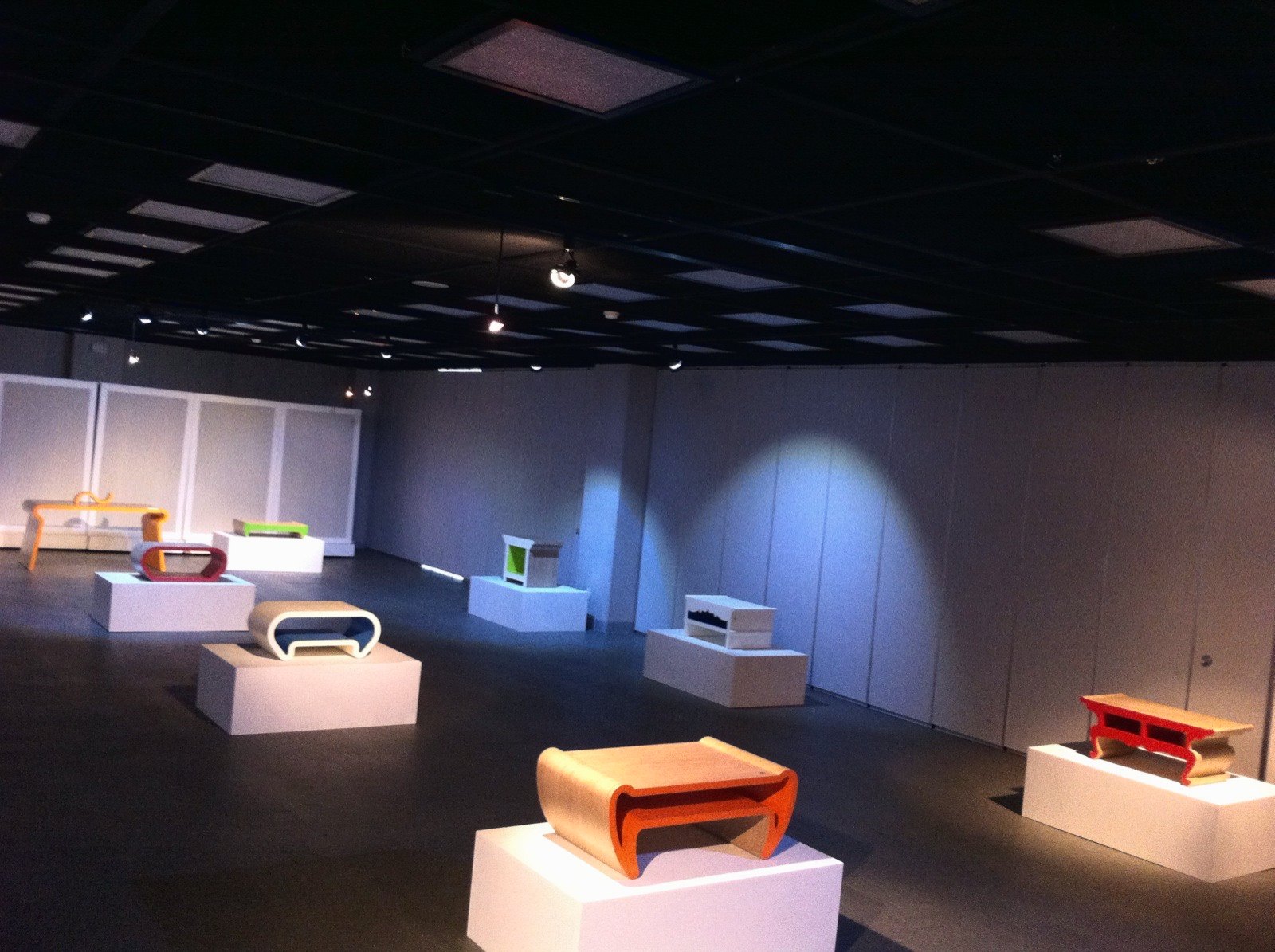
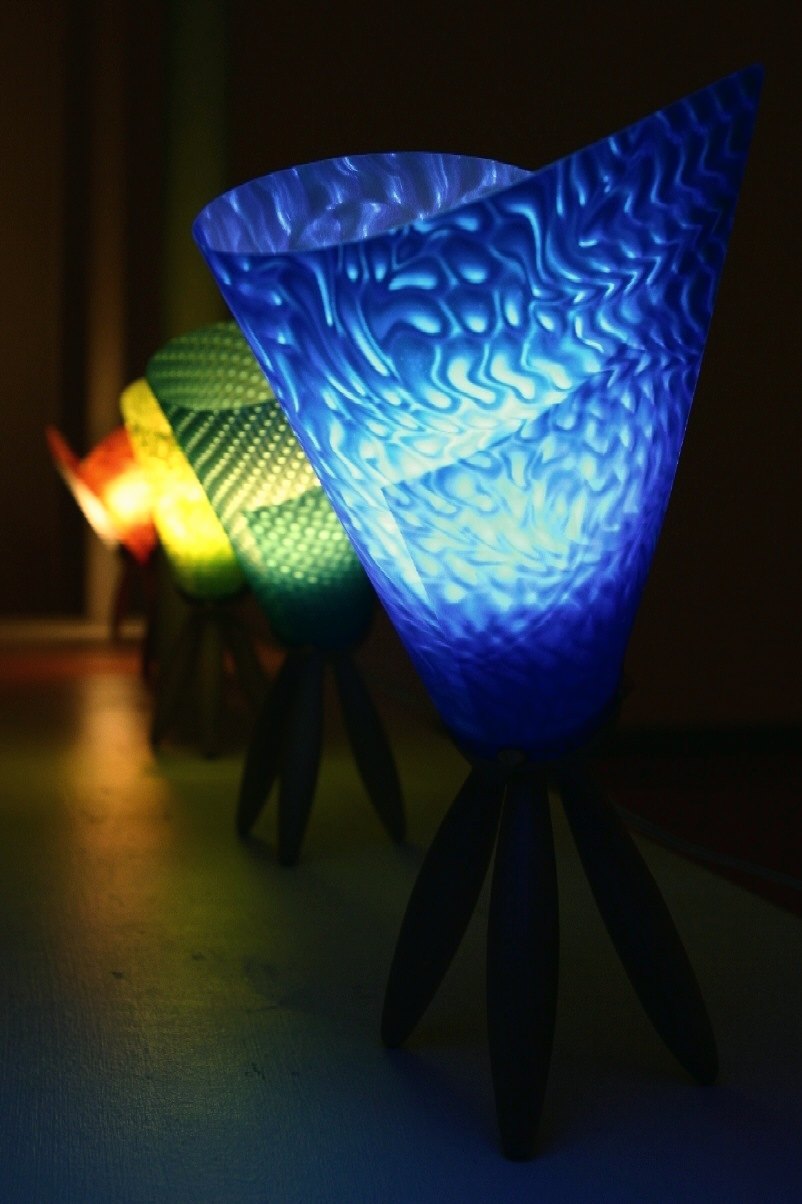
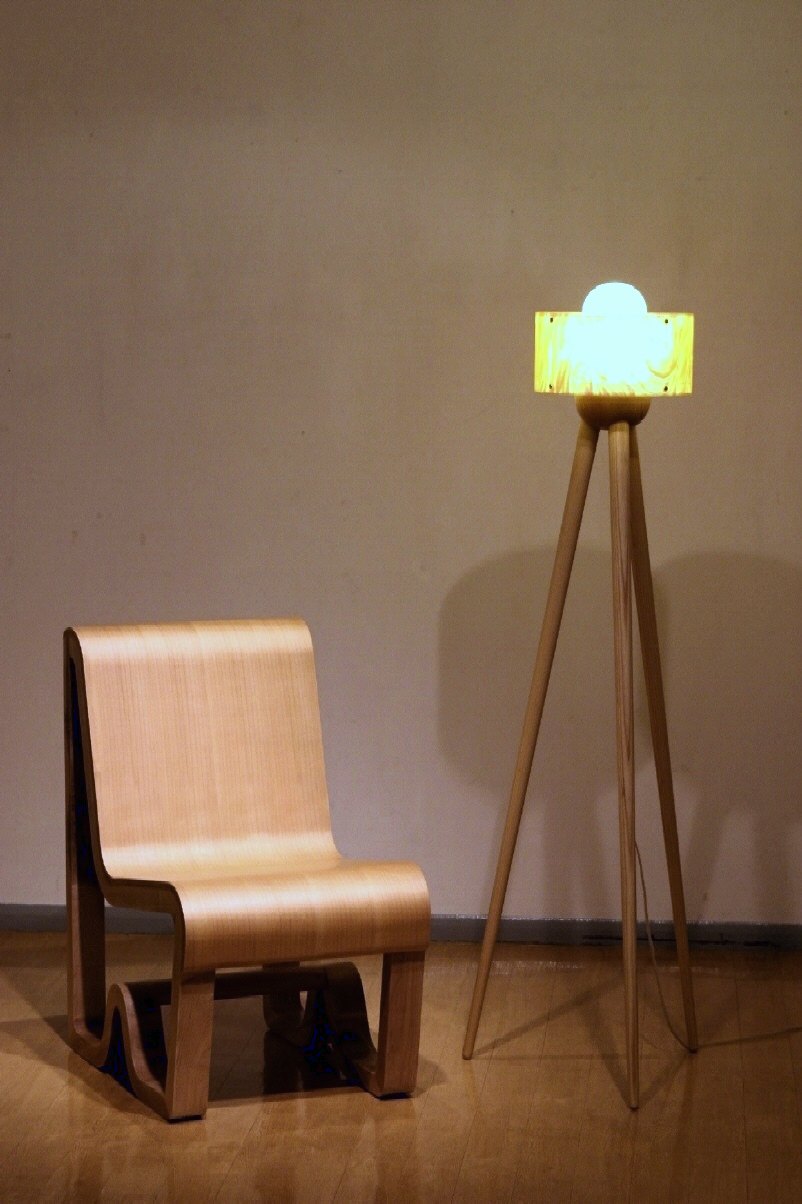
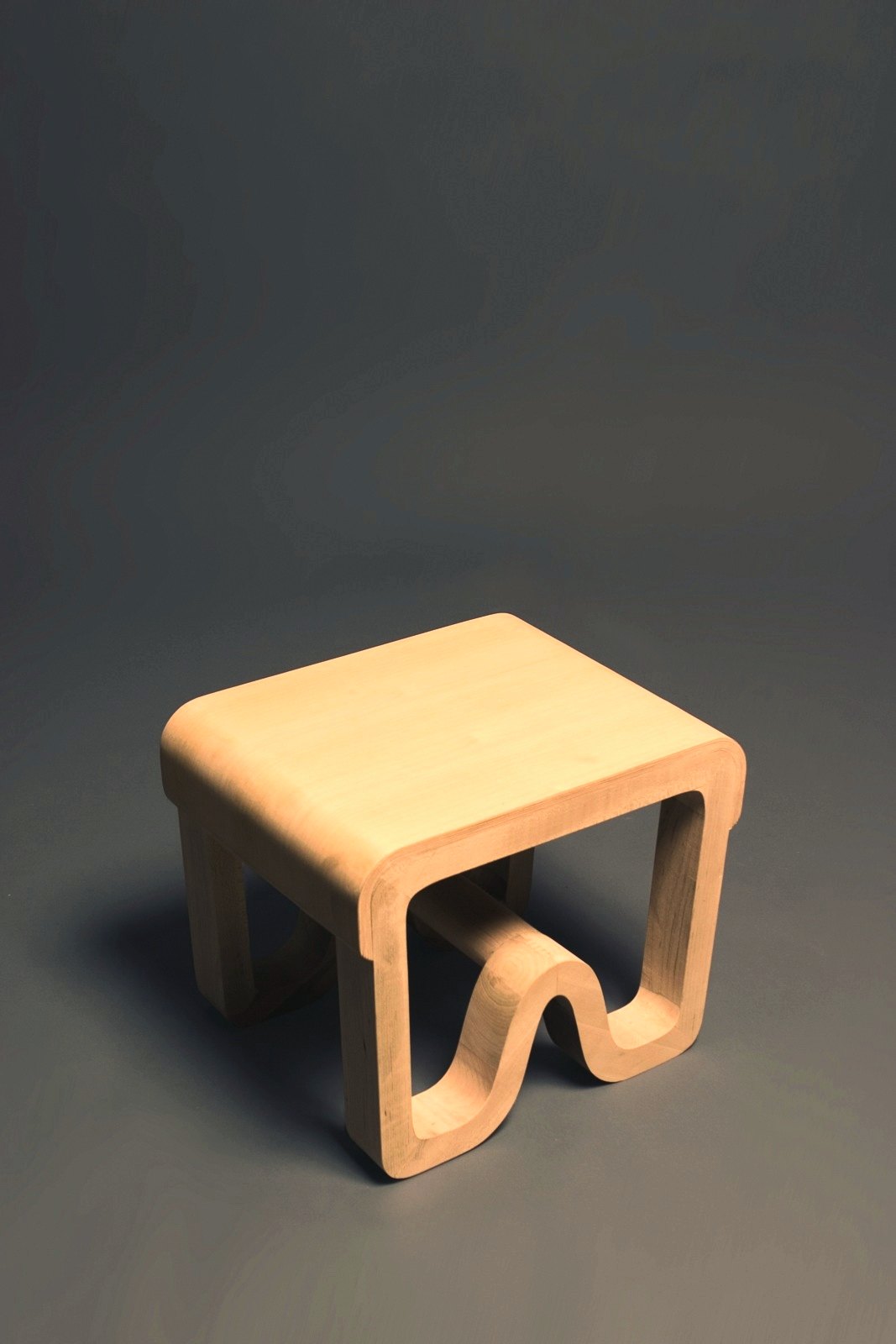
In the mid-2000s I began building furniture from sheets of CNC-cut plywood, stacked one by one. It started from digital data, yet the result was a mass that held the grain of wood and the warmth of the hand. The way thin layers accumulate into a single form resembles the way time accumulates into tradition. Multi-Layer Furniture and Mass Furniture were born this way.
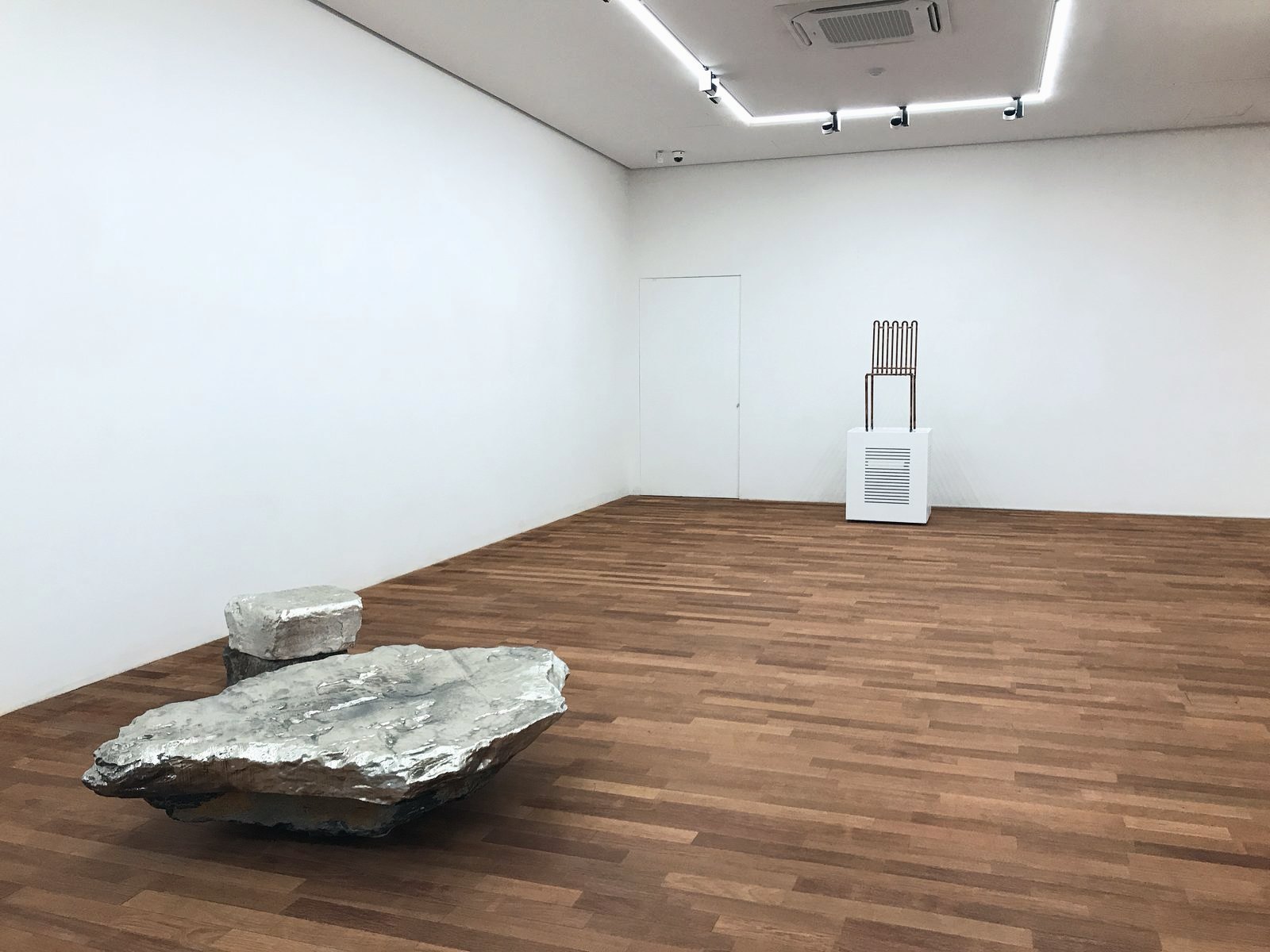
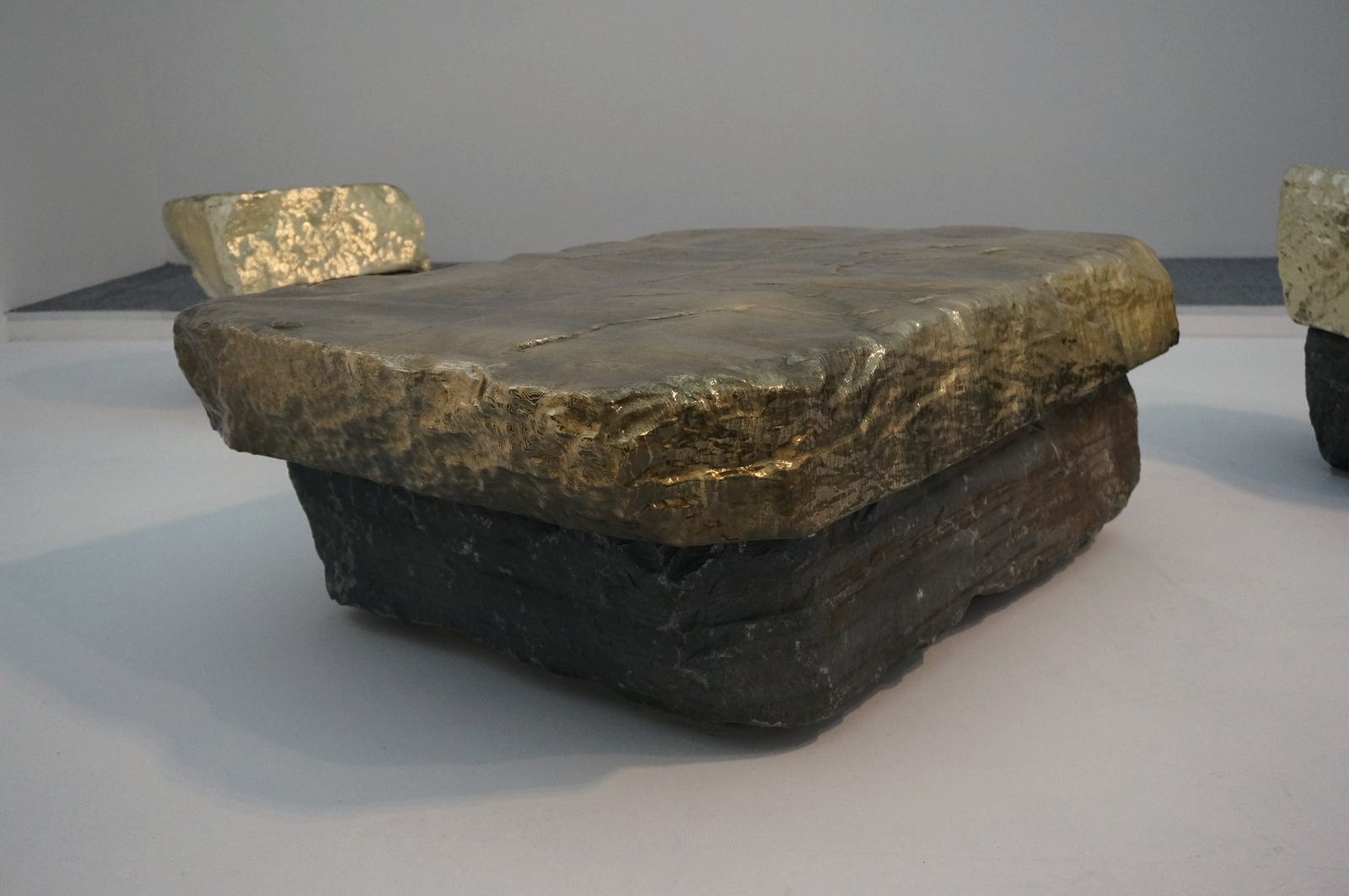
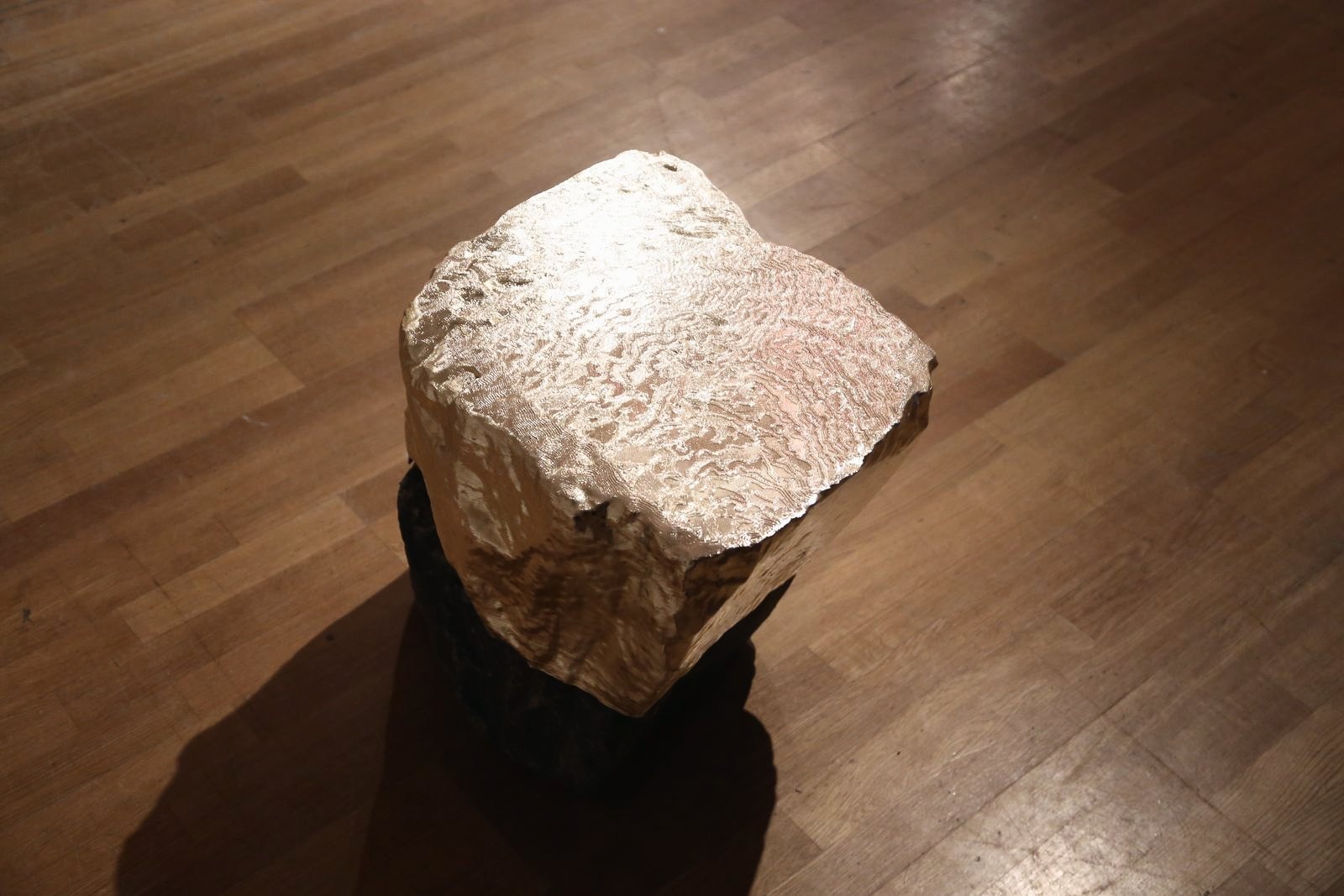
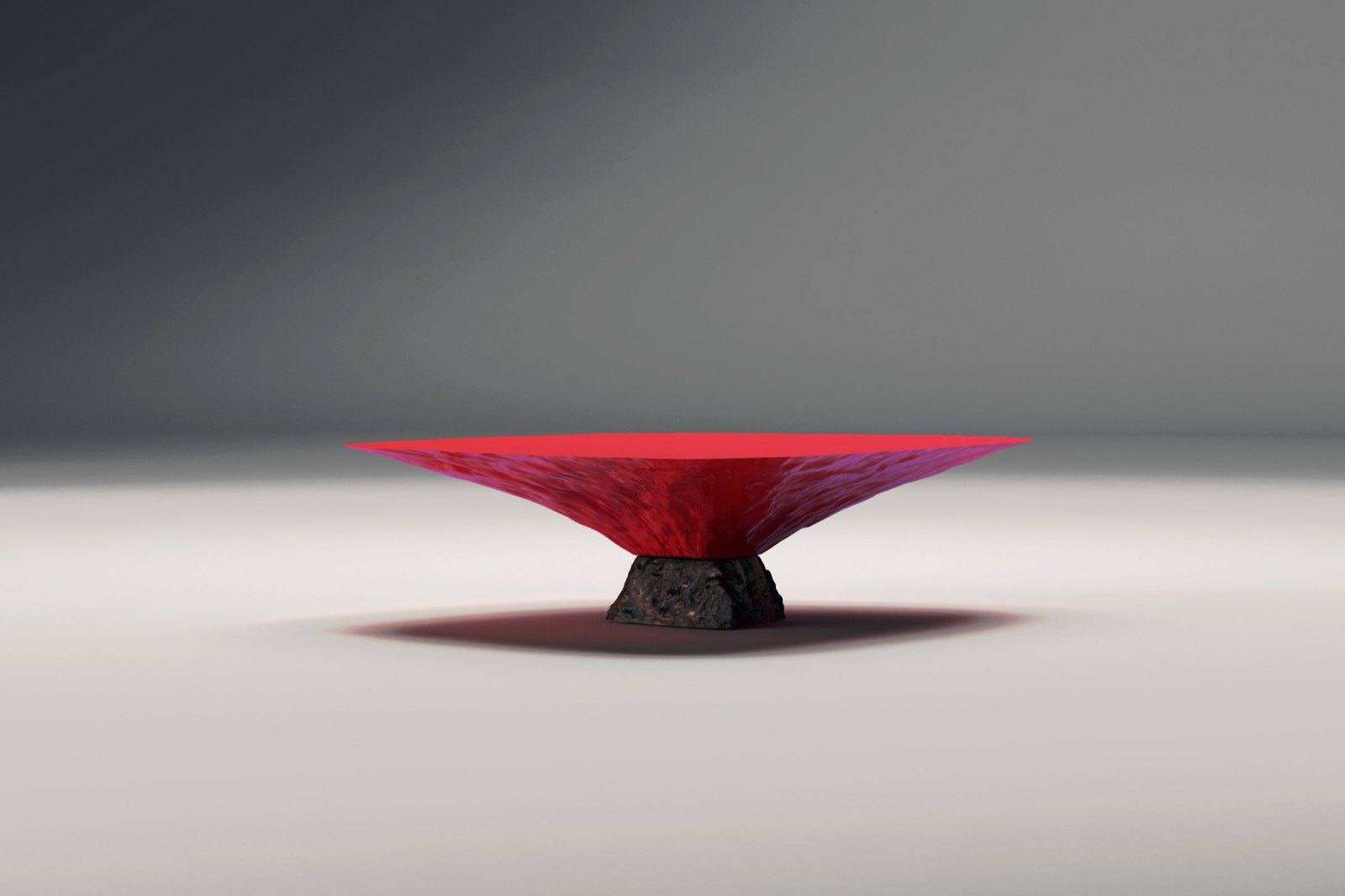
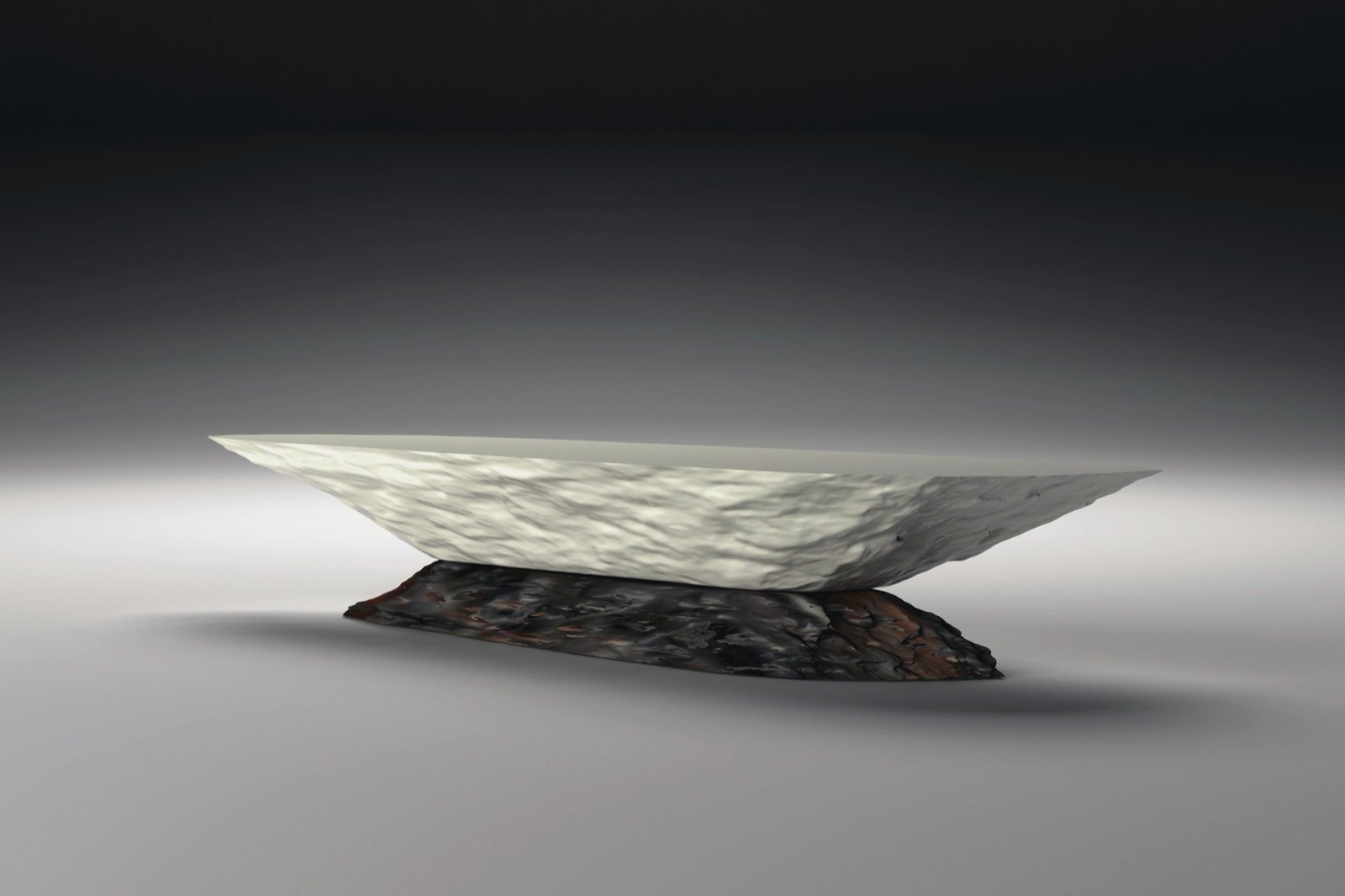
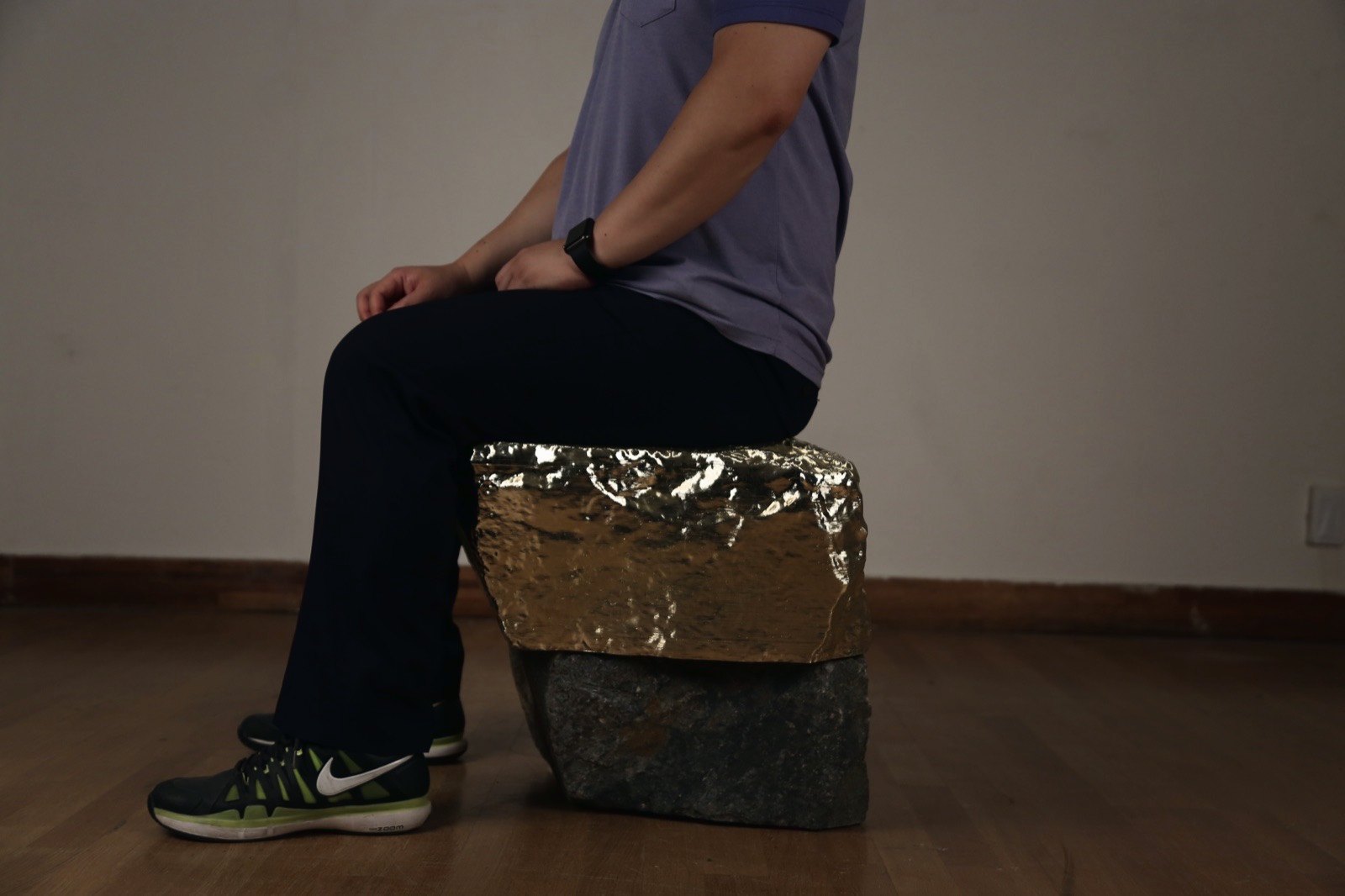
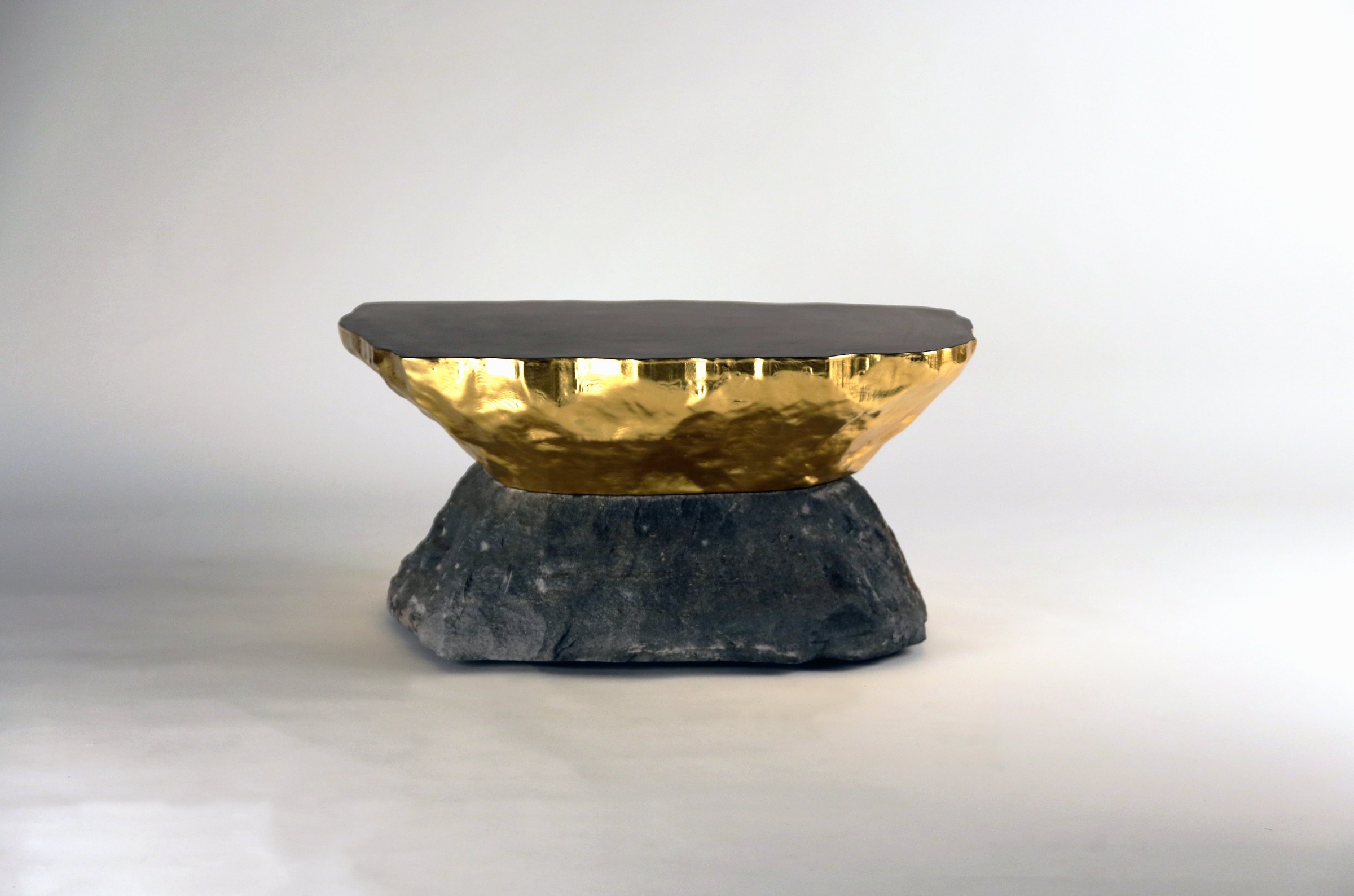
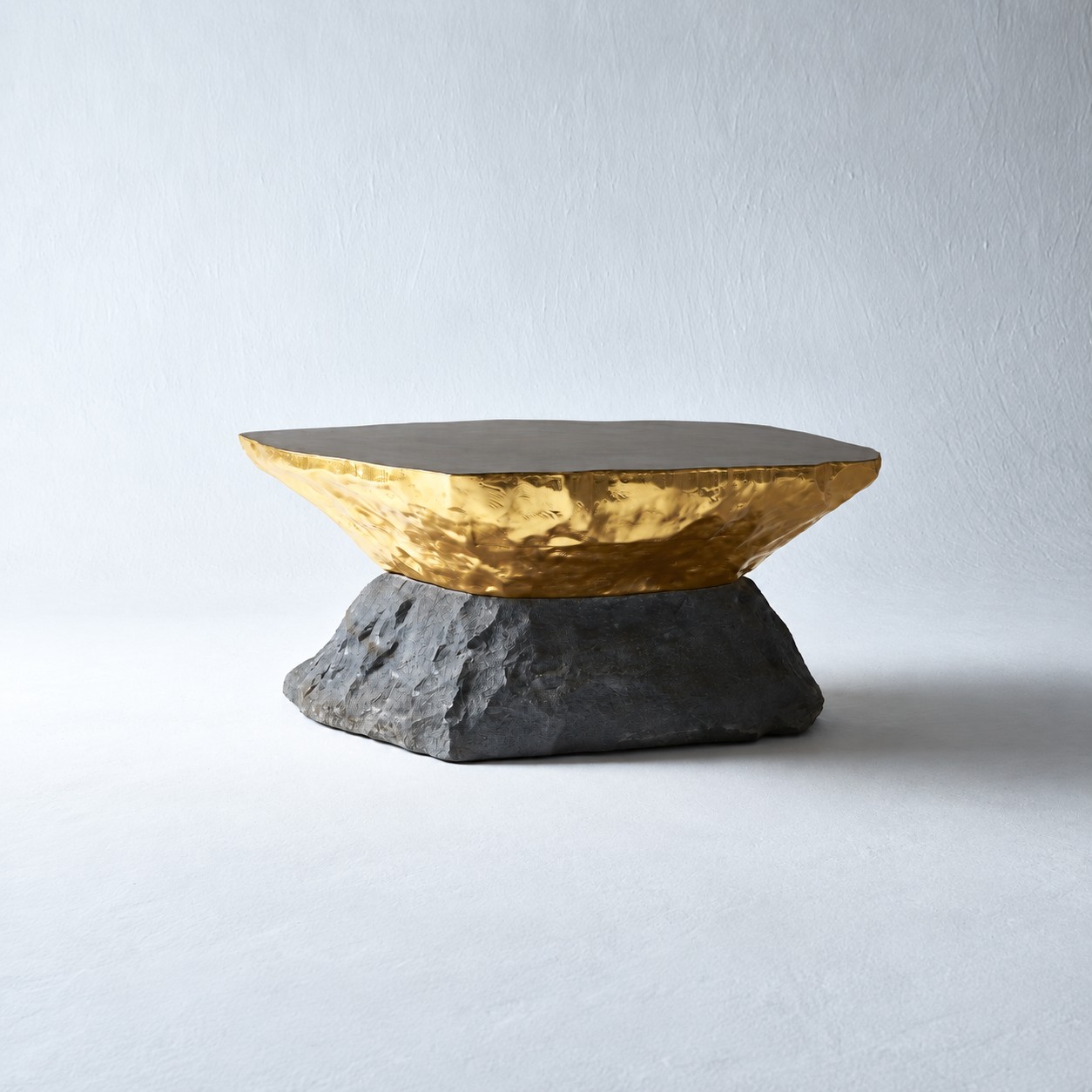
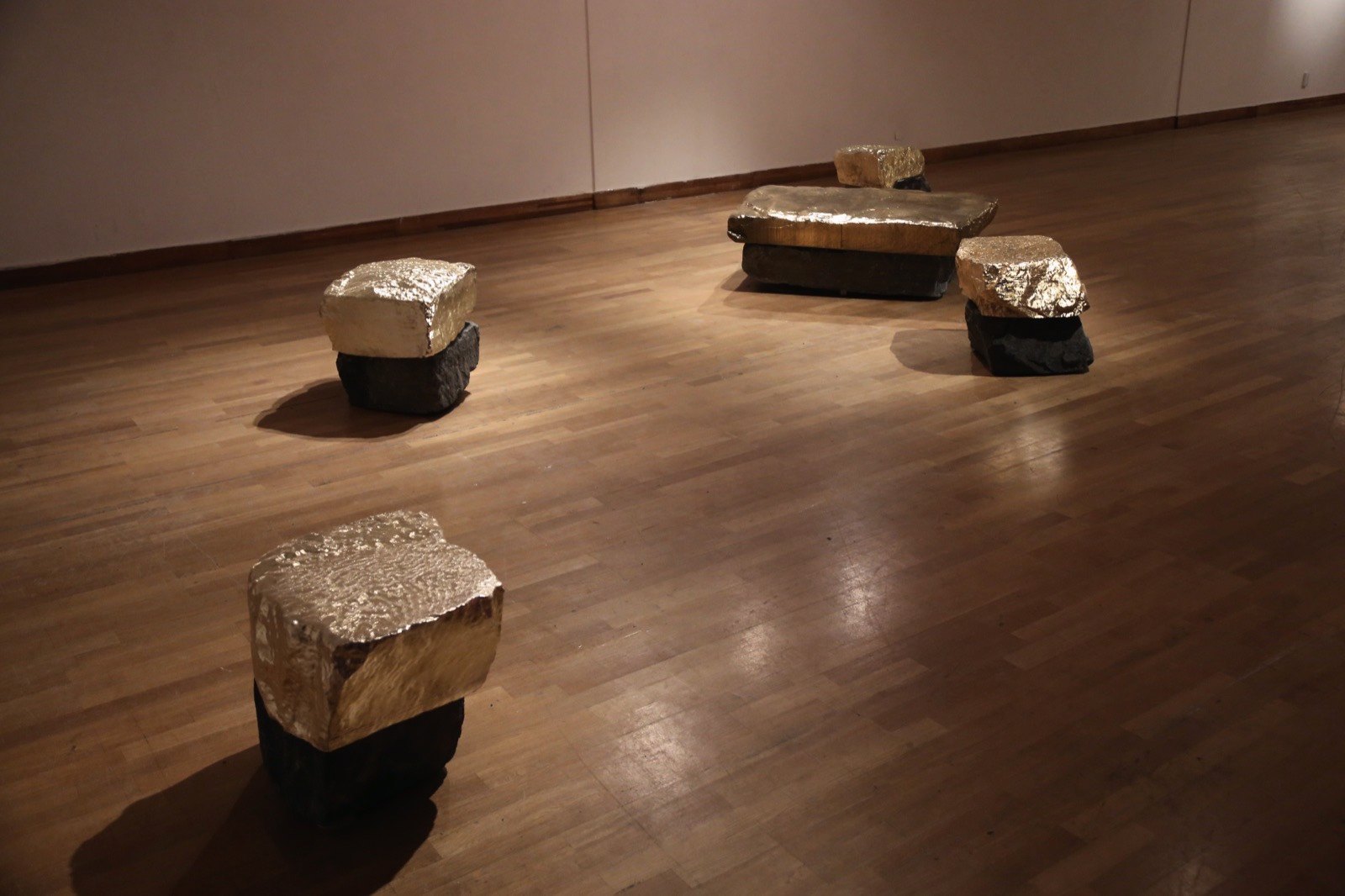
I select stones myself at a quarry in Boryeong, scan them in 3D, twist and carve the data, and print them again. These “digital stones,” finished in gold and silver, interlock with real stone to become a stool, a table, a tower. No two stones in the world are alike, so every piece that holds a stone is unique—one of a kind even within its series. The old geuraengi technique—carving timber to fit the contours of a stone—I perform again as a calculation inside the computer. It looks like stone but is not: This Is Not A Stone. In that small error of perception, the boundaries between original and copy, nature and technology, begin to waver. That wavering is the nature of our time I want to show.
From ancient Egypt to today, the chair has kept the same structure—a vertical and a horizontal. And yet each chair reveals its era. I hope my furniture will one day serve as a portrait through which the early twenty-first century can be read: one that holds both a restrained, naturalistic beauty and the thinking of the digital age.
For nearly twenty years I have stood with my students in exhibition halls in Milan, London, Paris and Cologne. Watching young designers speak in their own language on the world stage is as precious to me as my own work. Now, at the Living Design Center, I face another new tool: AI. The tools change, but the question remains the same—how shall we stay together with nature?
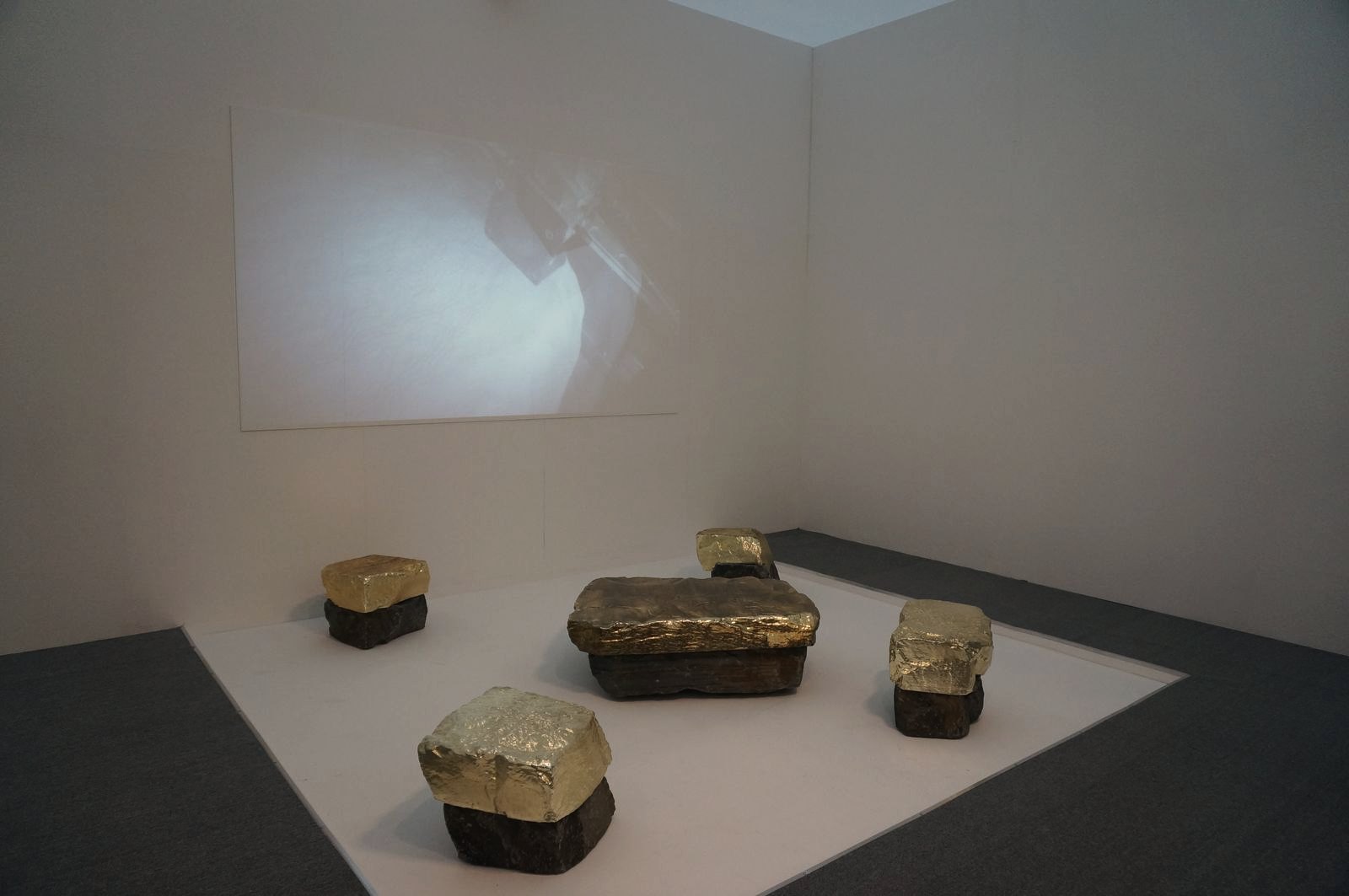
Stone—the oldest natural material—is scanned into data, transformed and replicated, then materialized again by 3D printing and CNC. The original and “another Stone” meet in a joint that translates geuraengi, the traditional Korean scribing technique, into the digital. The film shows an “another Stone” bowl being built layer by layer on the studio’s large-format 3D printer.
Recorded on video in January–March 2018 while making the pieces for La Triennale di Milano: natural stone is selected in Boryeong and 3D-scanned into data, a CNC toolpath is built to the stone’s form, and laminated walnut is milled layer by layer into the top that will sit on the stone—shown in the order of the work.
In traditional geuraengi, a carpenter setting a post on an uneven foundation stone runs an iron compass along the stone to mark its contour on the post in ink, then cuts the post to that ink line so the two fit tightly. Digital geuraengi 3D-scans a natural stone, replicates it and changes its size and proportions into “another stone,” then subtracts the overlap with the stone below to carve its contour into the underside. The upper stone is therefore always larger than the one below, yet locks precisely onto its contours. The film sets the two techniques side by side using the actual working data of Gold Table (2016).


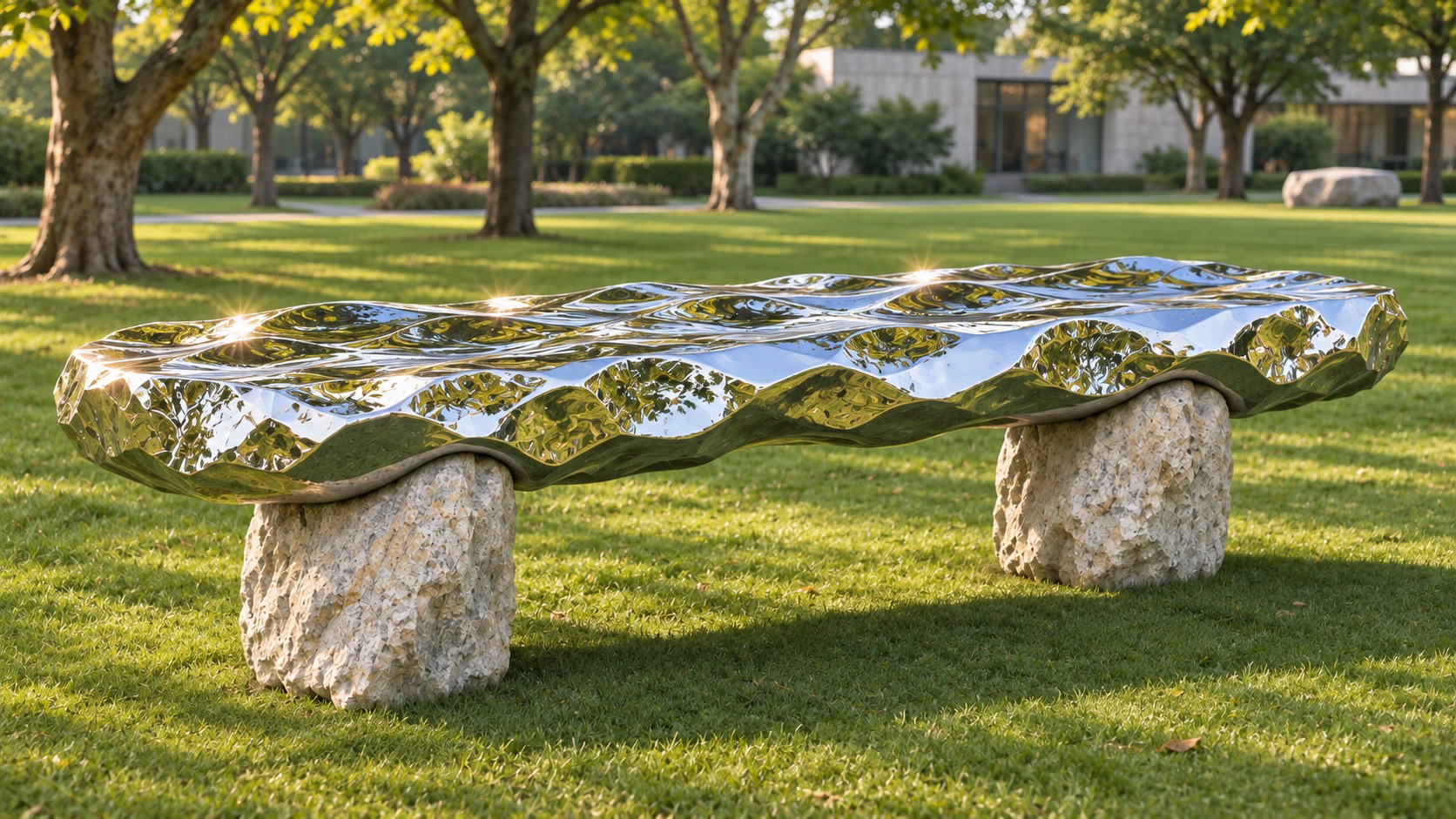
Indoors, “another stone” is made by 3D printing or in wood; outdoor public art adds one more step. The replica, fitted by digital geuraengi, is made in metal—stainless steel or white bronze— so it endures rain, sun and sea wind. The lower stone is chosen from the site’s own ground, and the metal stone sits precisely on it. Because each lower stone is a single natural stone, every piece is unique. The stool and long table of the new 2027 wood-stone series are translated into outdoor metal—public seats and benches to sit and linger on.
another Metal stone & stone 2027
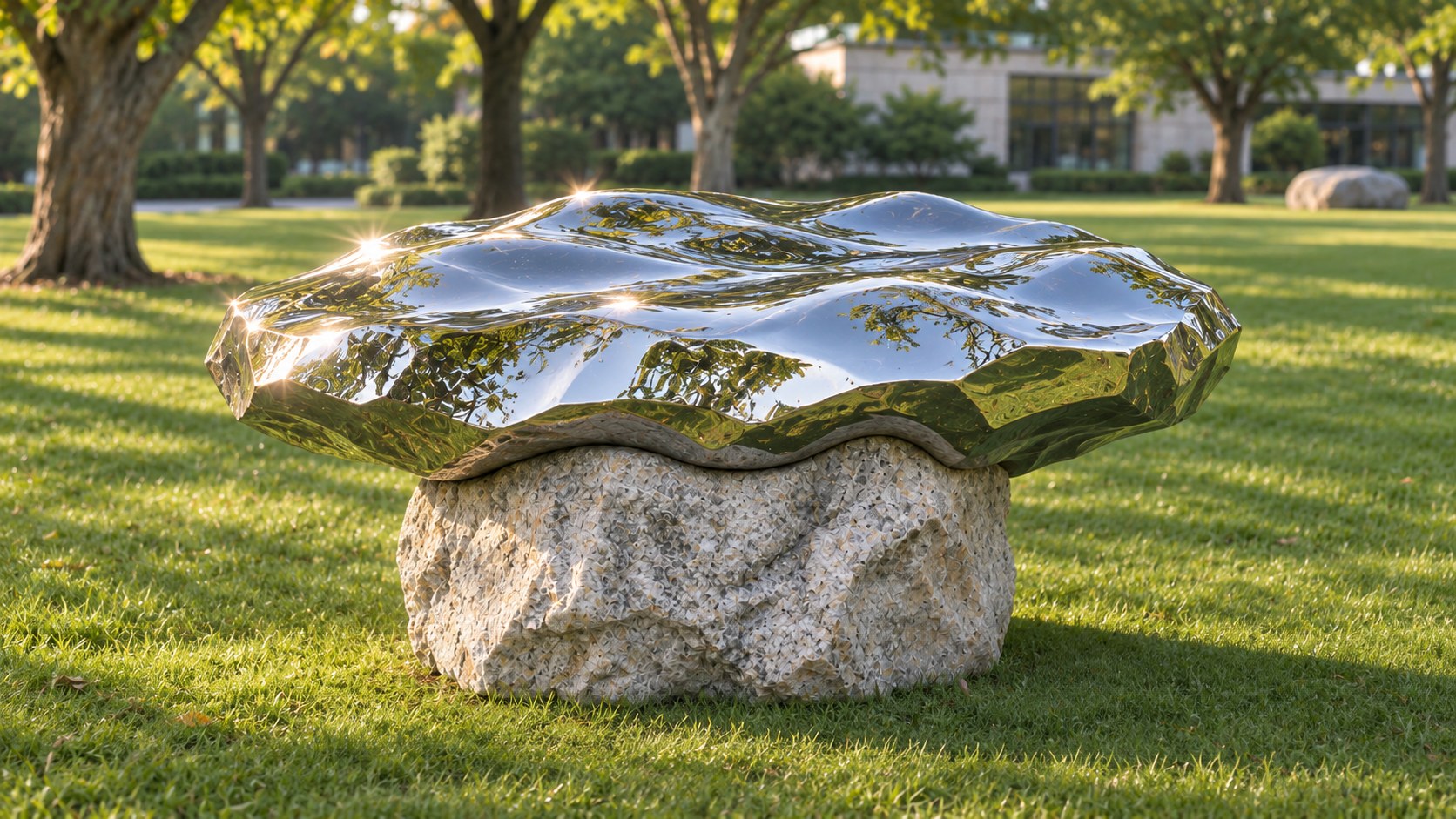
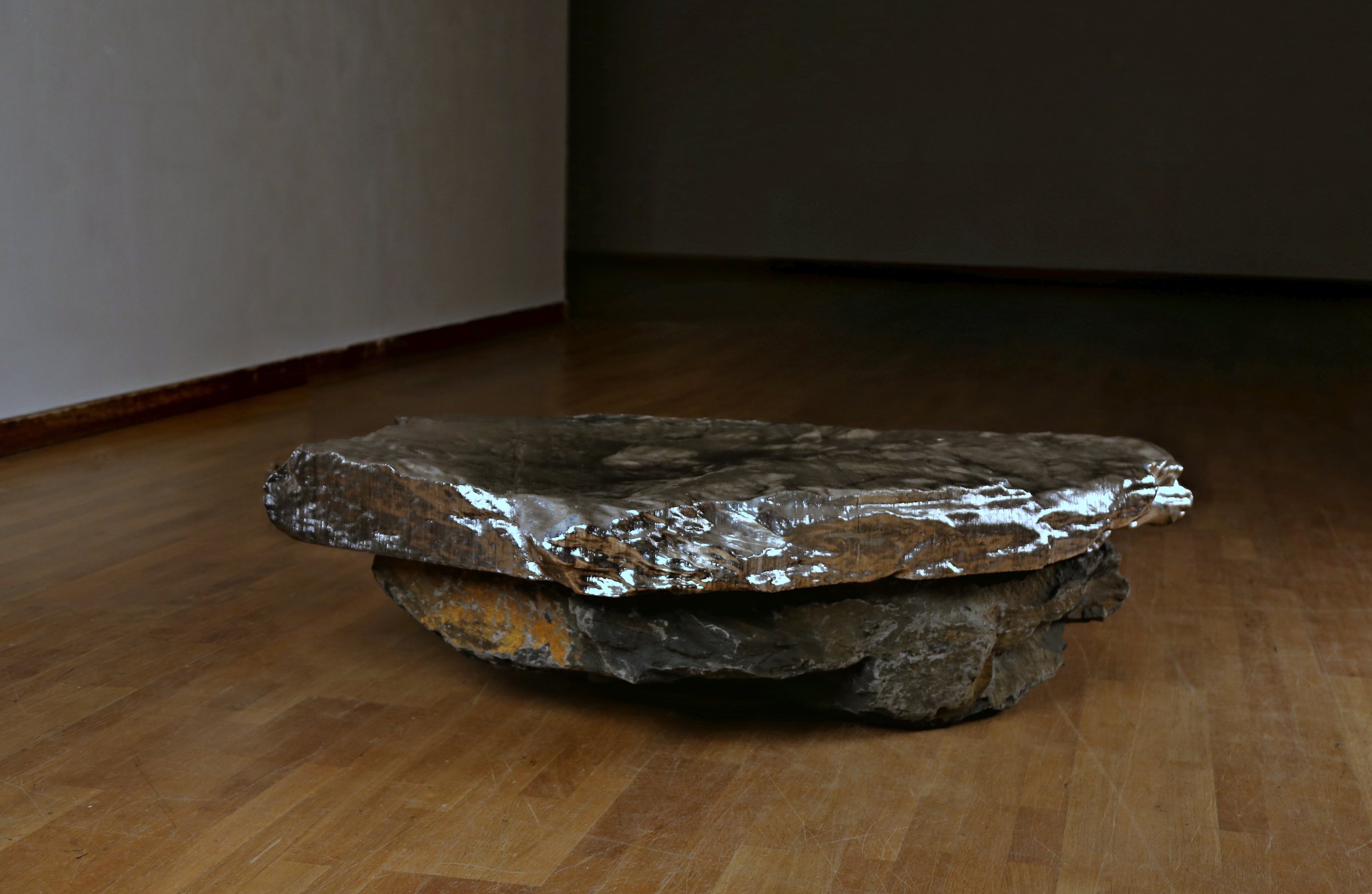
AI has begun to enter the process. In the 2026 work Wood Stool 26-0903, the AI “Jabee” refined the 3D scan data and replicated, mirrored and transformed the natural-stone data to shape the seat. In the next body of work its role widens: predicting the sculptural potential of each stone when selecting it at the quarry, generating CNC toolpaths, and assessing how each material can best be used. As the old carpenters worked with the tools of their time, the same question continues with the tools of this one.
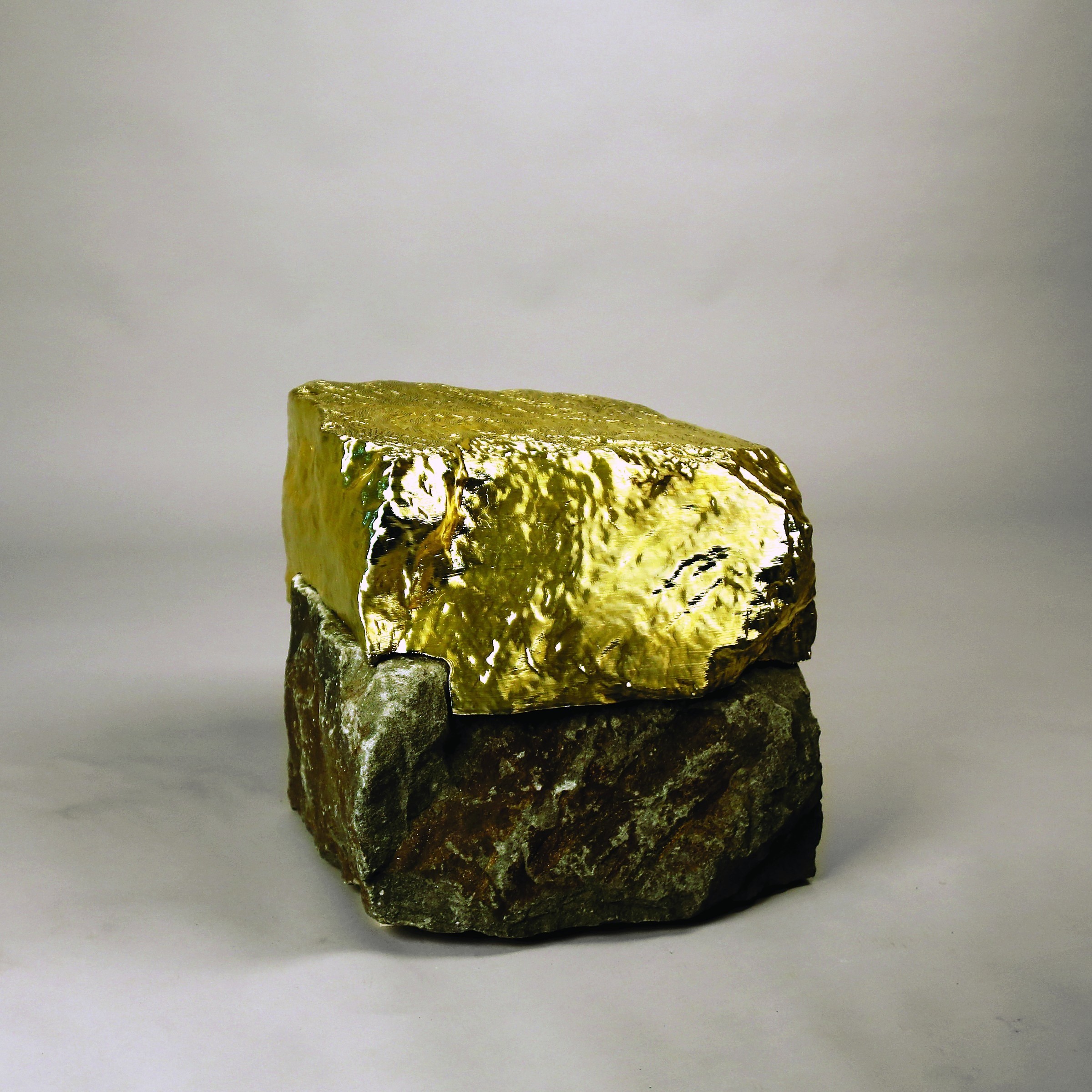

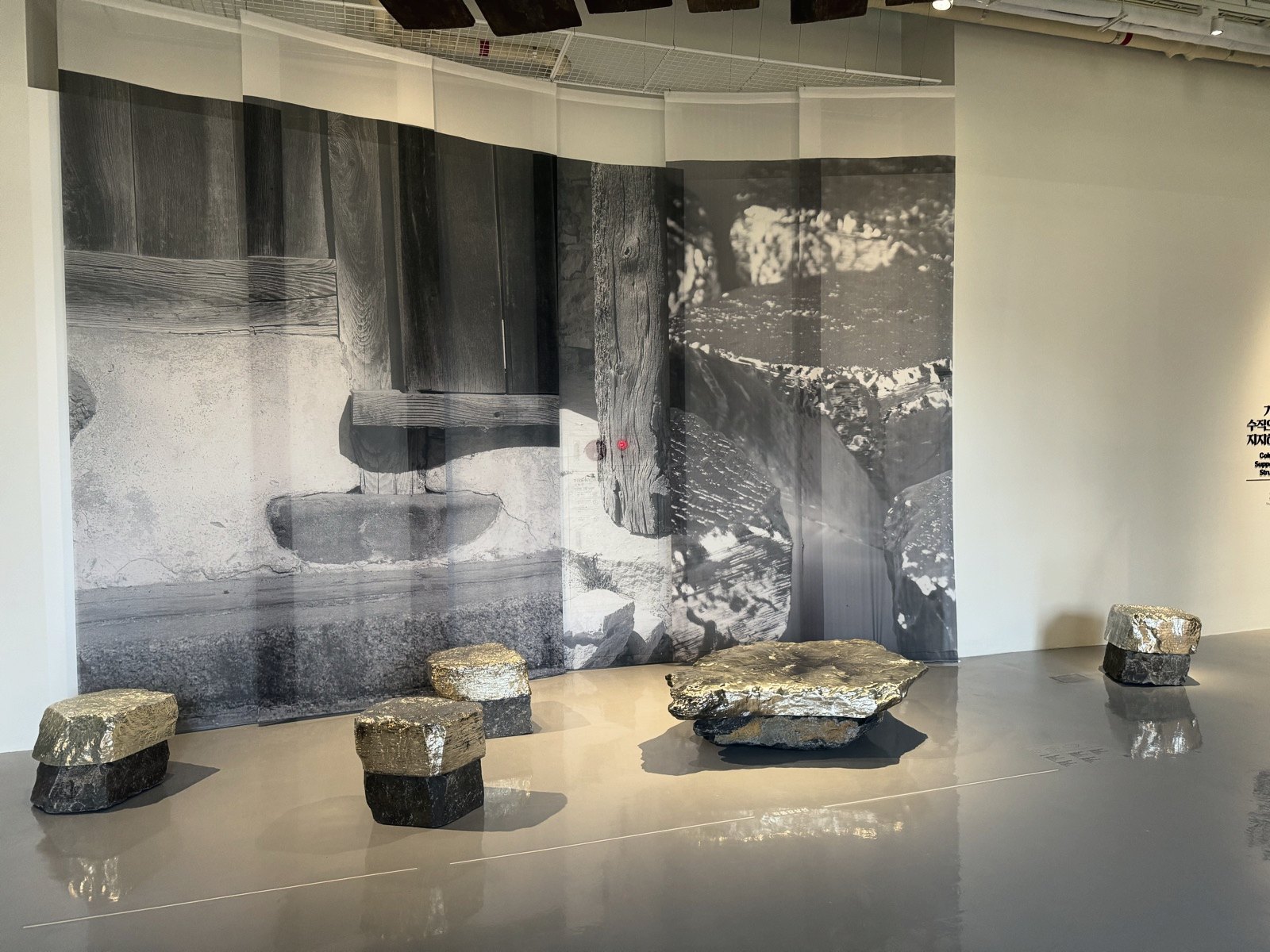
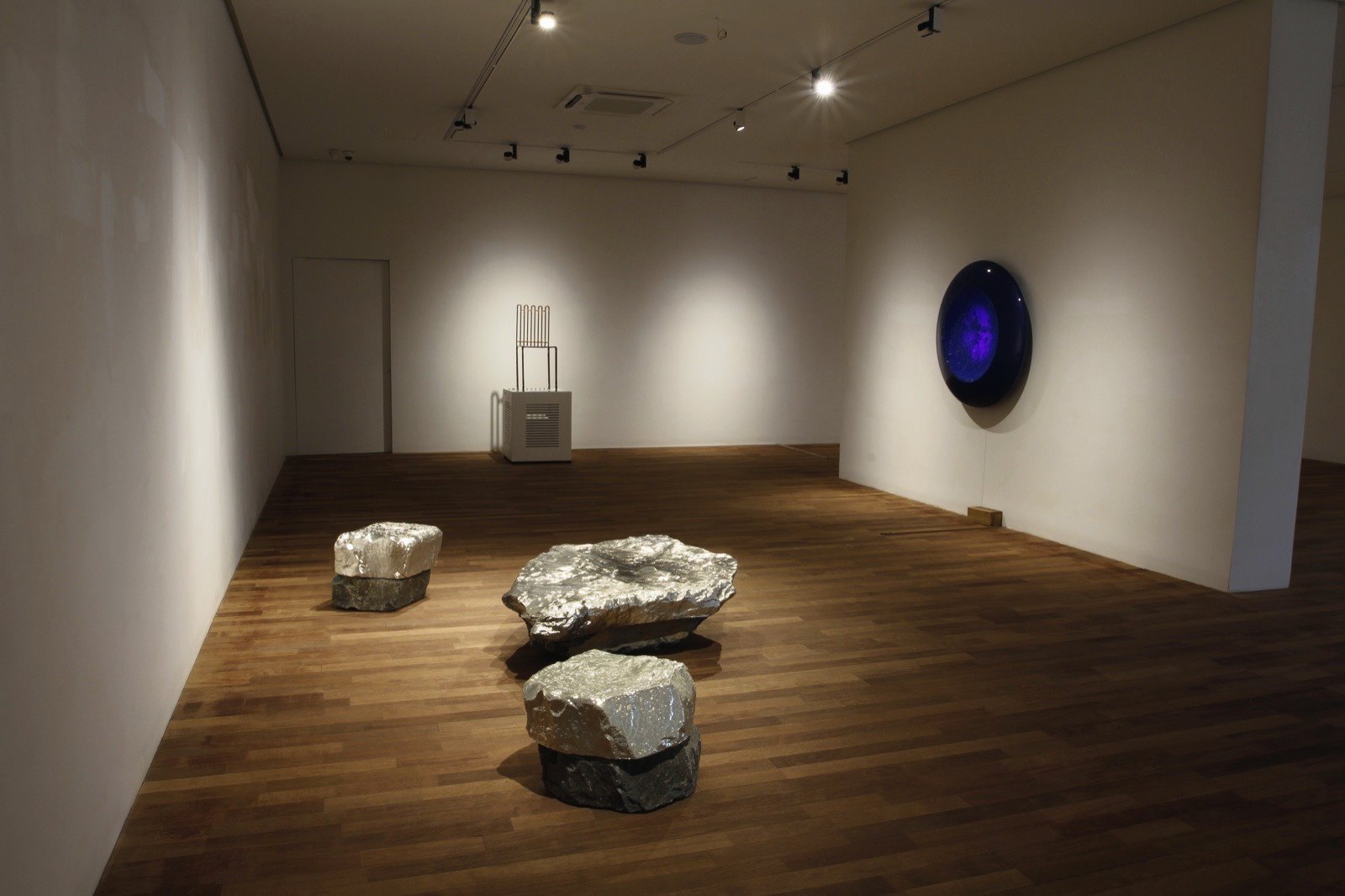
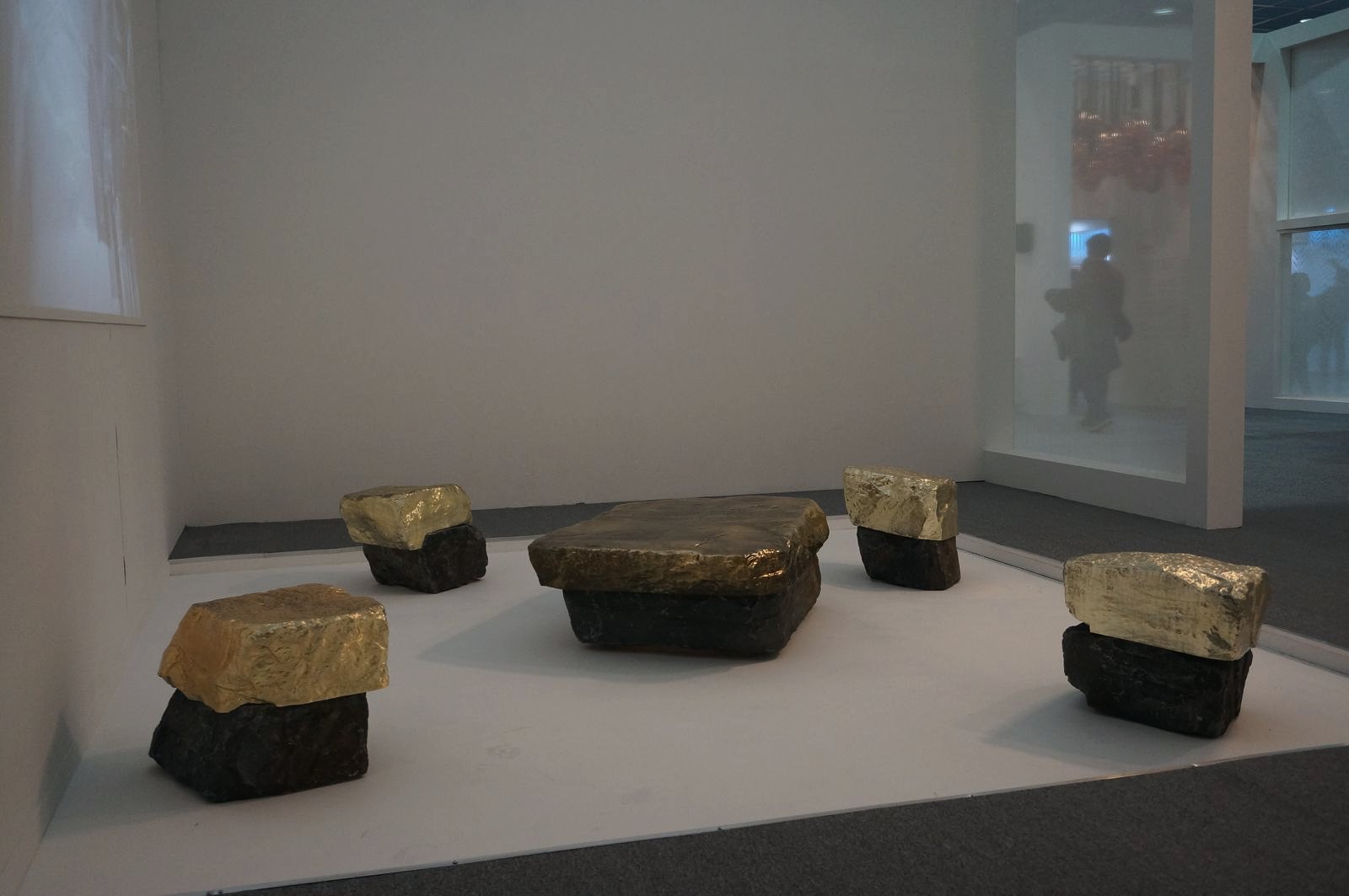
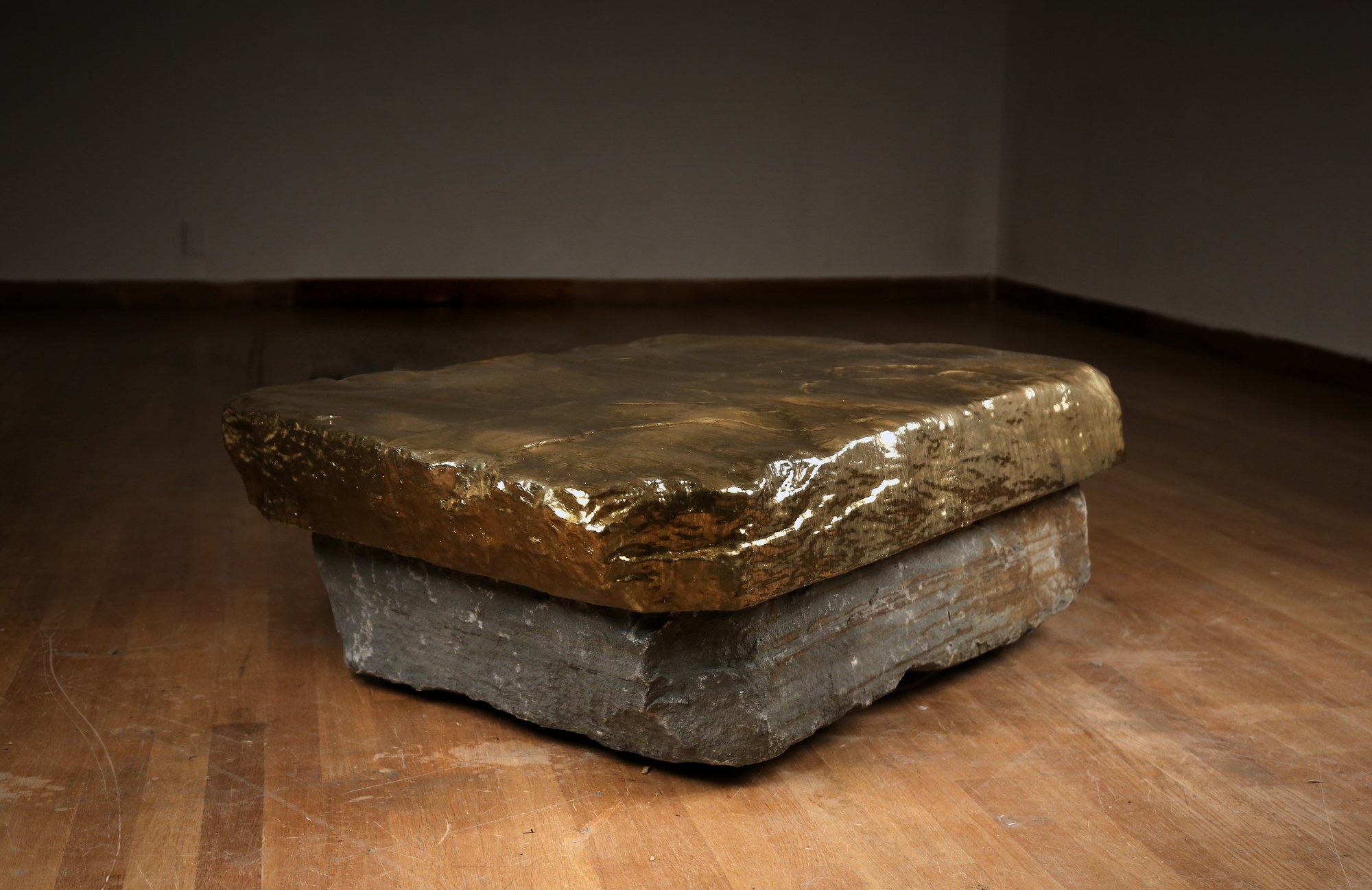
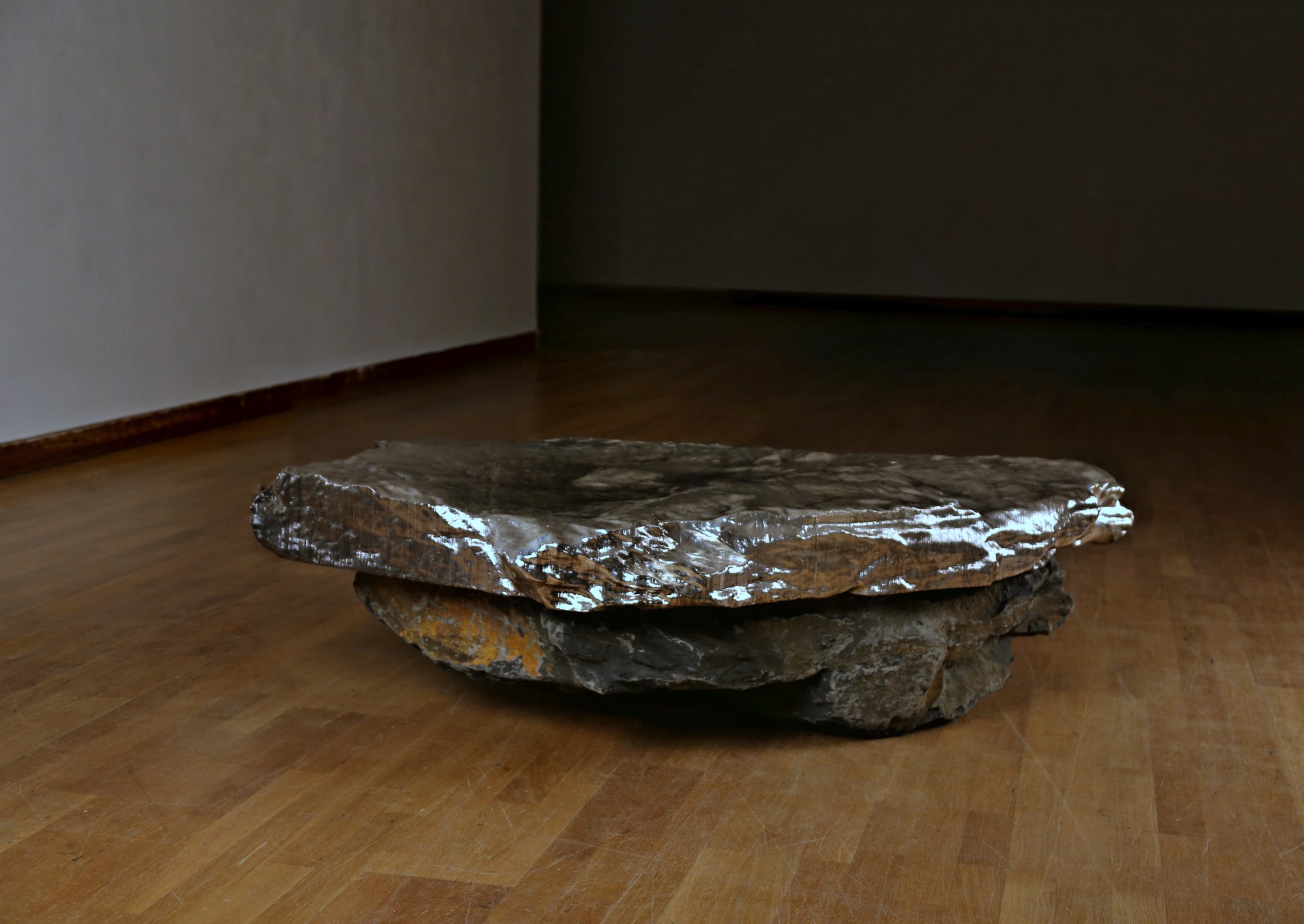
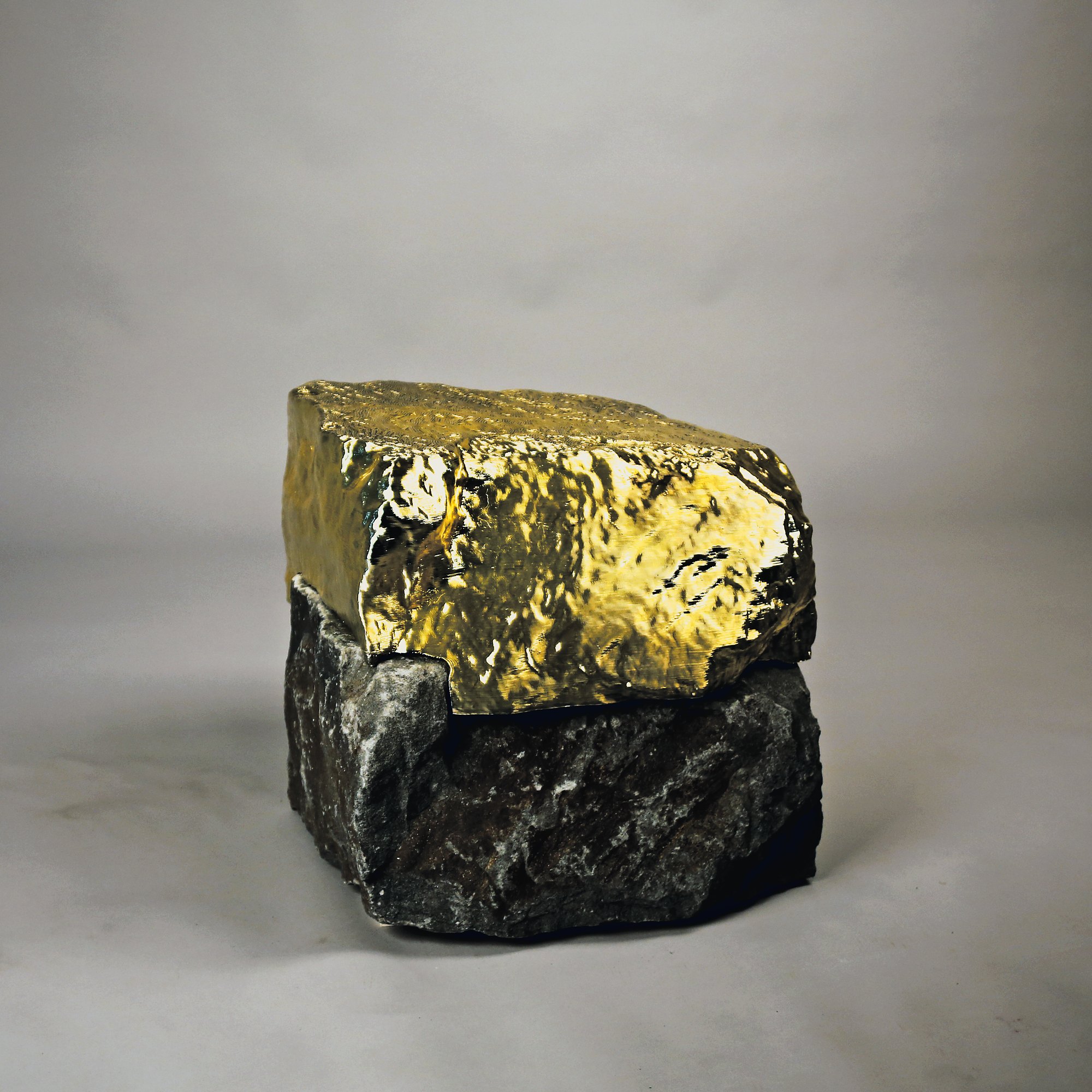
Art furniture joining Boryeong stone with “digital stone”—scanned, transformed, printed and plated in gold or silver—fitted by digital geuraengi. First presented at the doctoral exhibition at Hongik Museum of Art, 2016.
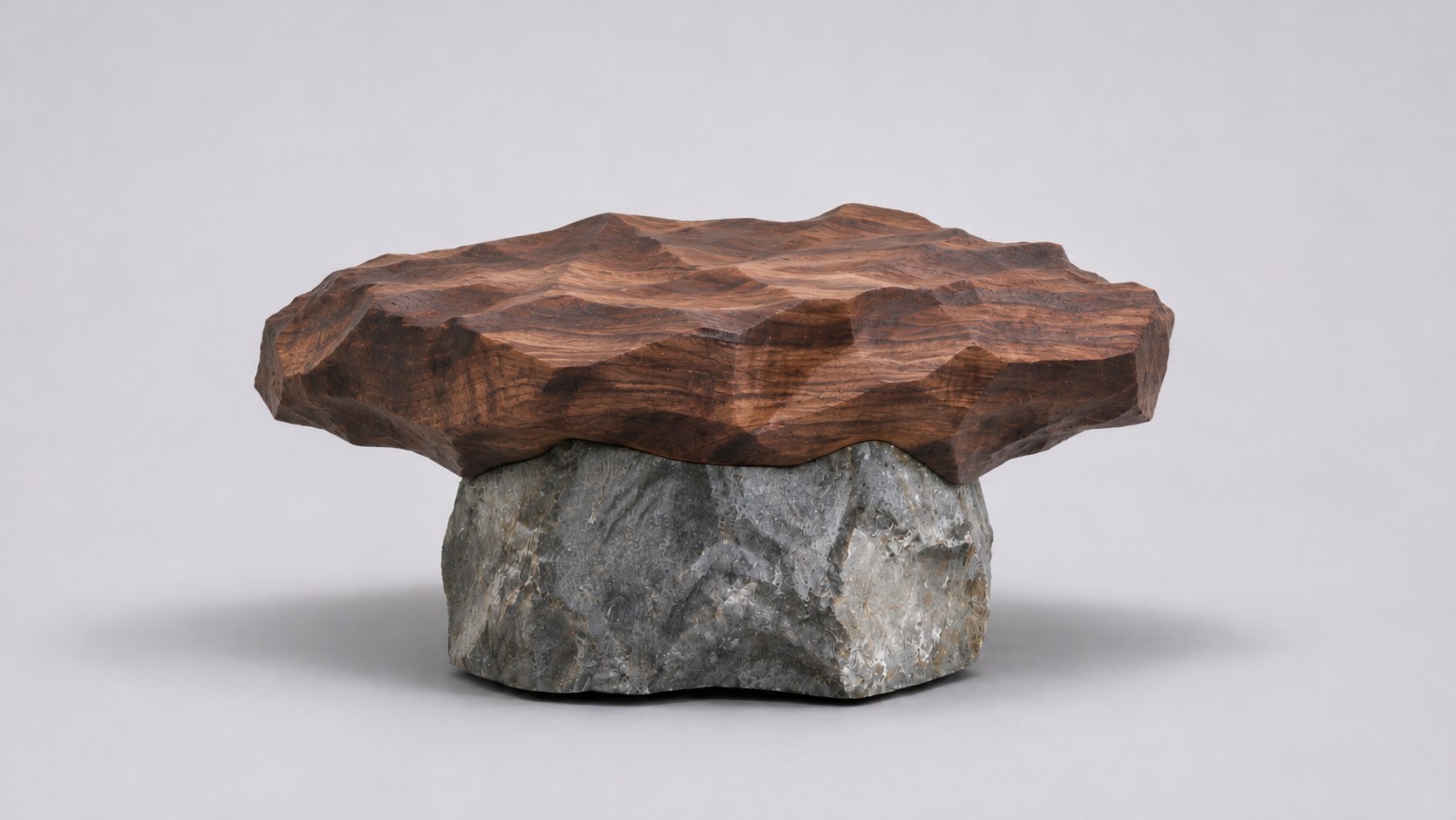
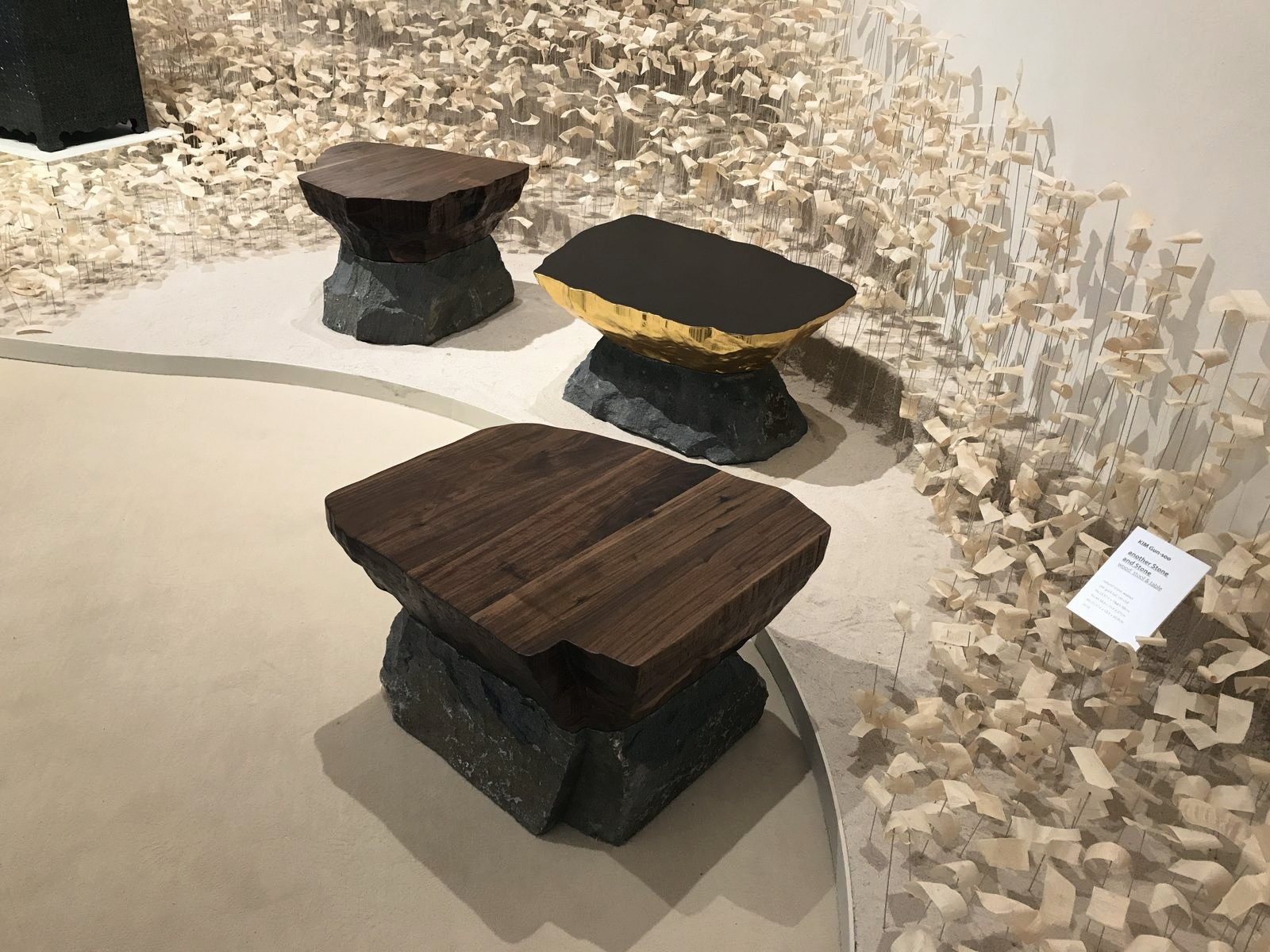
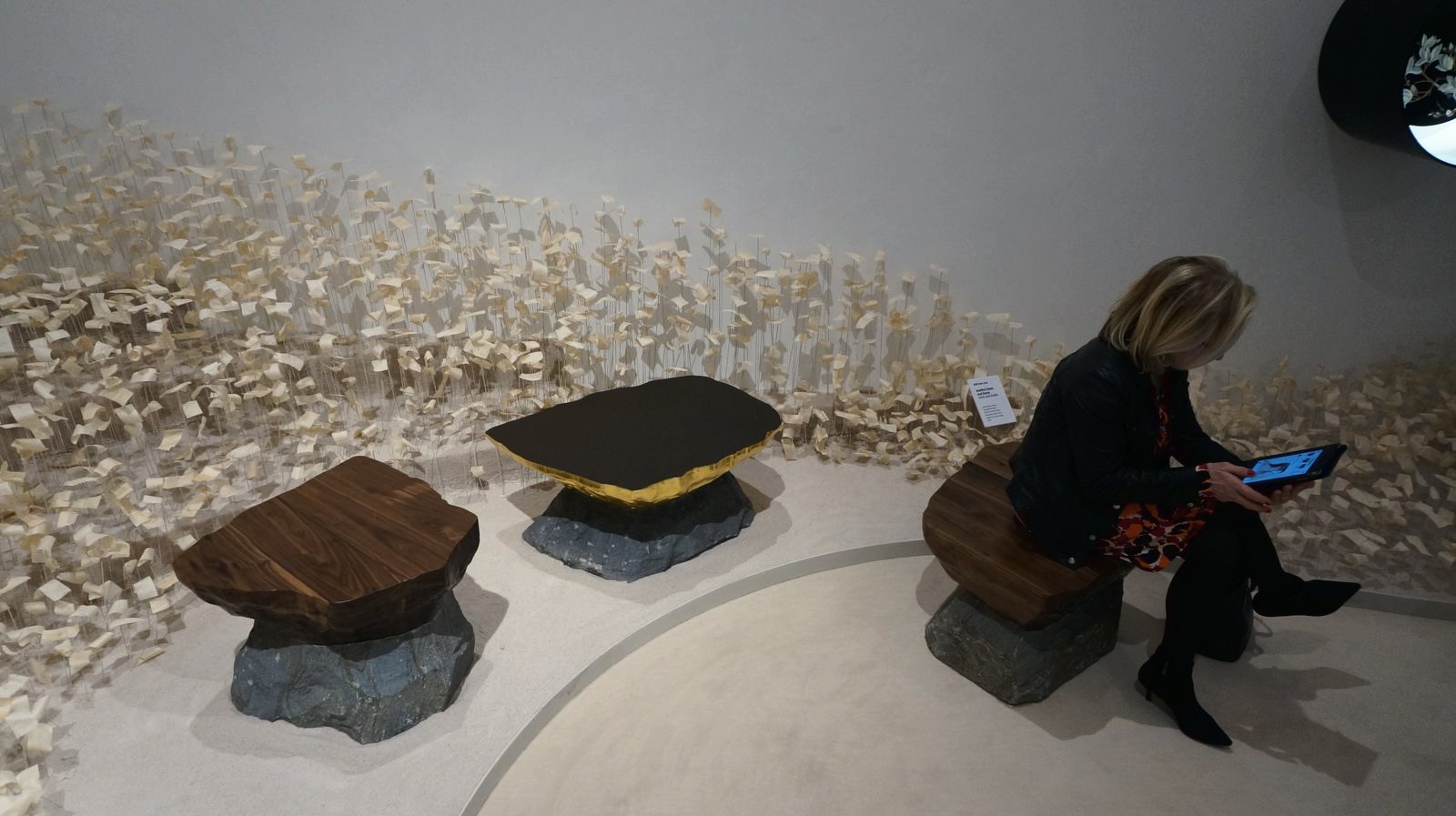
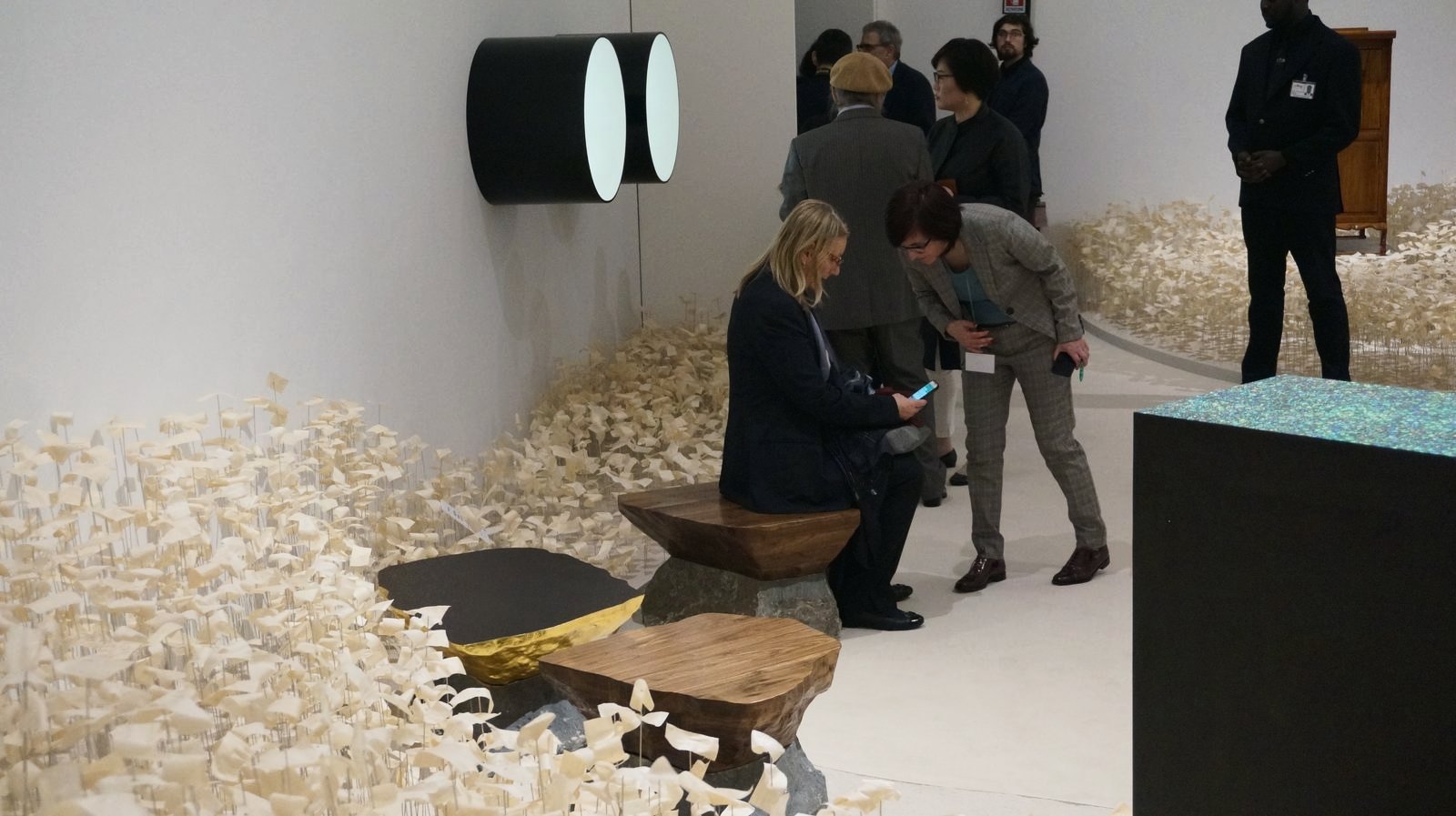
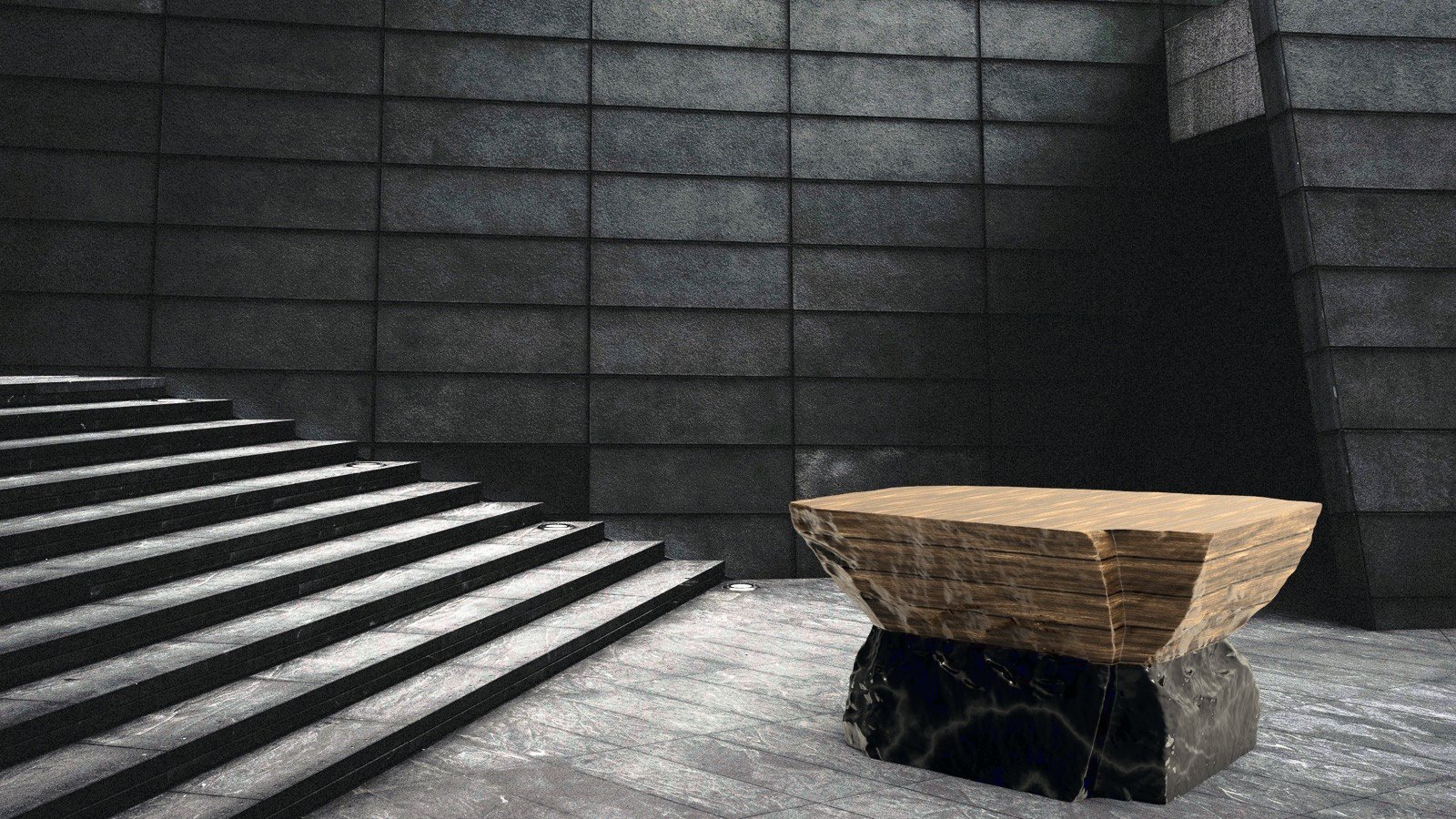
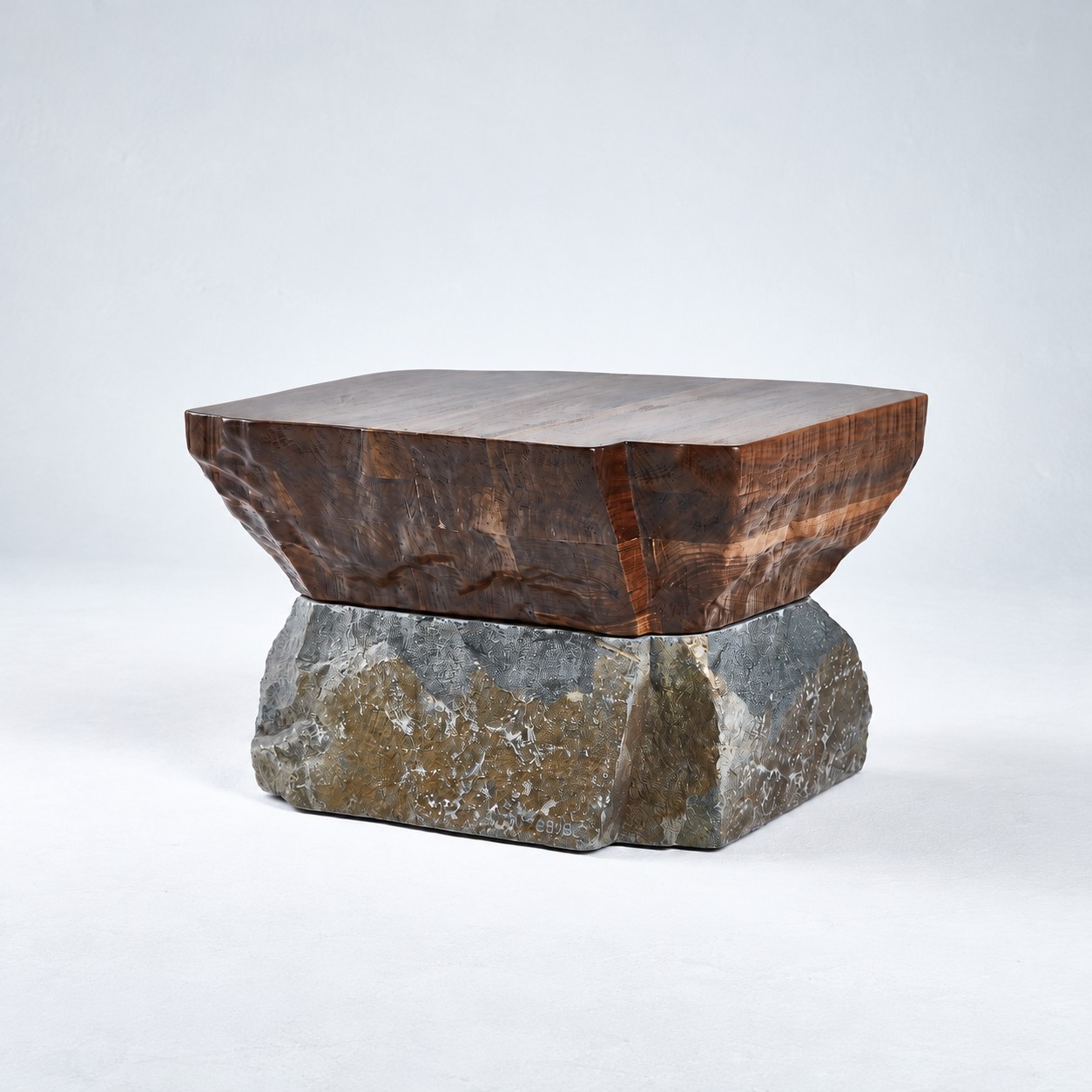
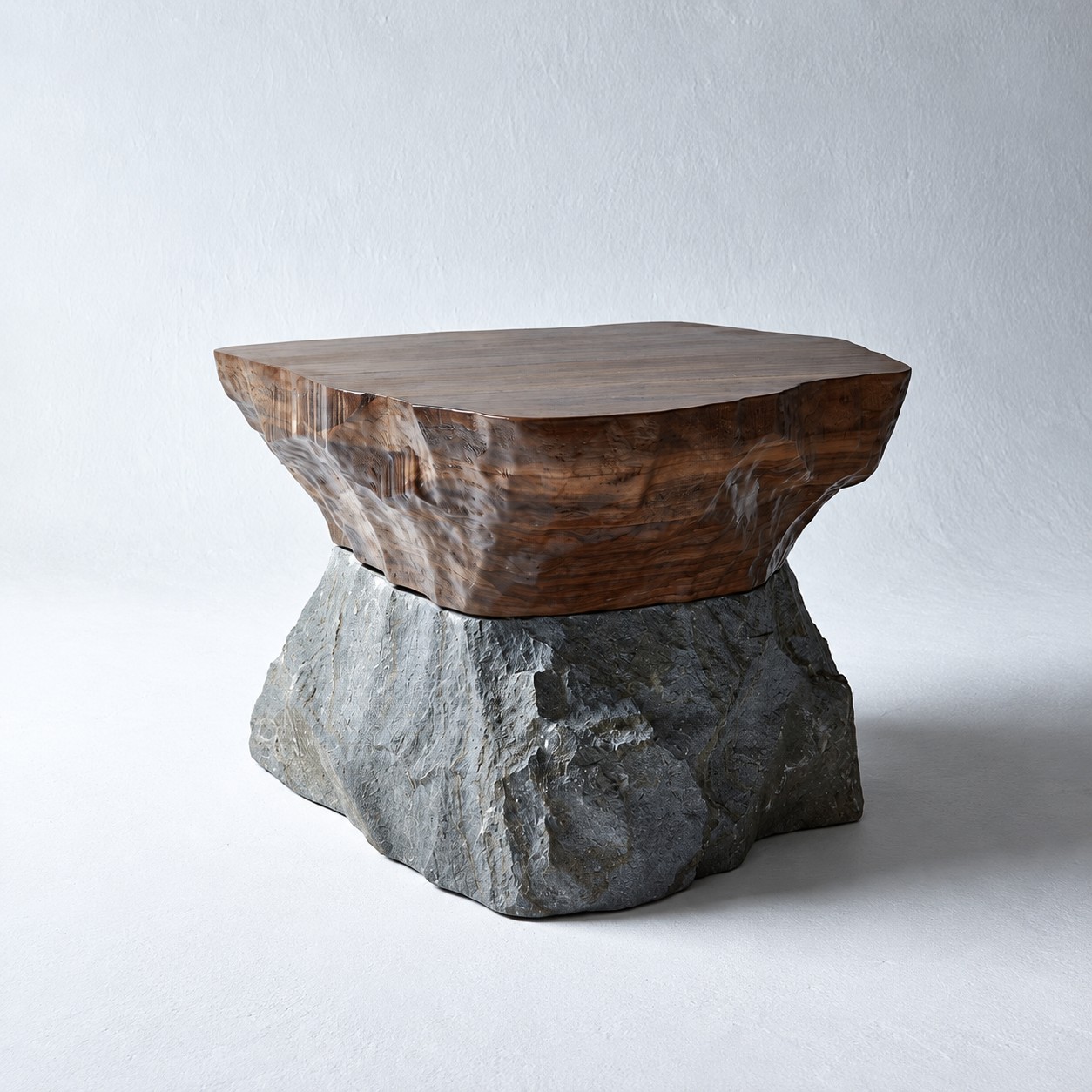
The natural stone below is left as it is, rugged up to its top. It is scanned with a 3D scanner and copied as a “wood stone” carved in walnut and set on top. The wood stone keeps the stone’s sides and relief, changing only its proportions to suit each stone. By digital geuraengi—overlapping the copy with the original and subtracting the overlap—the line where the two stones meet is not flat but winds along the stone’s curves. The wooden top stays rugged like stone, yet comfortable to sit on. The series extends from the Stool to the Coffee Table, Long Table and Short Table, whose tops are carved flat. The Short Table stands on a single stone leg; the Long Table sets a vast wooden capstone on two stone legs, taking the form of the dolmen—a symbol of wealth and power.
* The photographs are visualizations of the planned works (Stool, Coffee Table, Long Table, Short Table); the process film and 3D view use an illustrative virtual stone model.
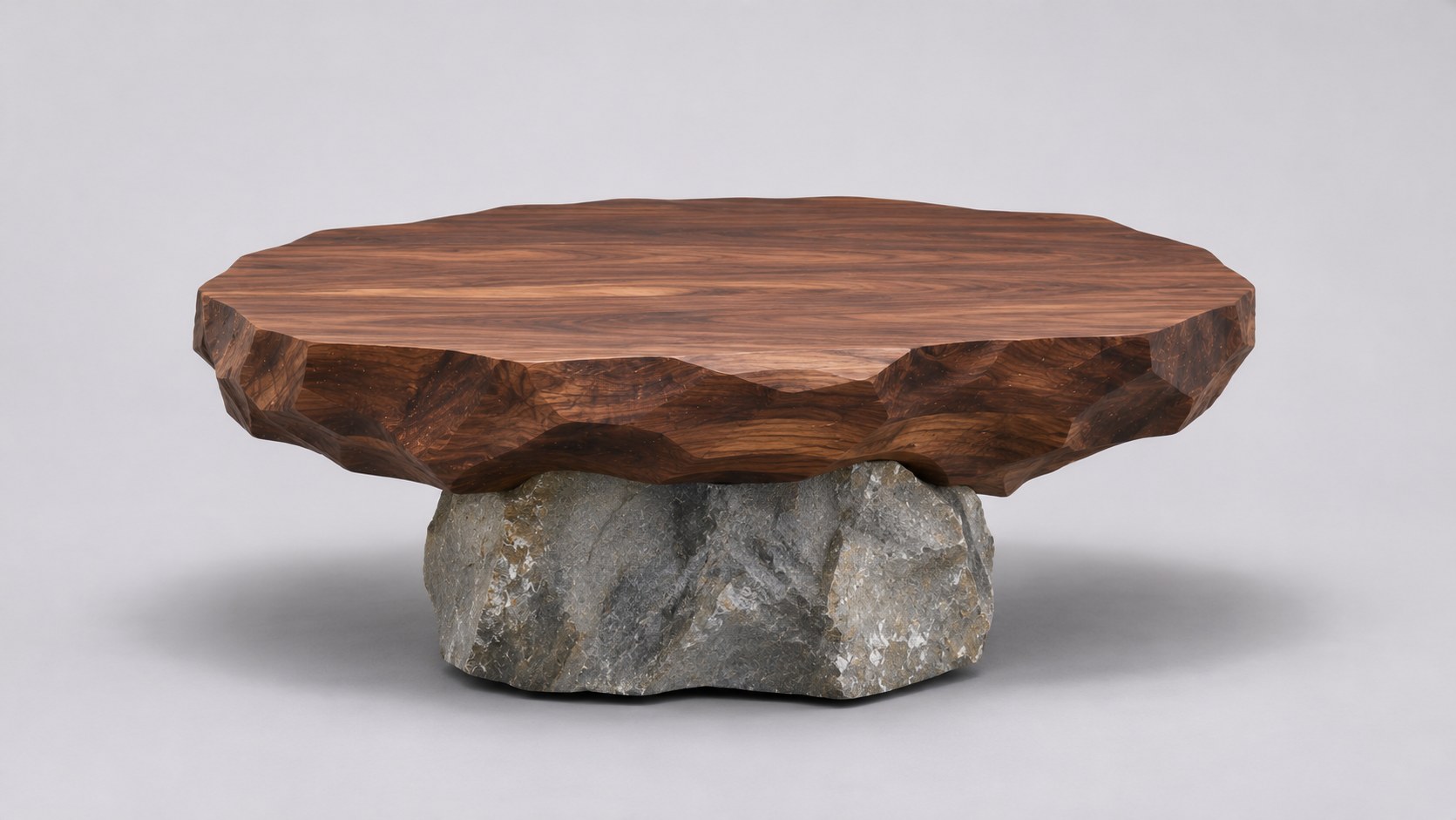
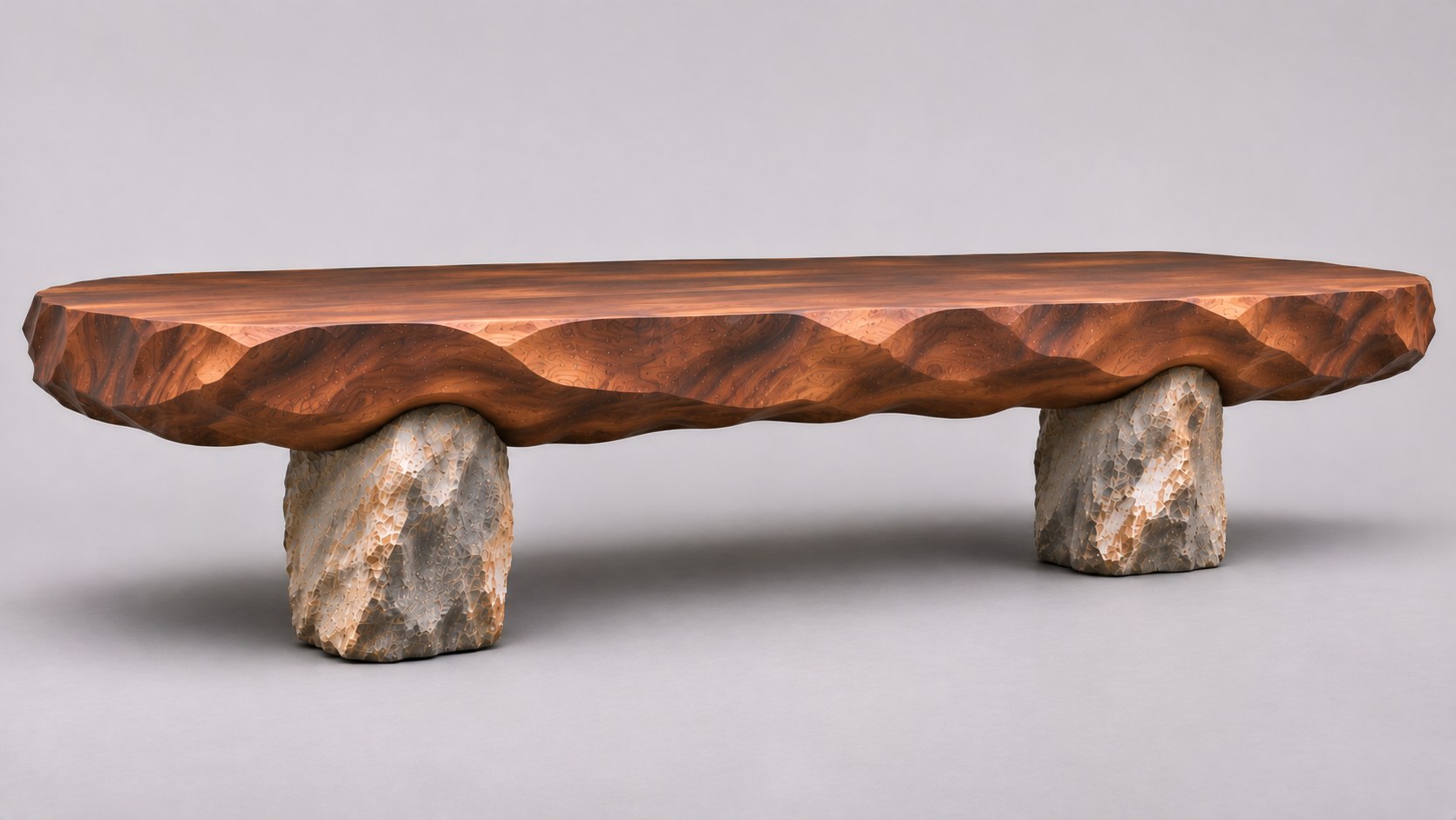
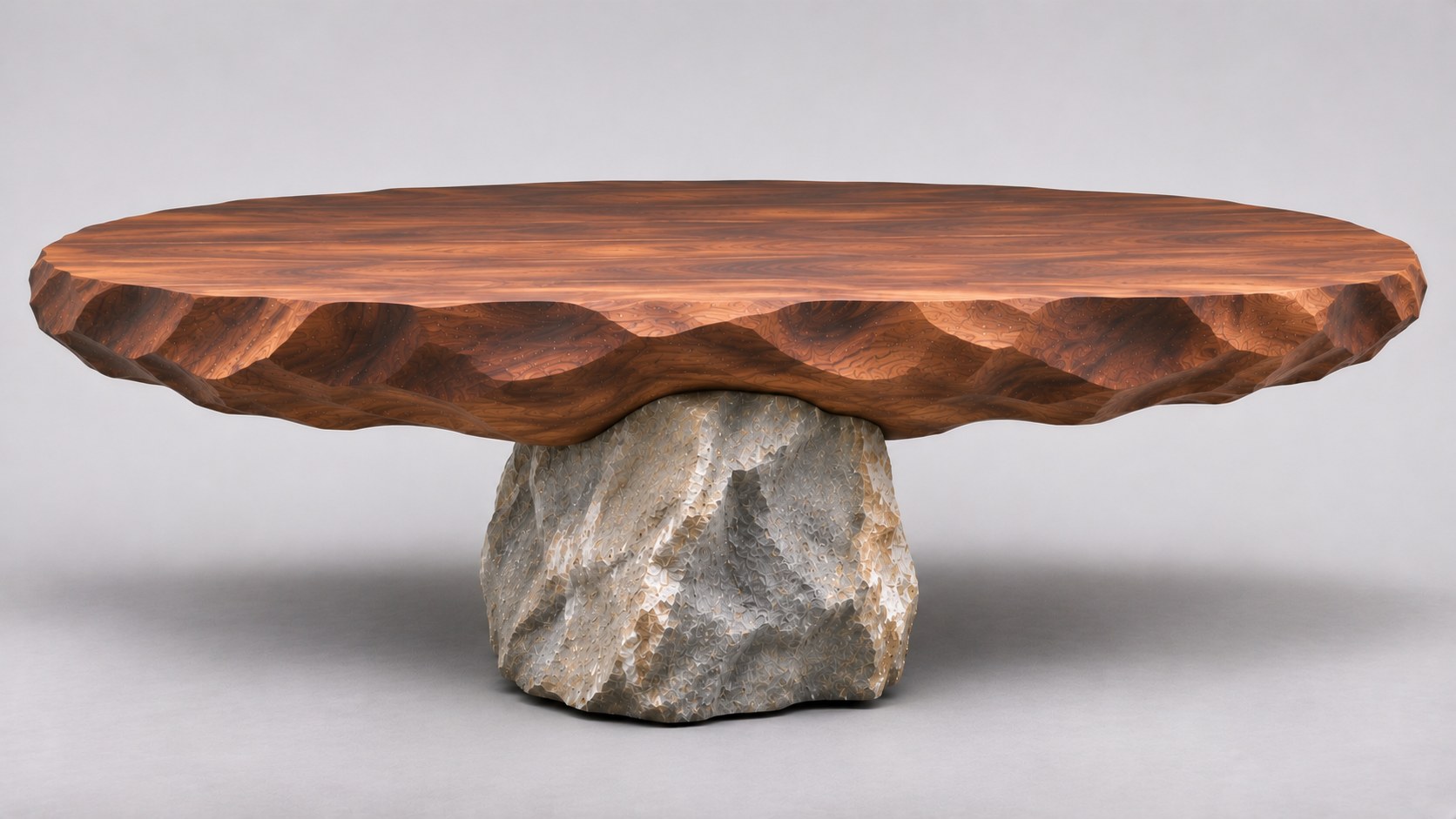
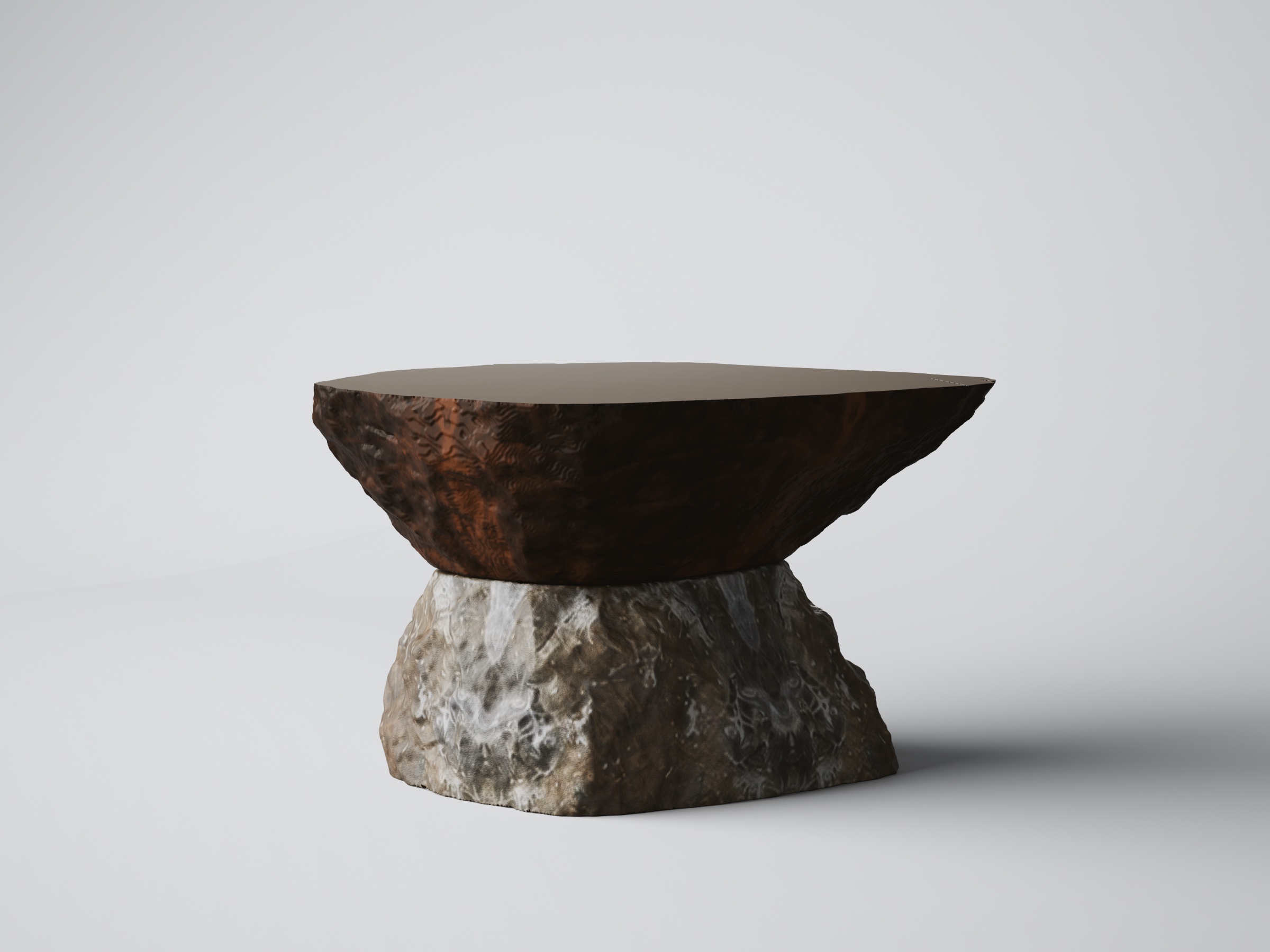
A natural stone is scanned into digital data; the AI “Jabee”* refined the scan, then replicated, mirrored and transformed the data of the lower natural stone to shape the walnut seat above—reflecting on the value between original and reproduction, and carrying wishes for good fortune inspired by the folk practice of dol seonang.
* Jabee: the name of the AI currently collaborating with Gunsoo Kim.


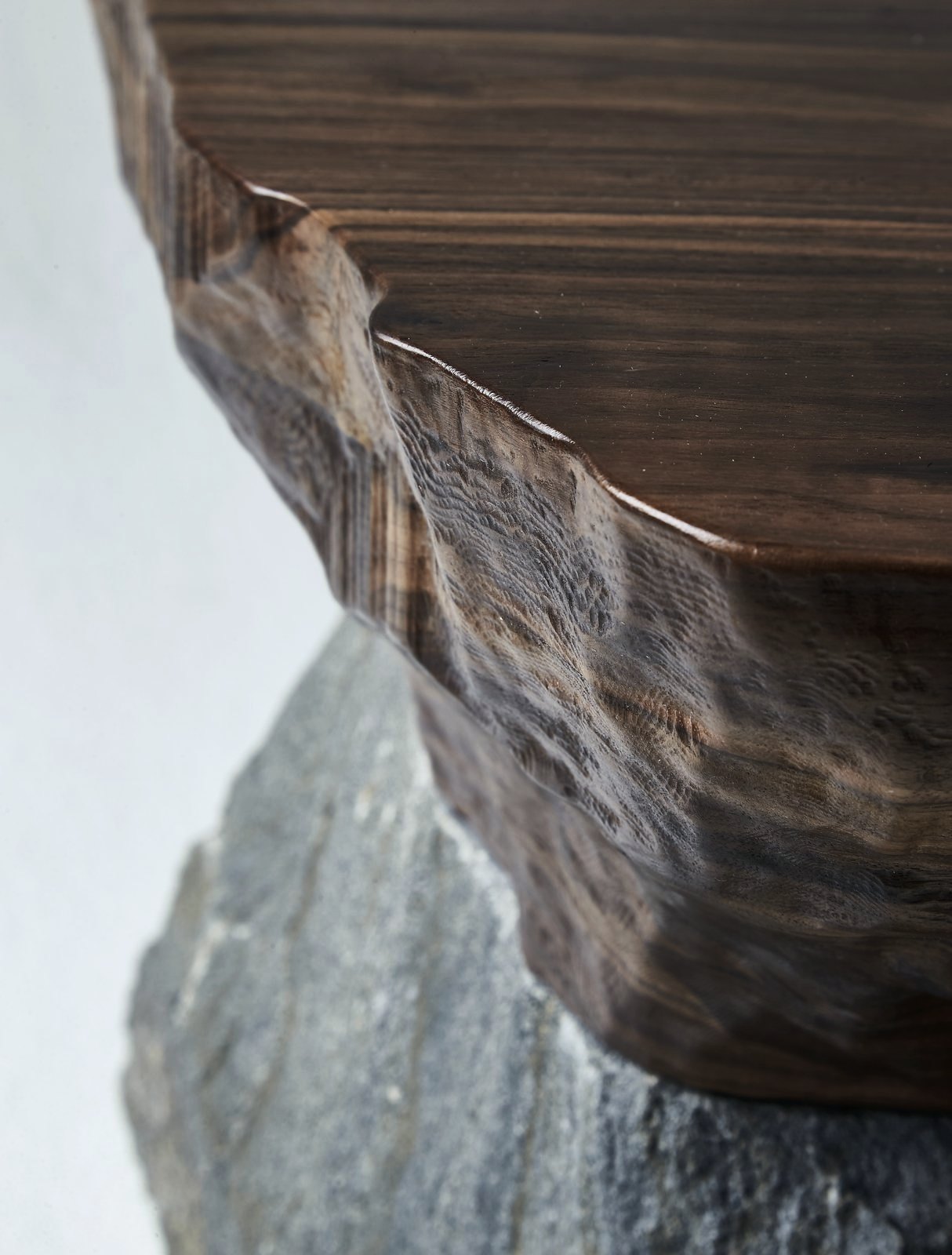
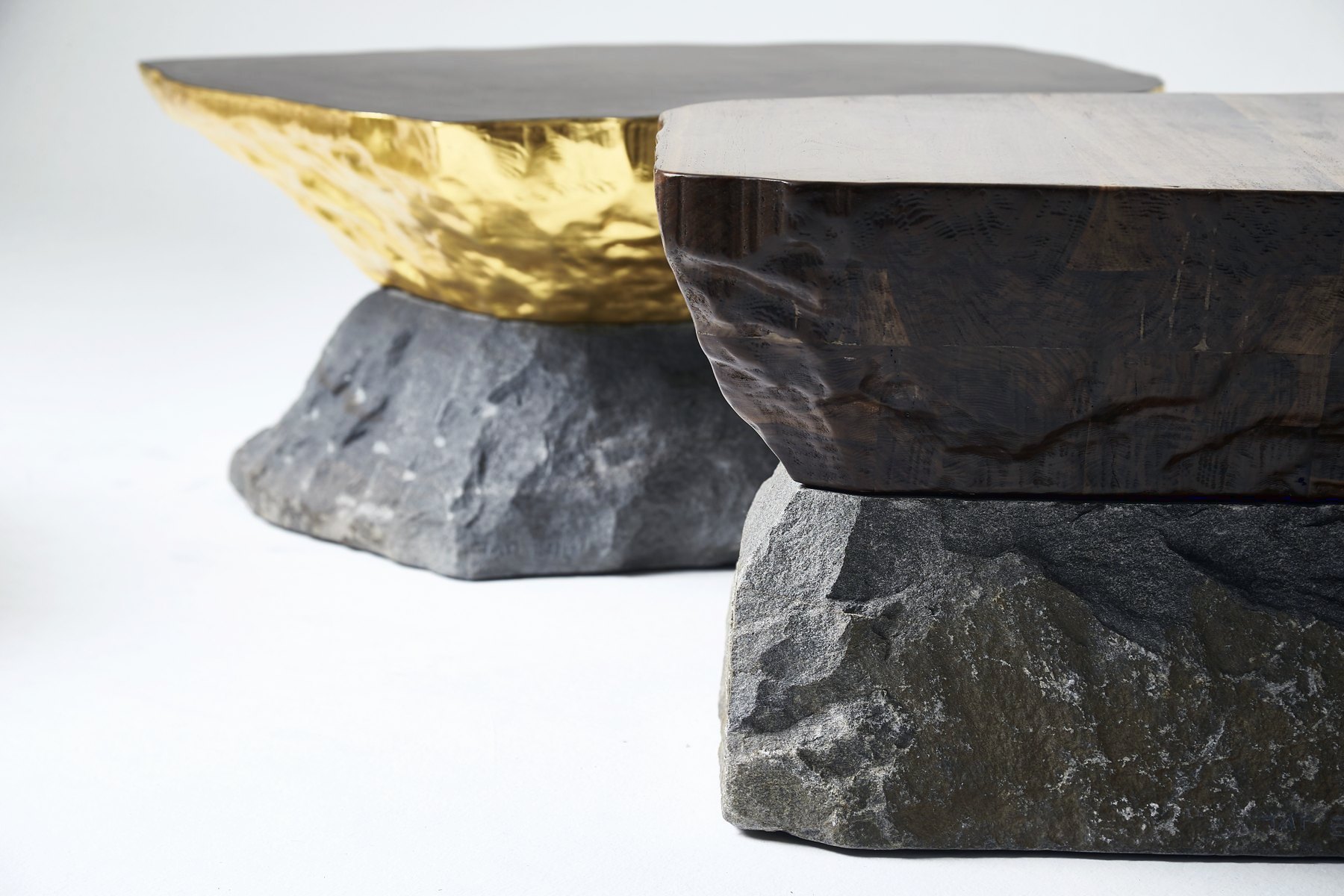

From choosing stone at the quarry to CNC-carving walnut to the scanned form of each stone and joining the two—the making of the Wood Series shown at La Triennale di Milano, 2018.
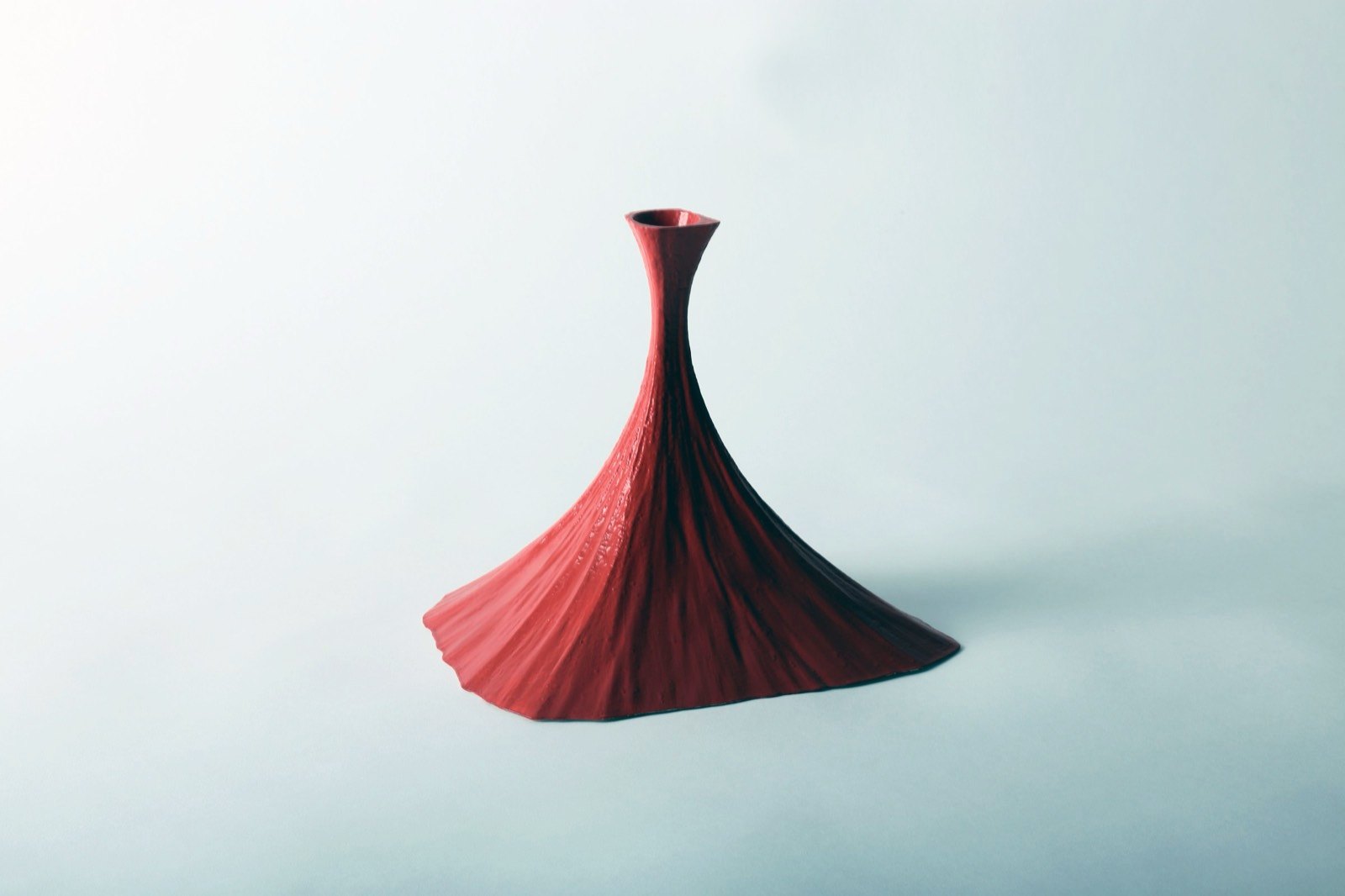
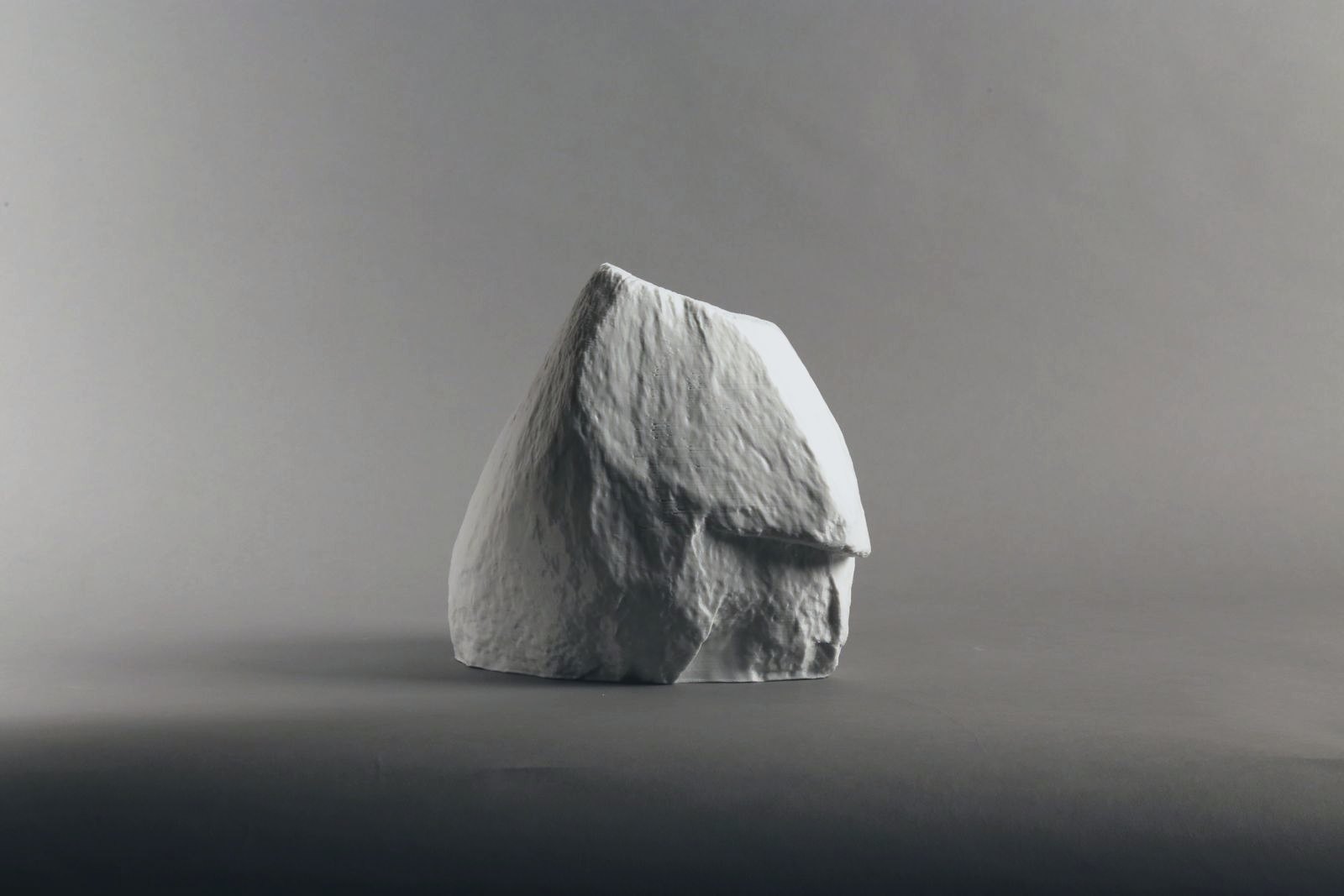
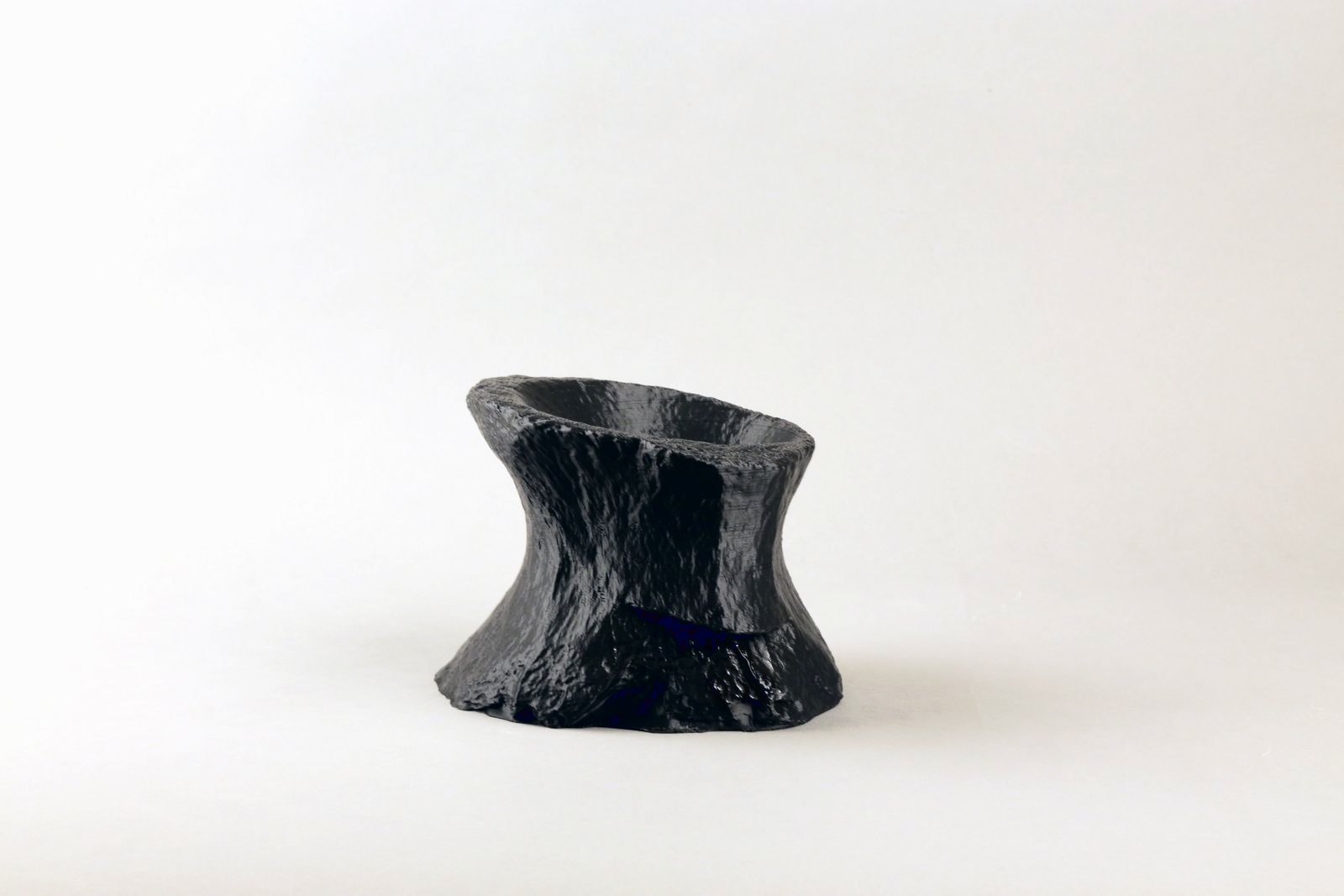
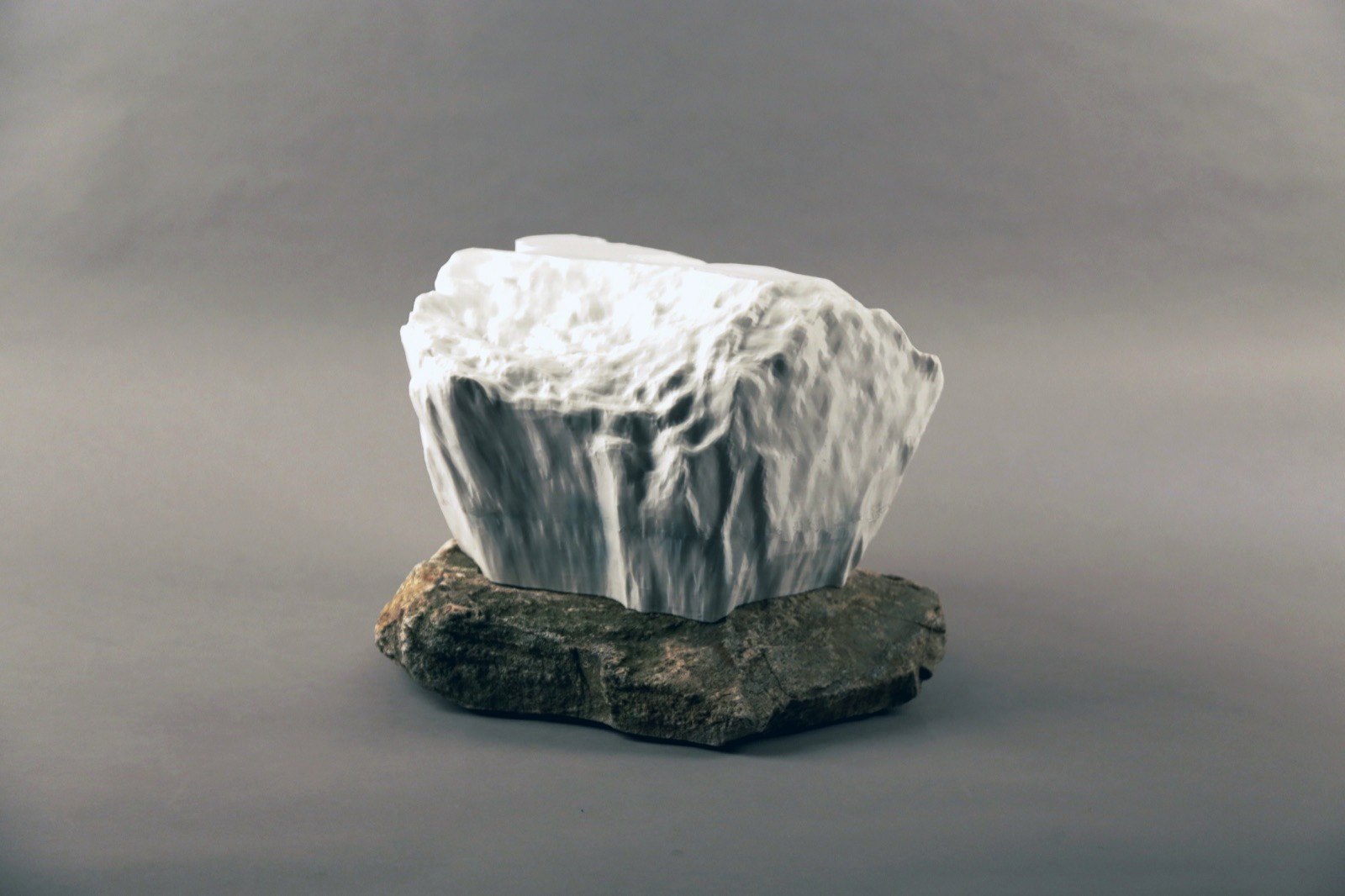
Desk objects in which virtual forms are materialized through 3D scanning and printing. They look like stone but are not—a deliberate cognitive error that offers visual surprise, exploring how a digital copy gains a value of its own.
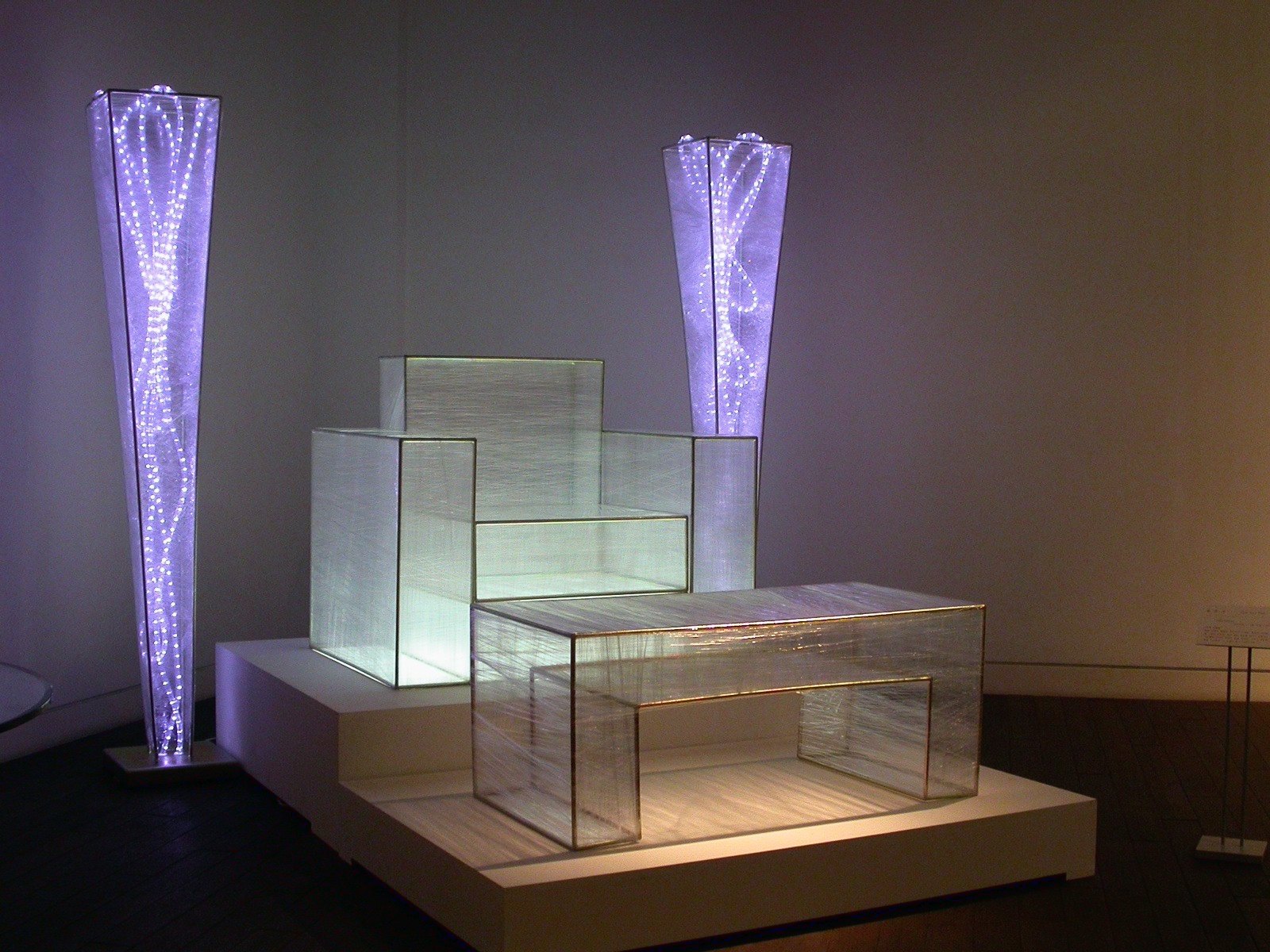
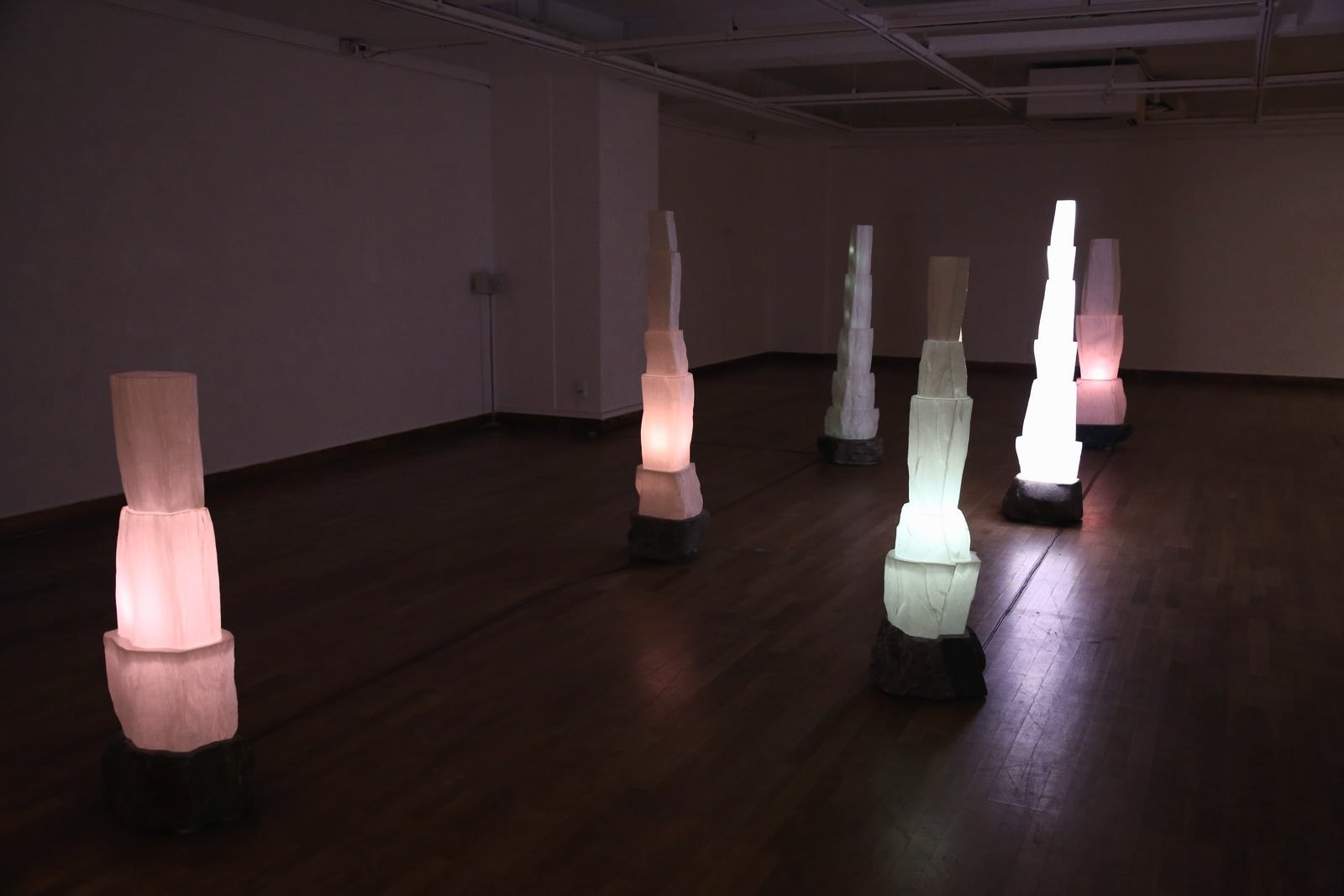
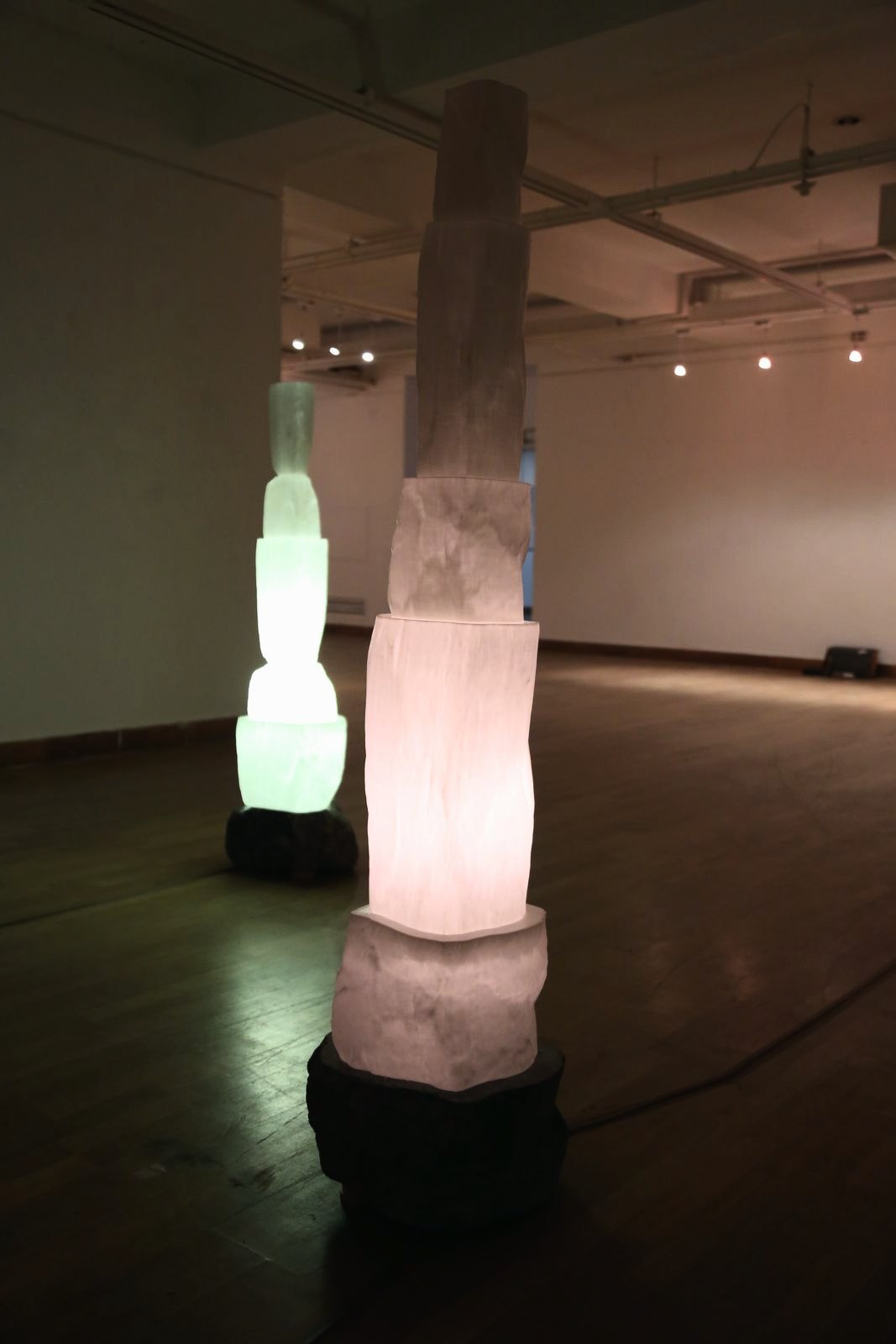
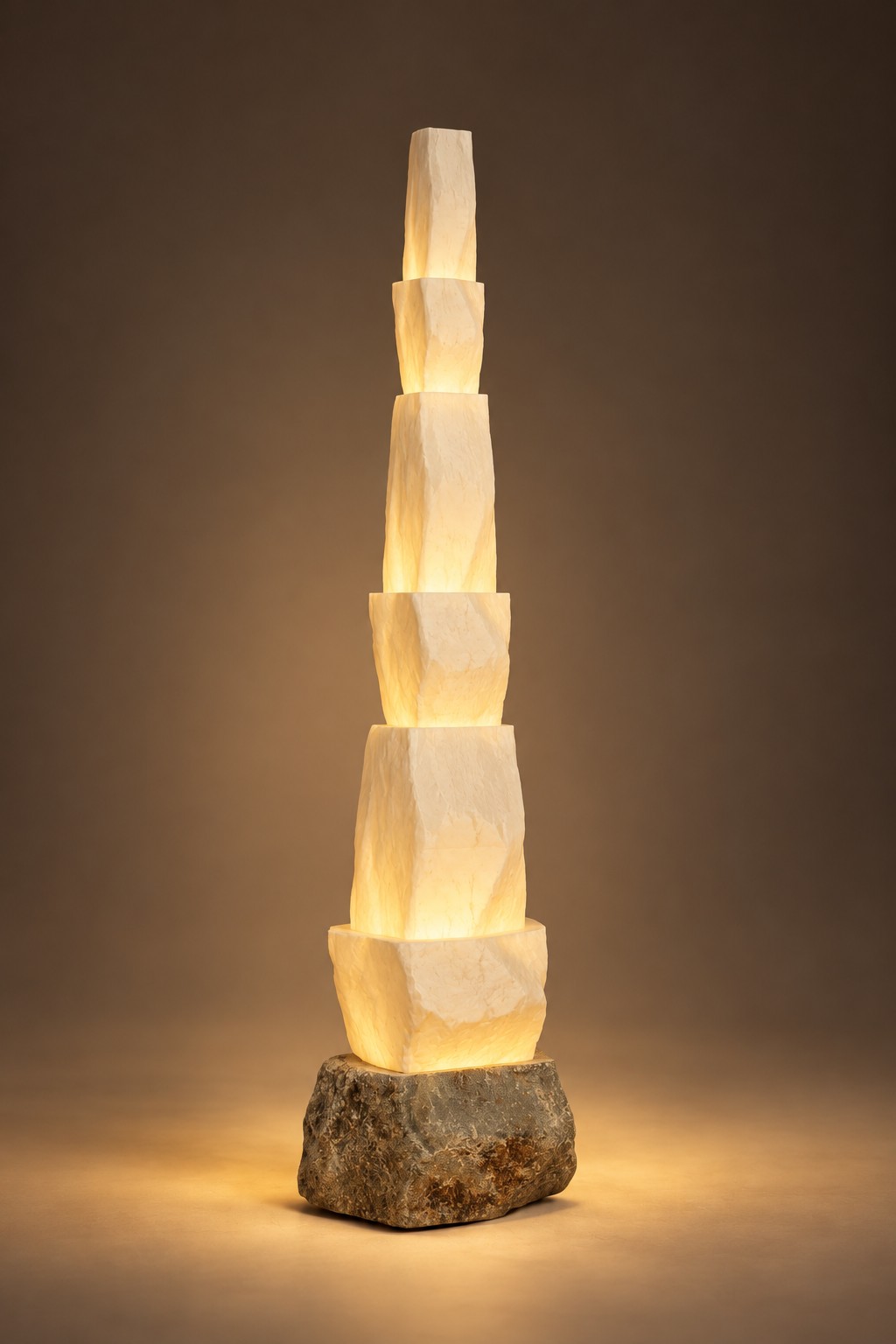
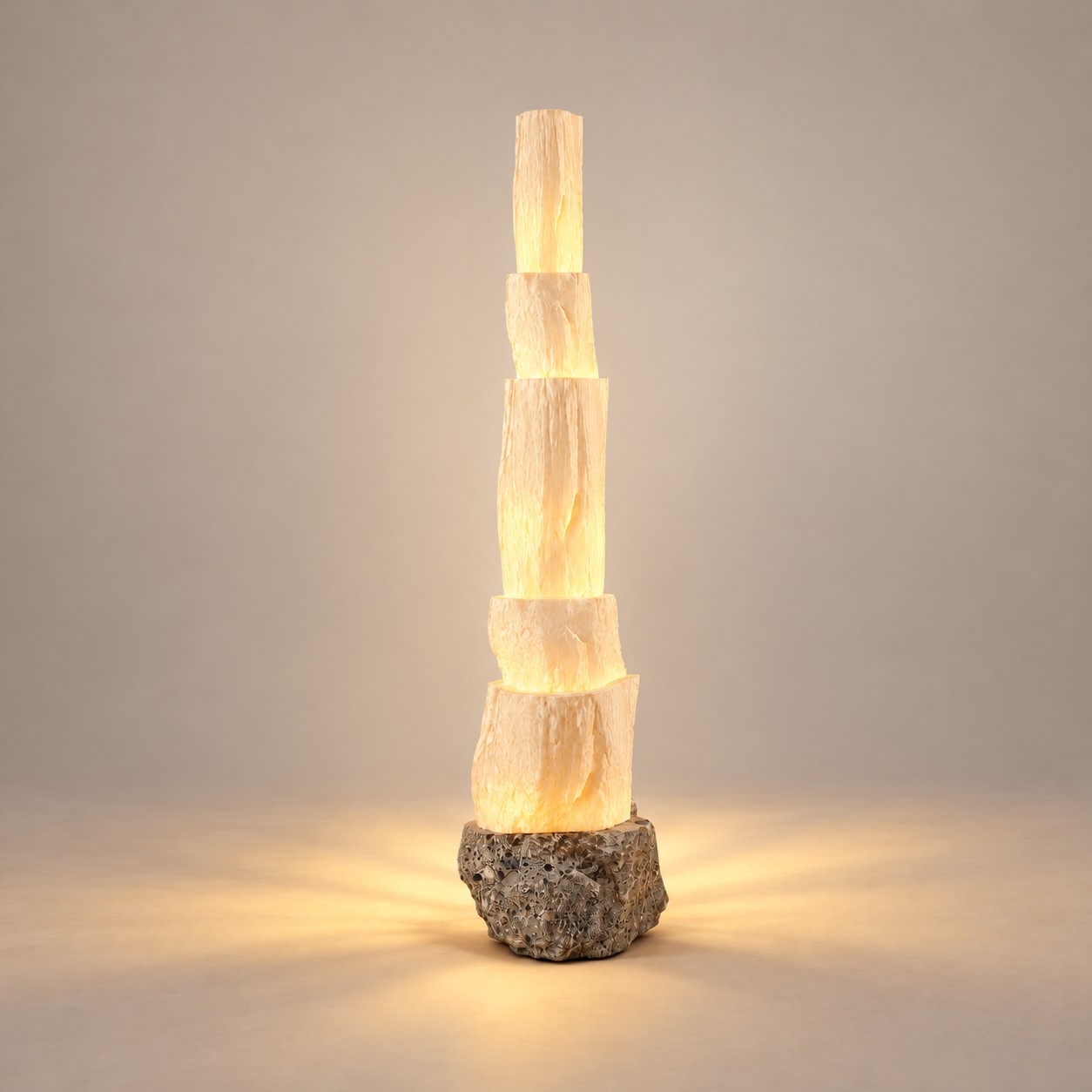
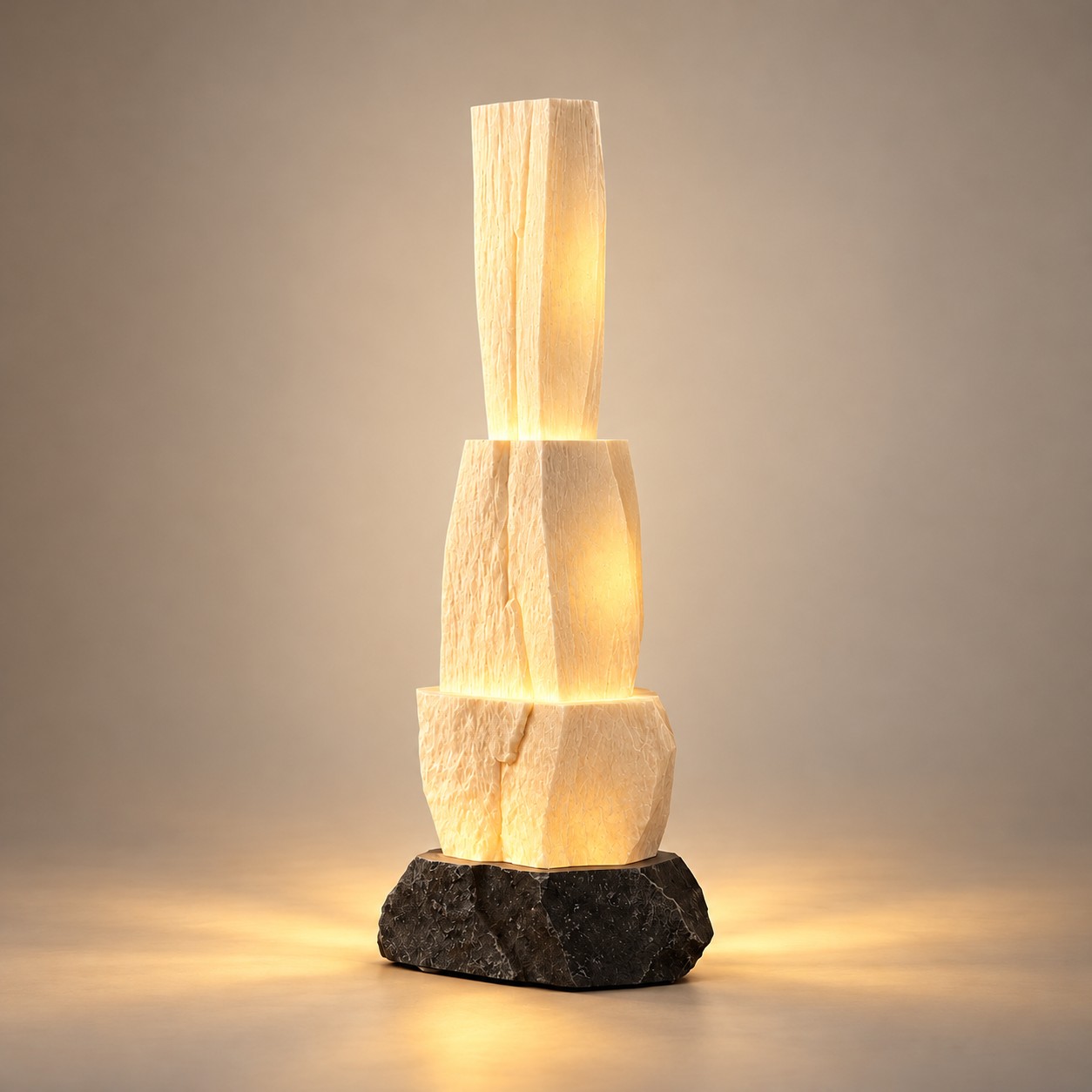
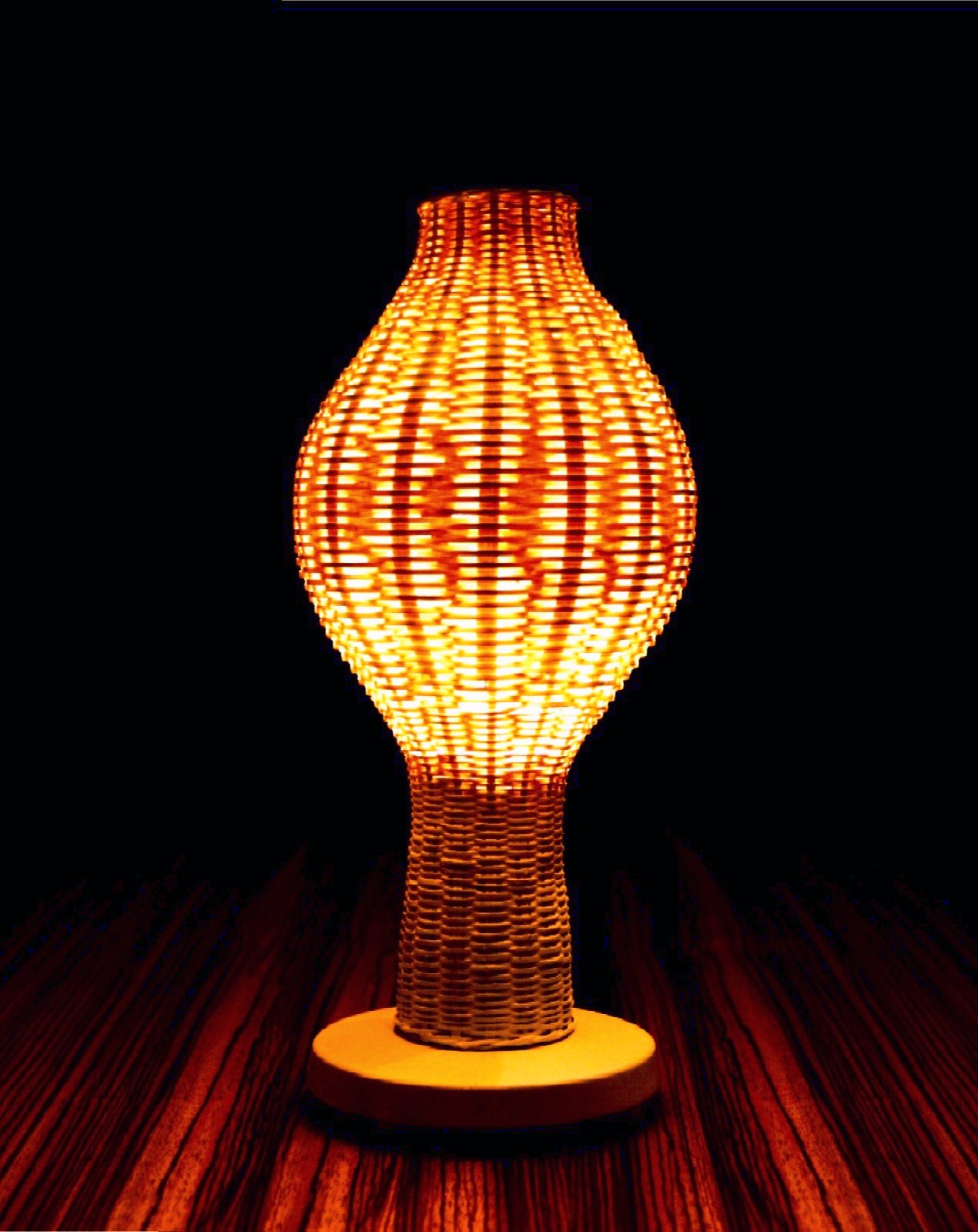
Seven gold and silver works and two stone-pagoda lights from the doctoral exhibition another Stone and Stone (HoMA Seoul, 2016), and the three works shown at La Triennale di Milano in 2018 (Constancy and Change in Korean Craft).
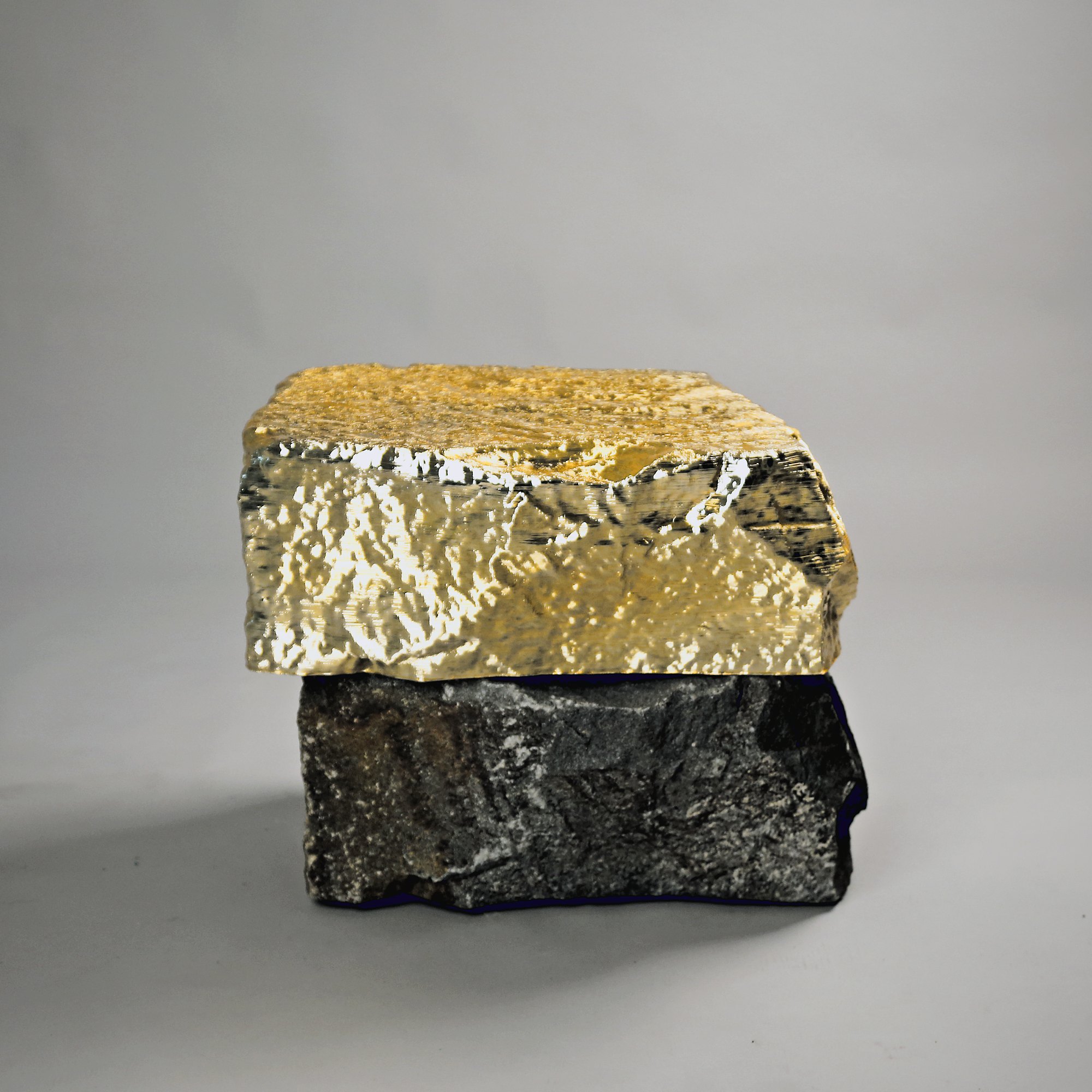
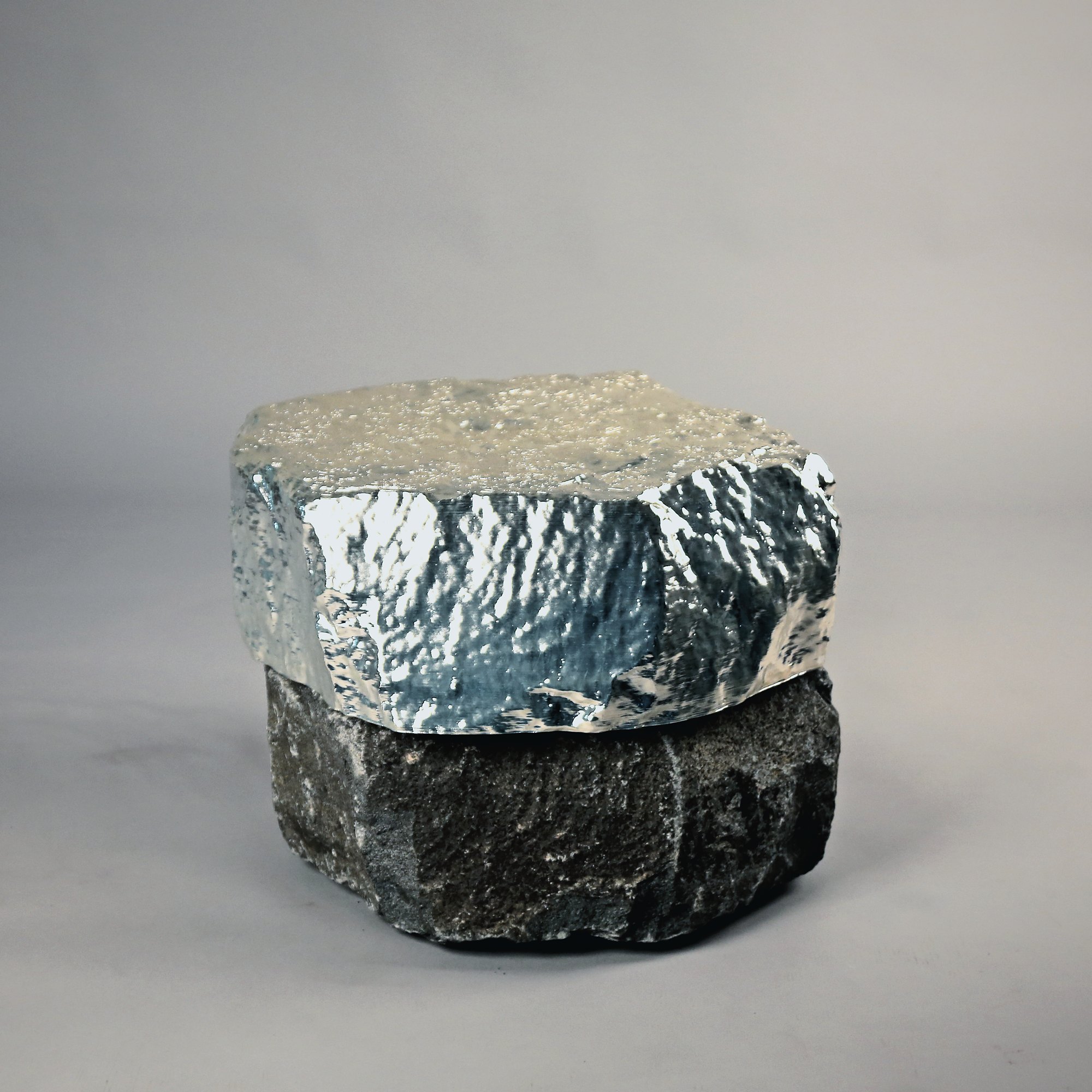
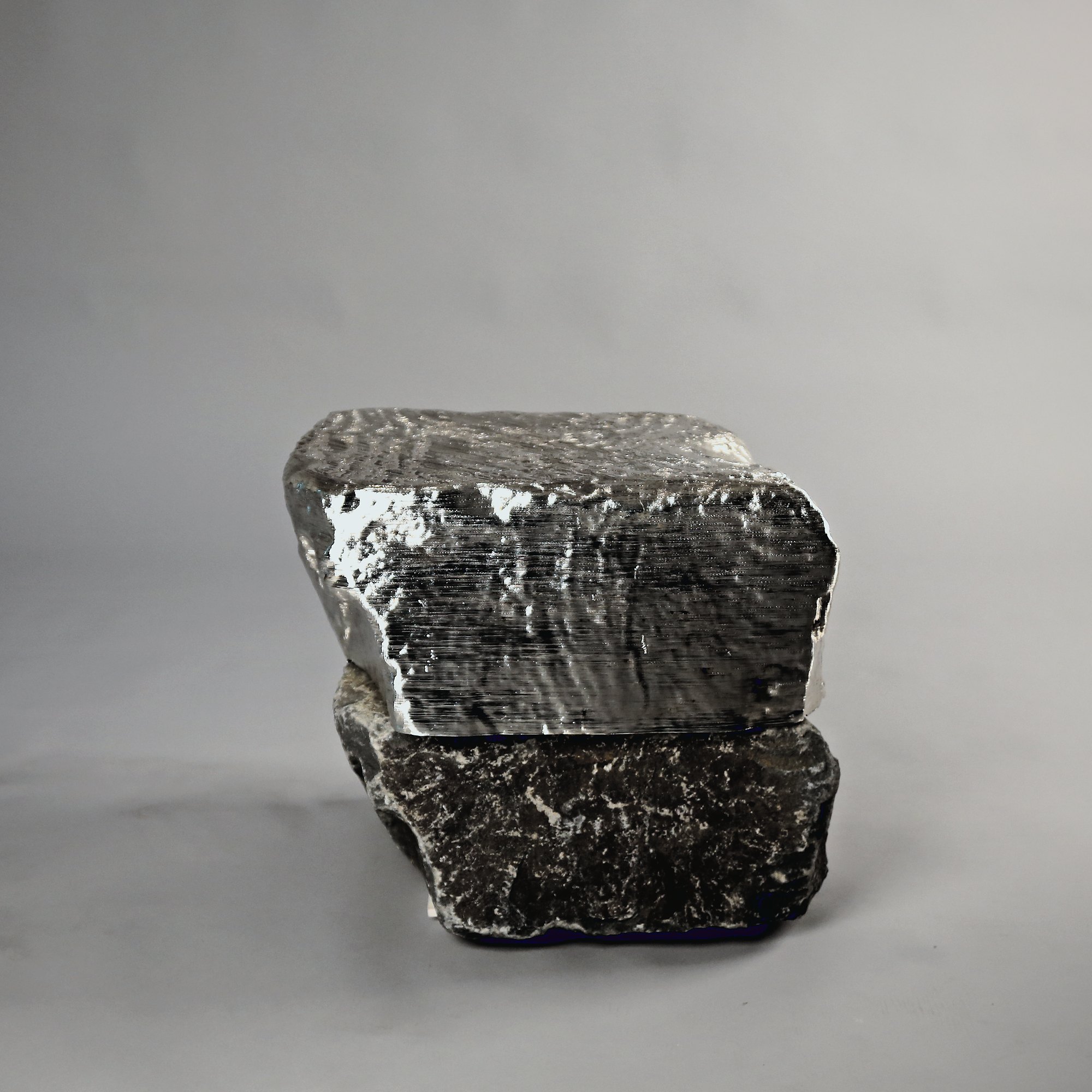
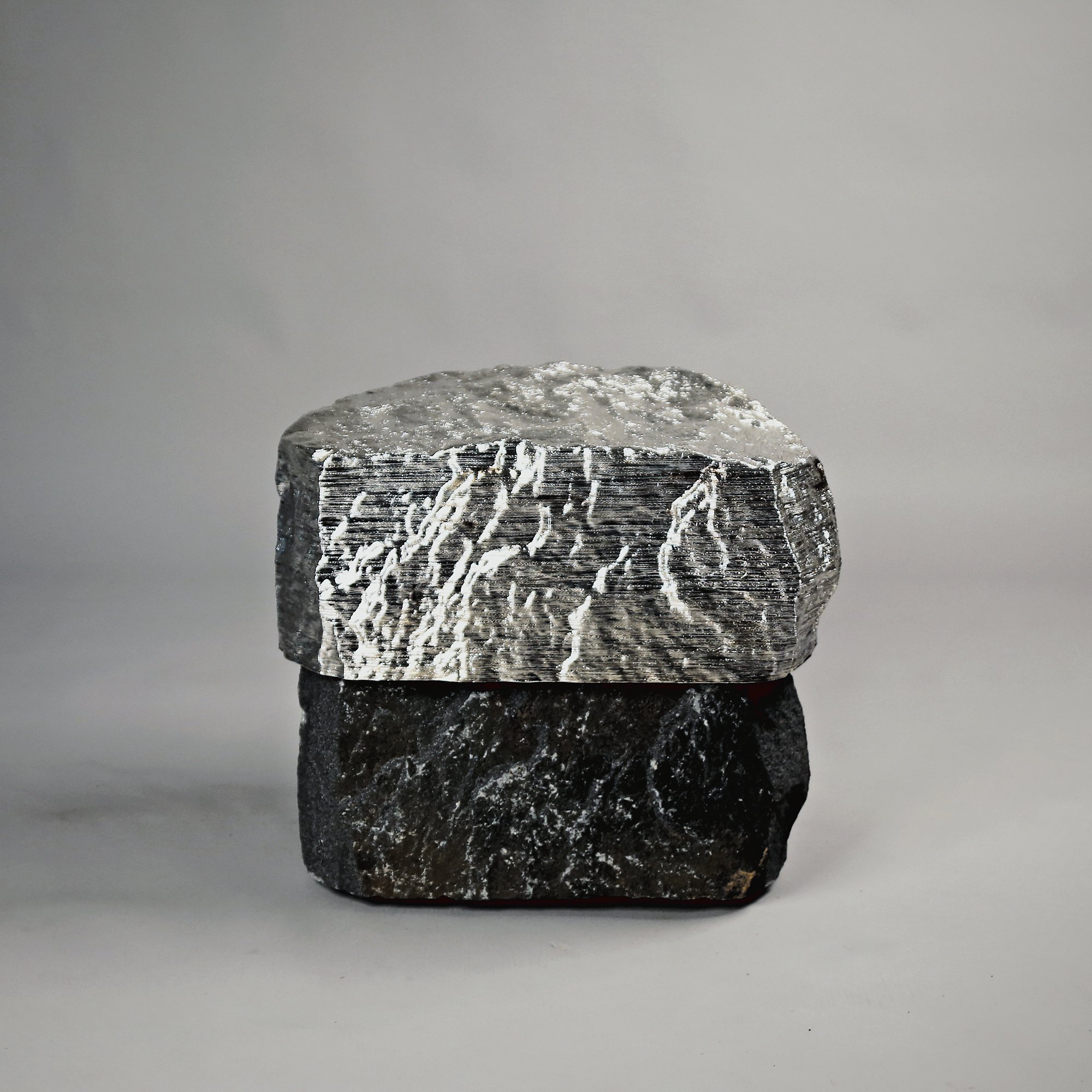
Drag to browse. 3D-printed PLA objects finished in natural paint.

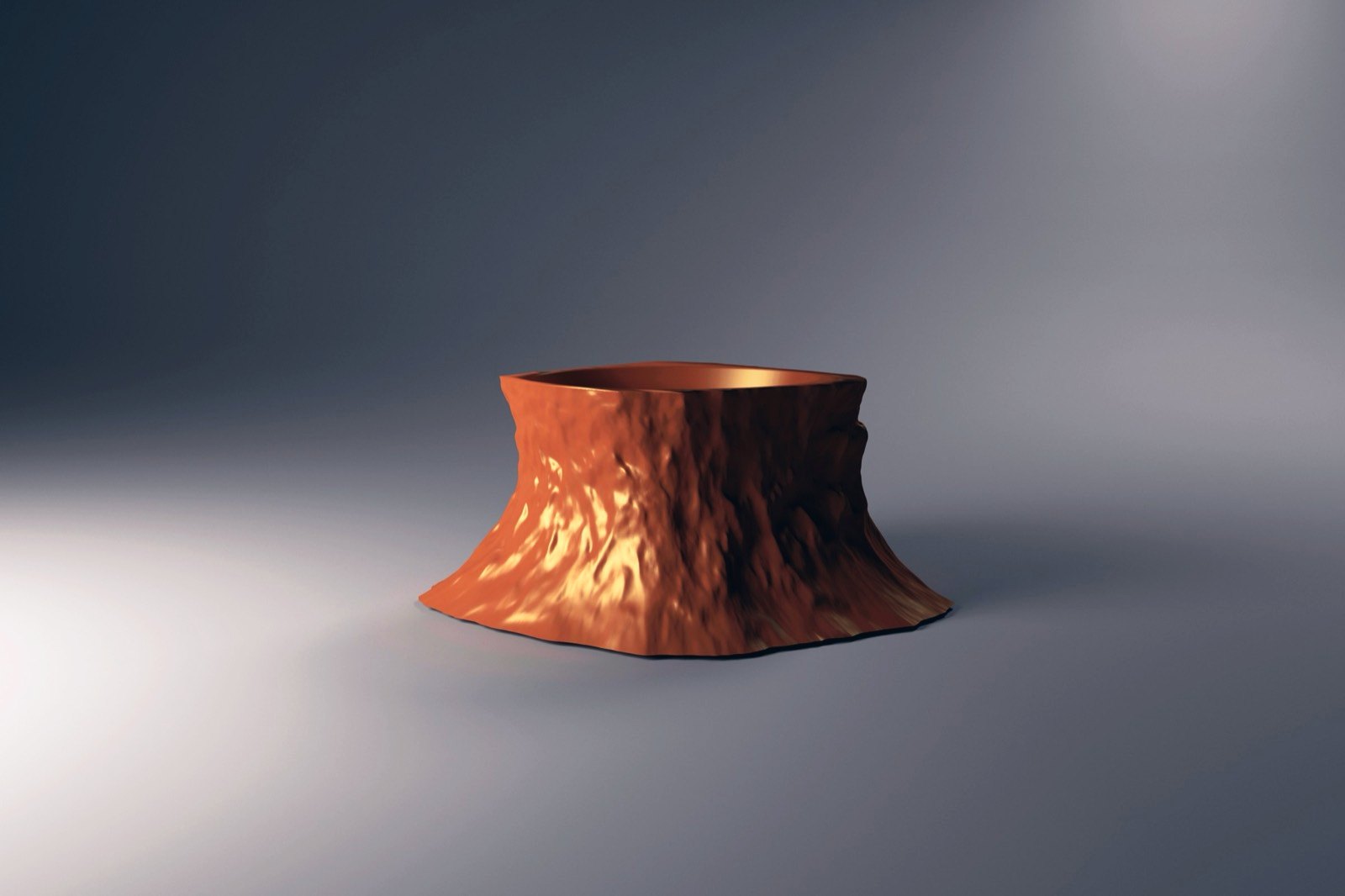
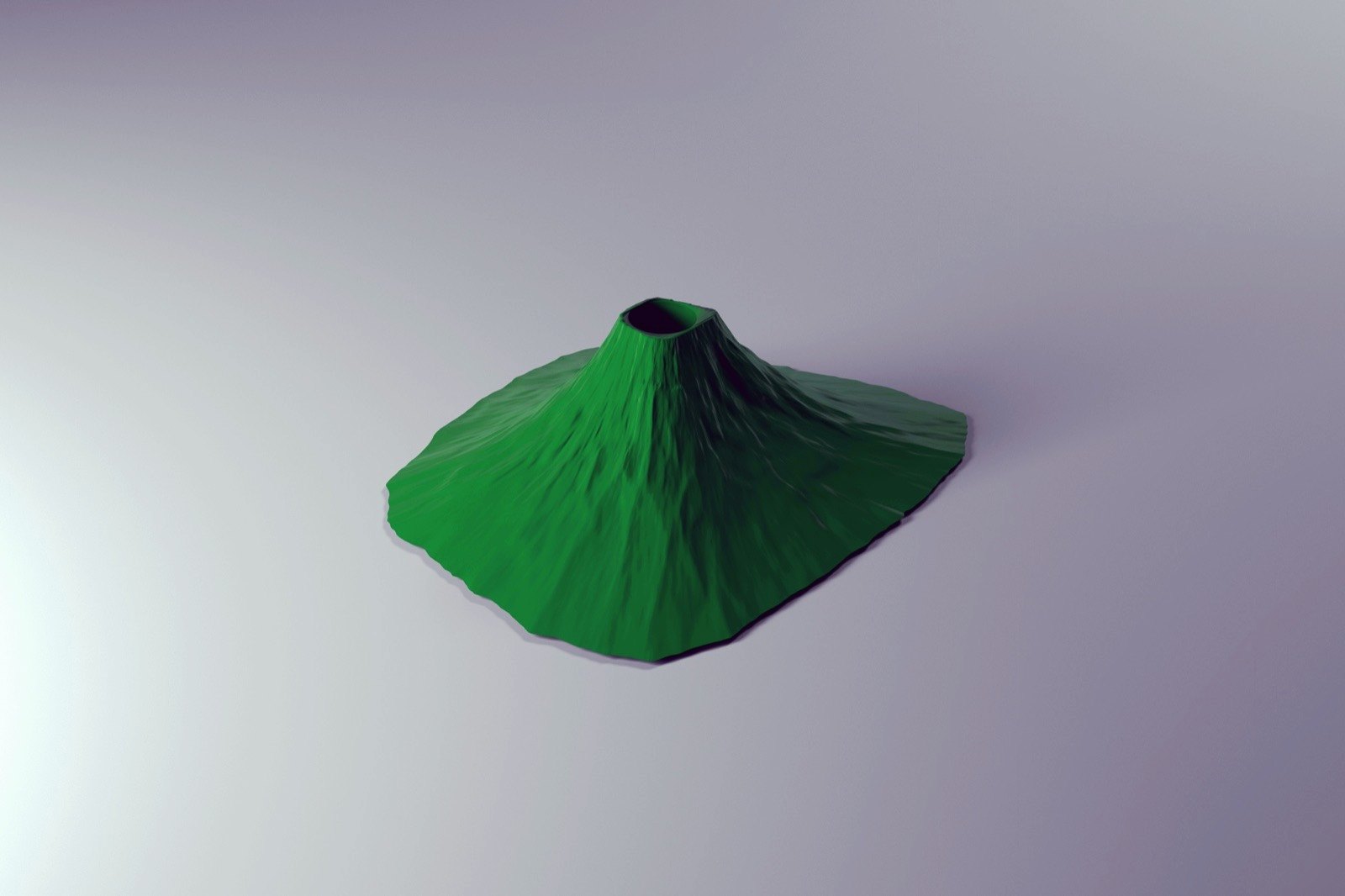
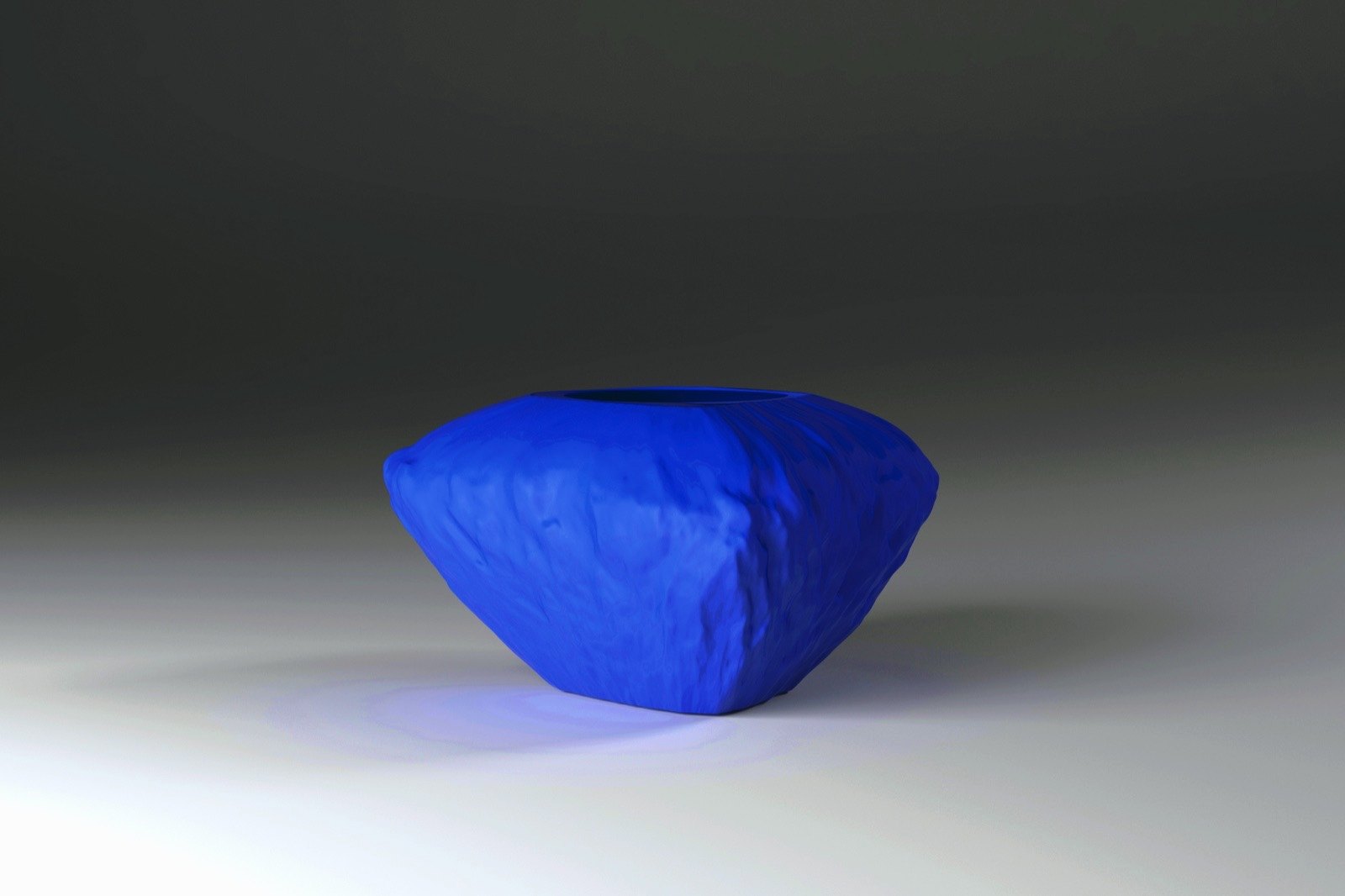
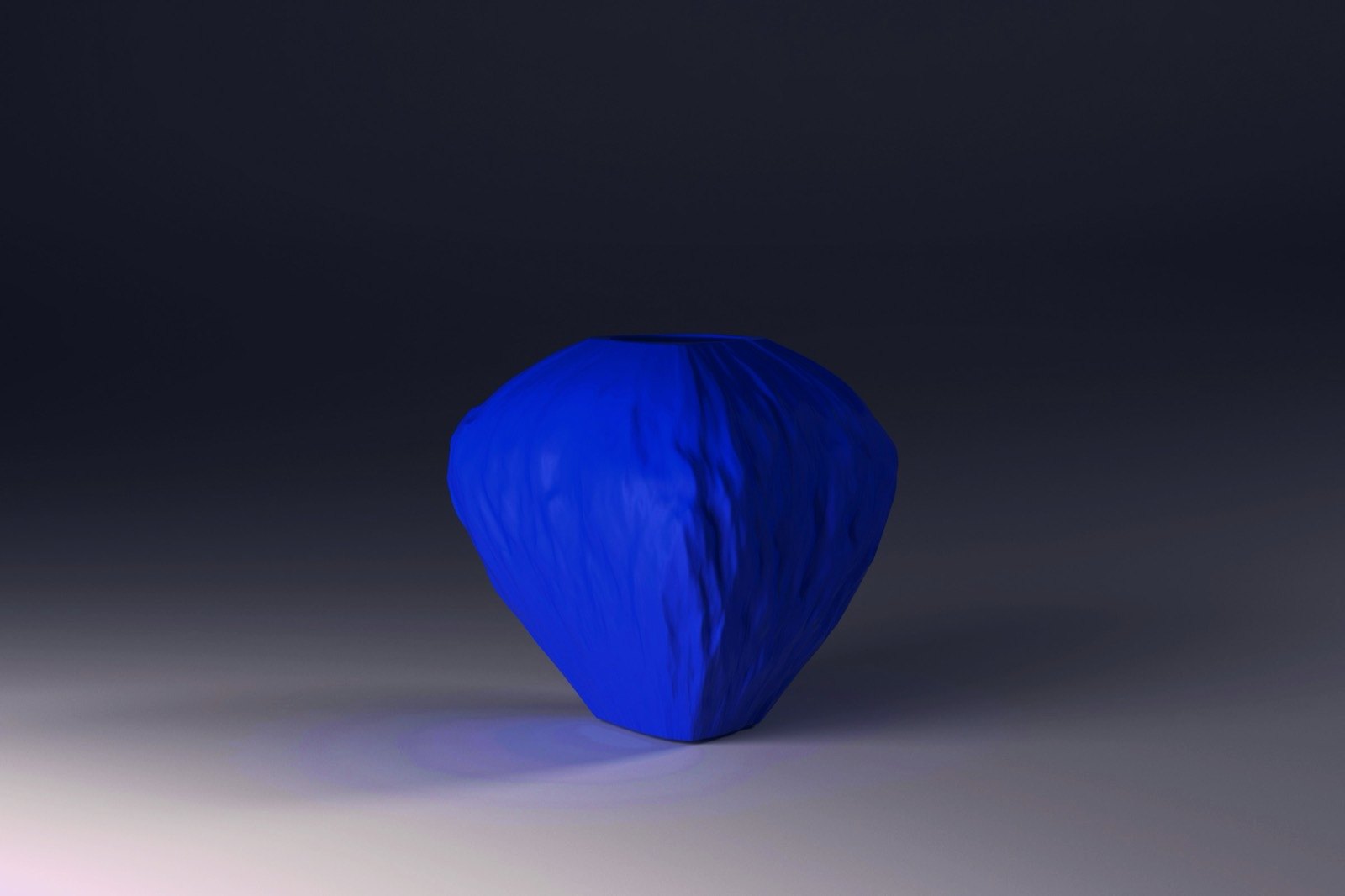
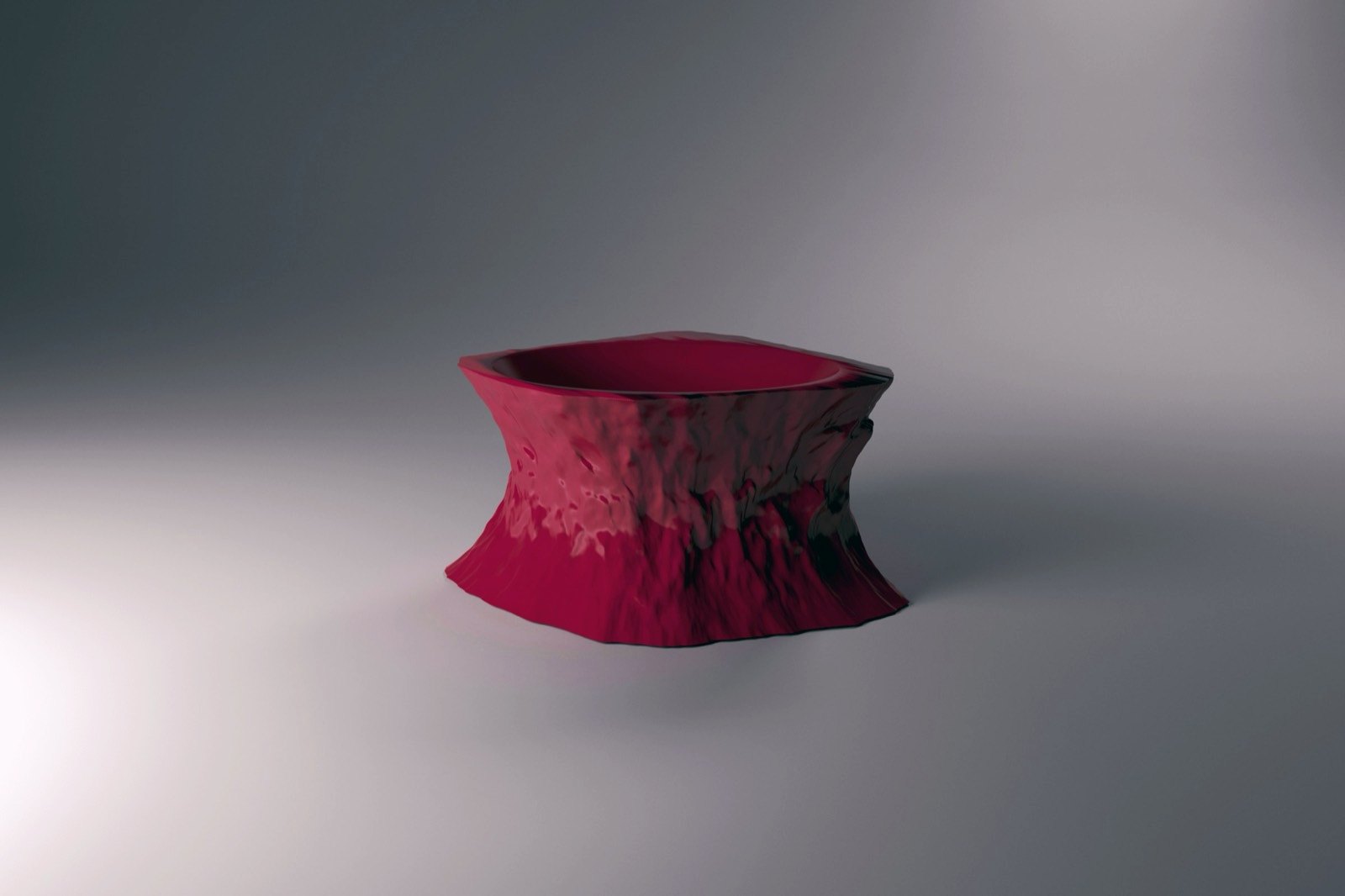


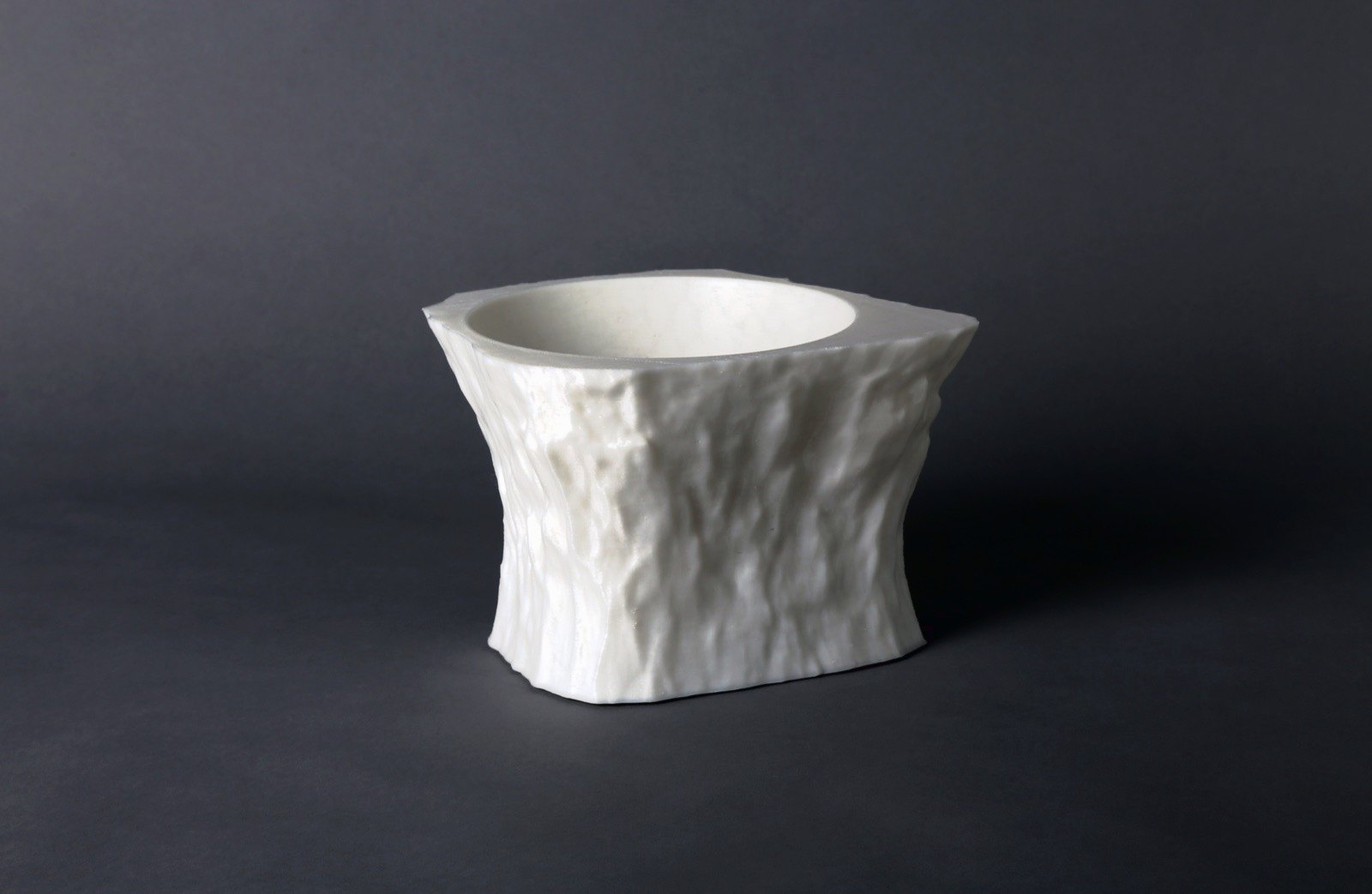
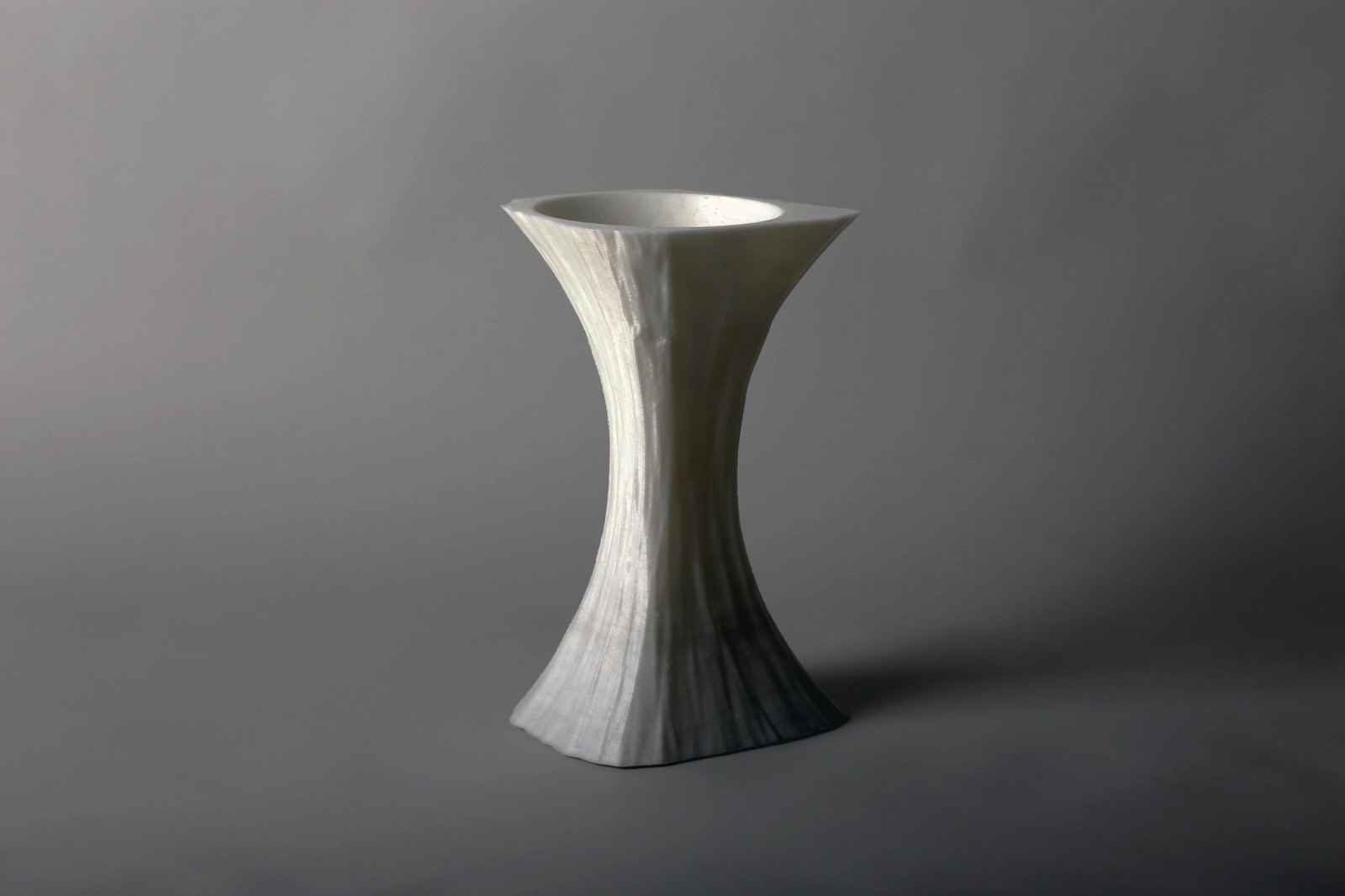
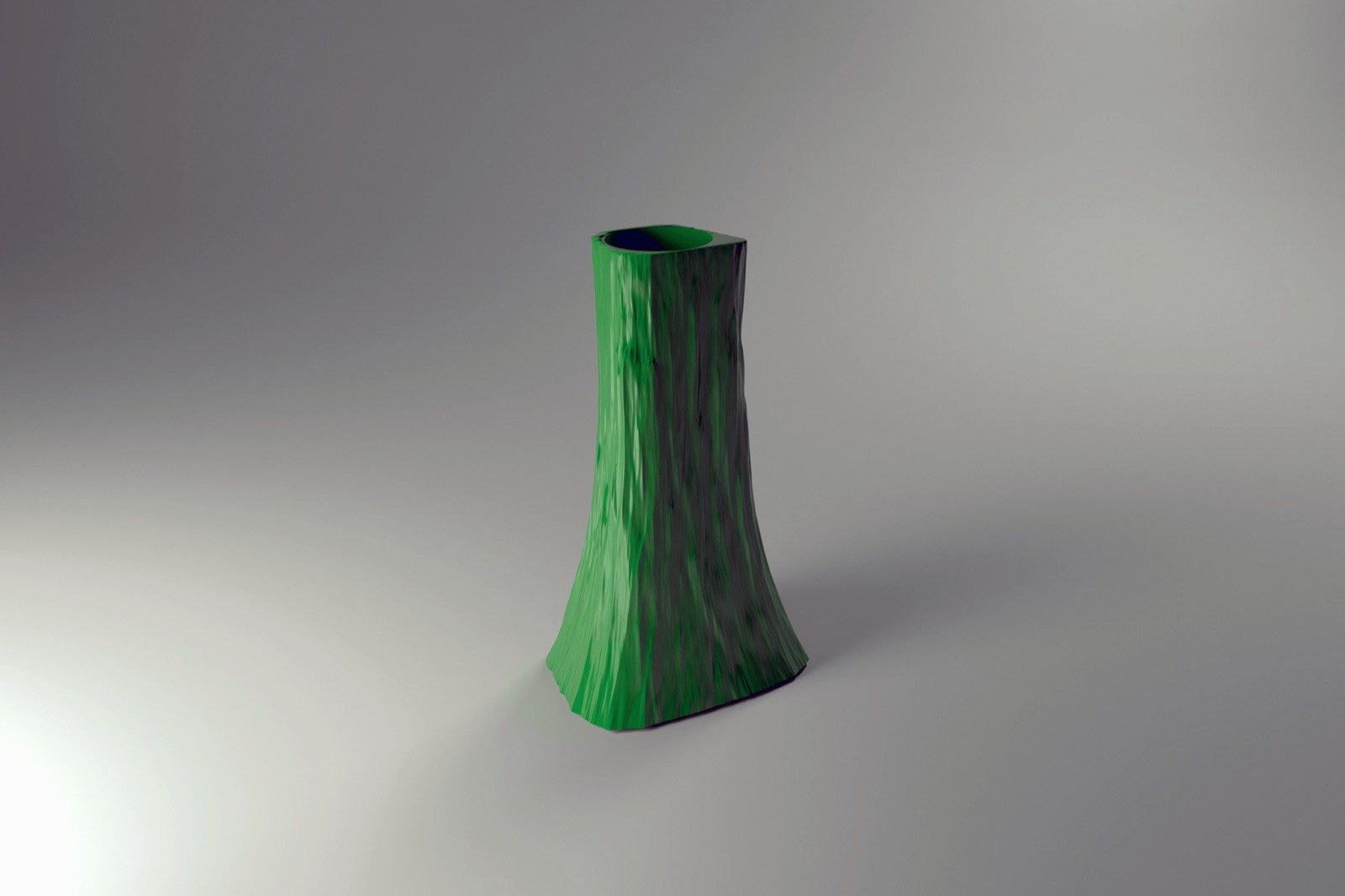
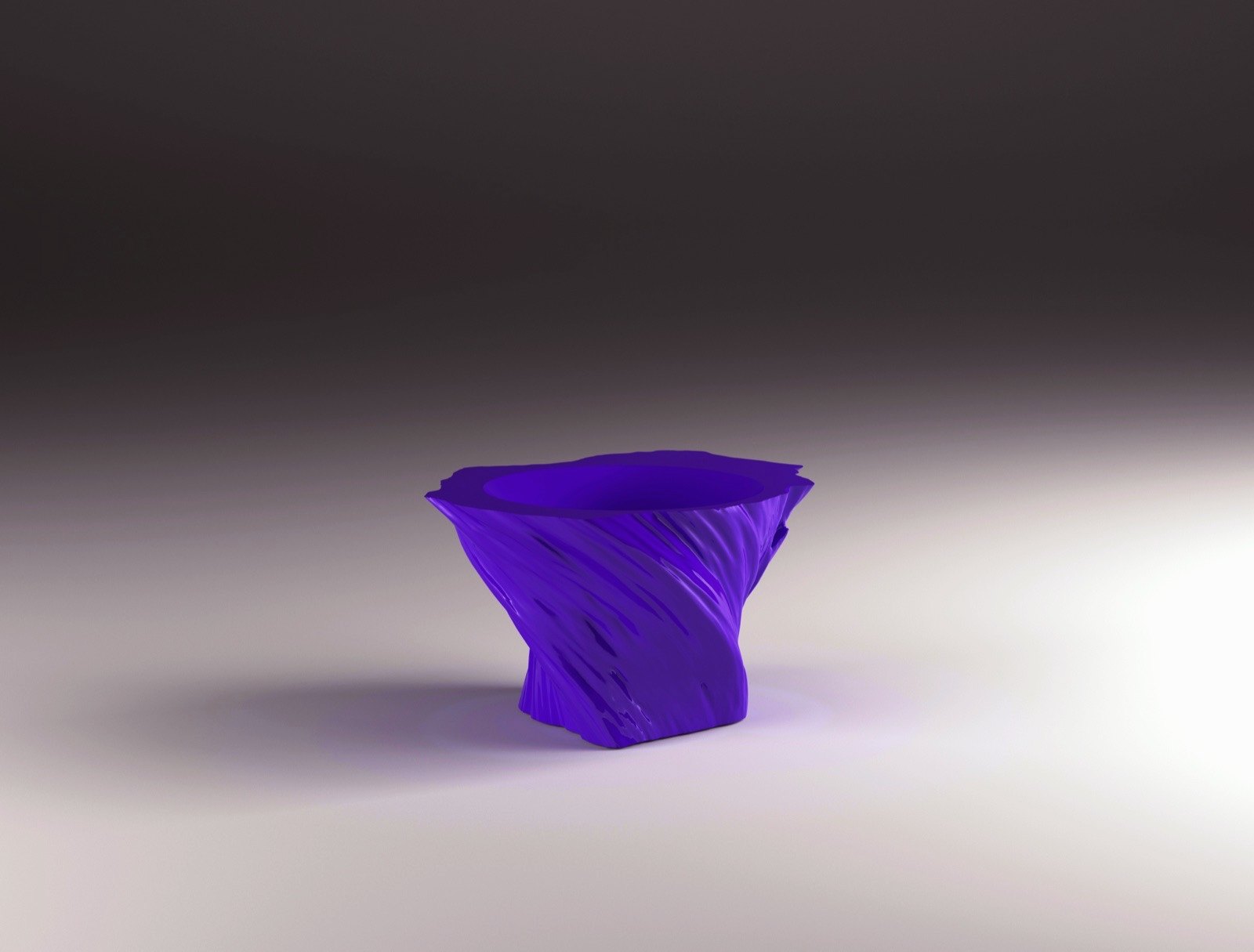

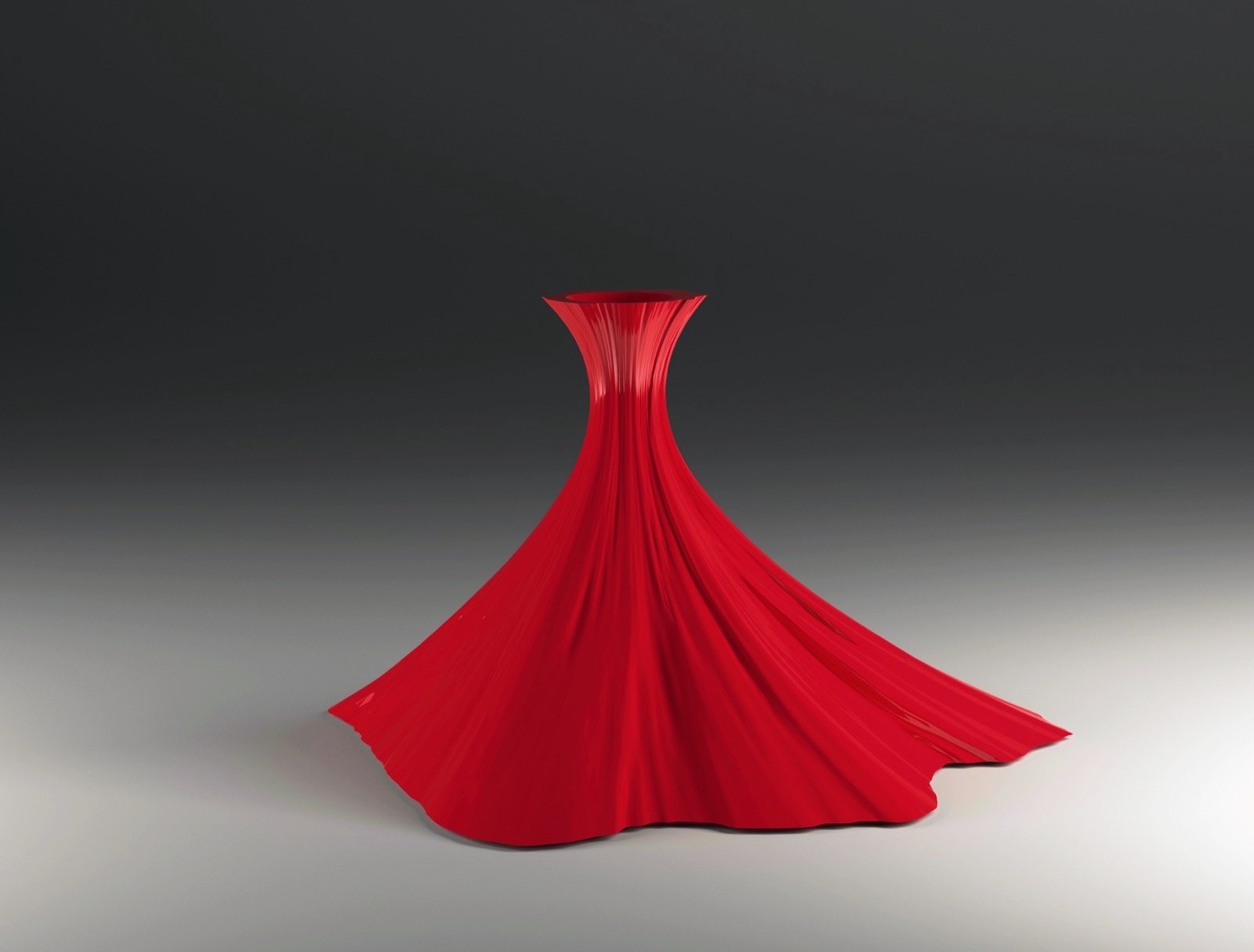
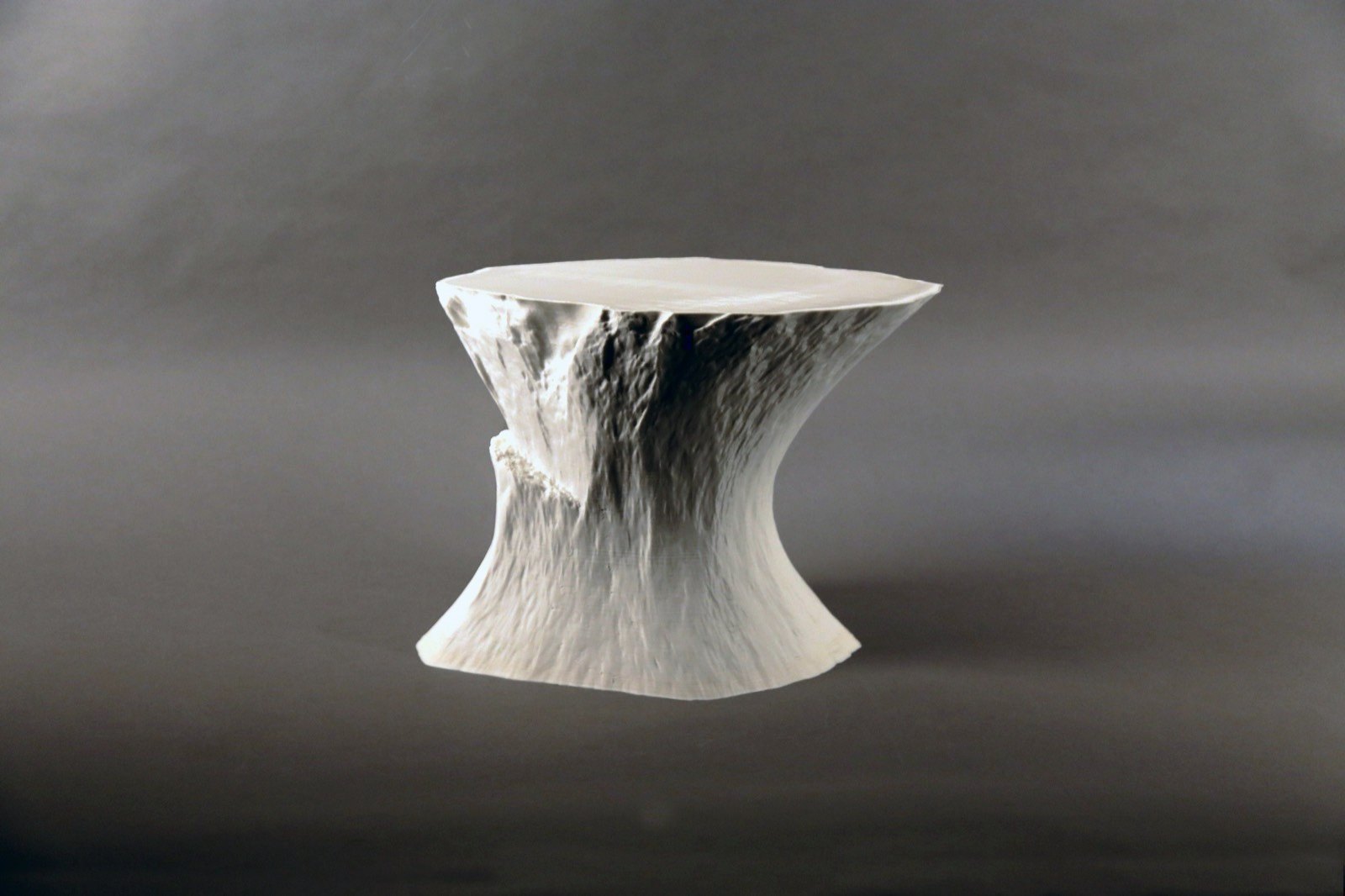
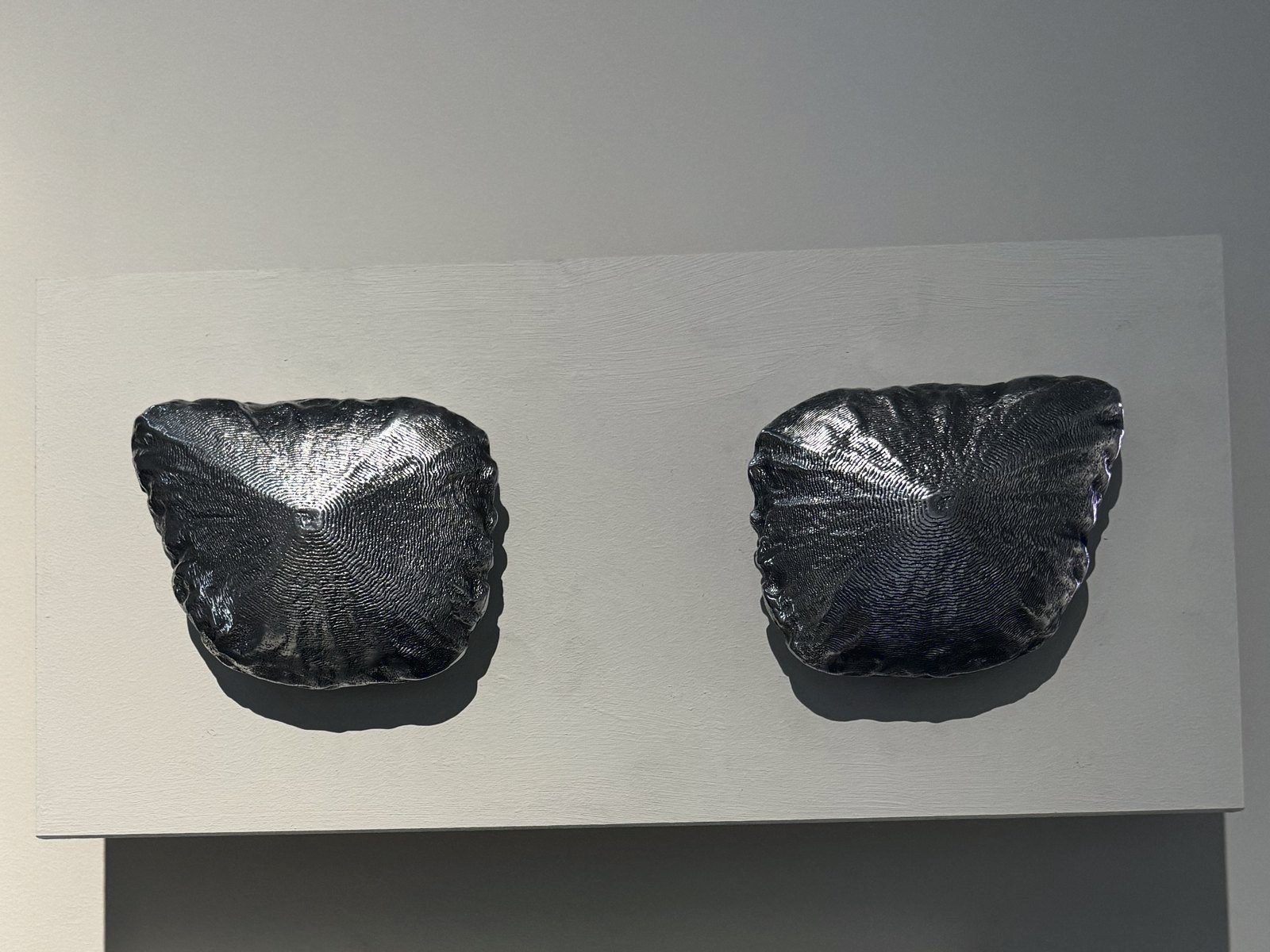
Door handles cast in aluminum from 3D-printed objects, in natural aluminum and black anodized finishes—six pieces shown in “House Built with Crafts” at the Seoul Museum of Craft Art (2024).
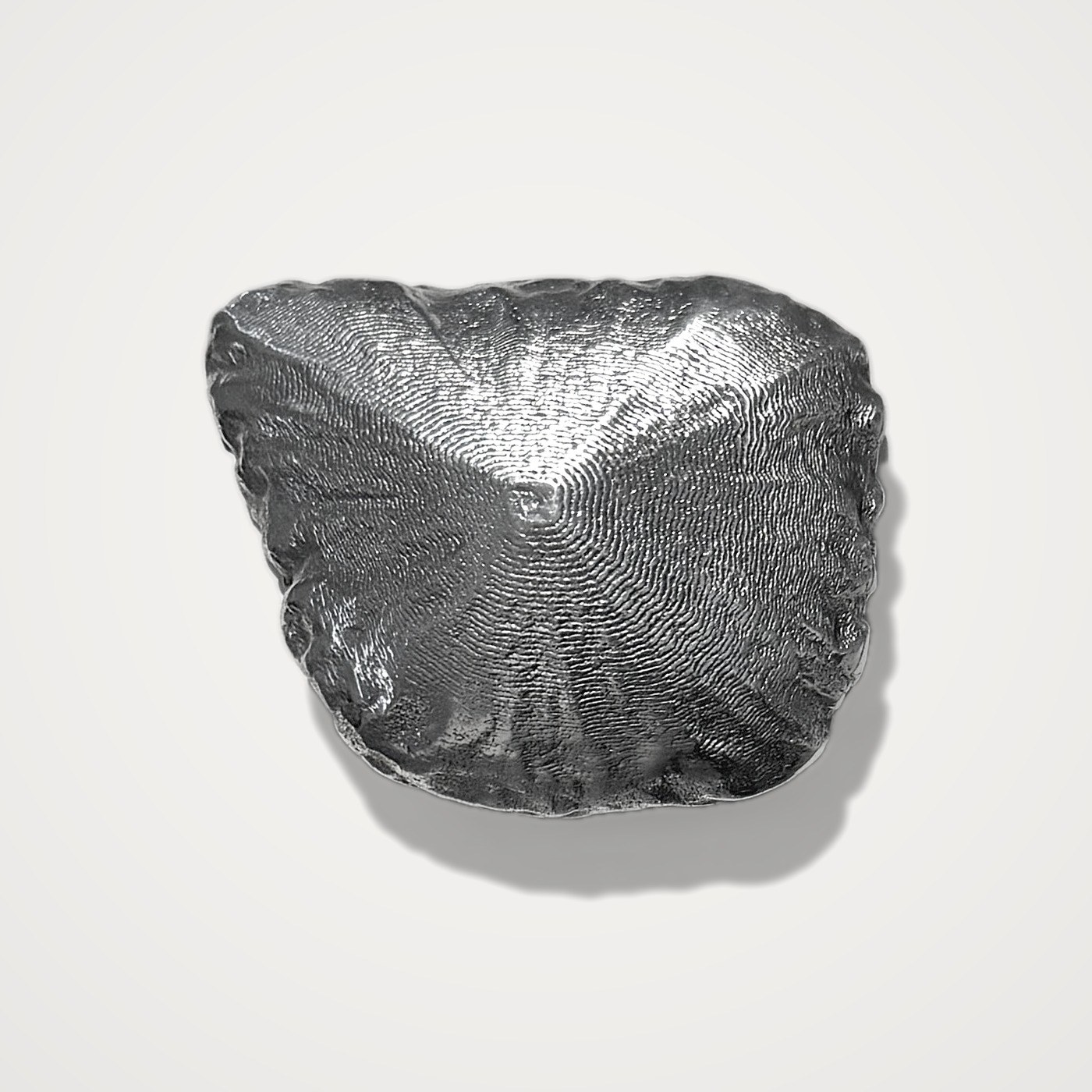
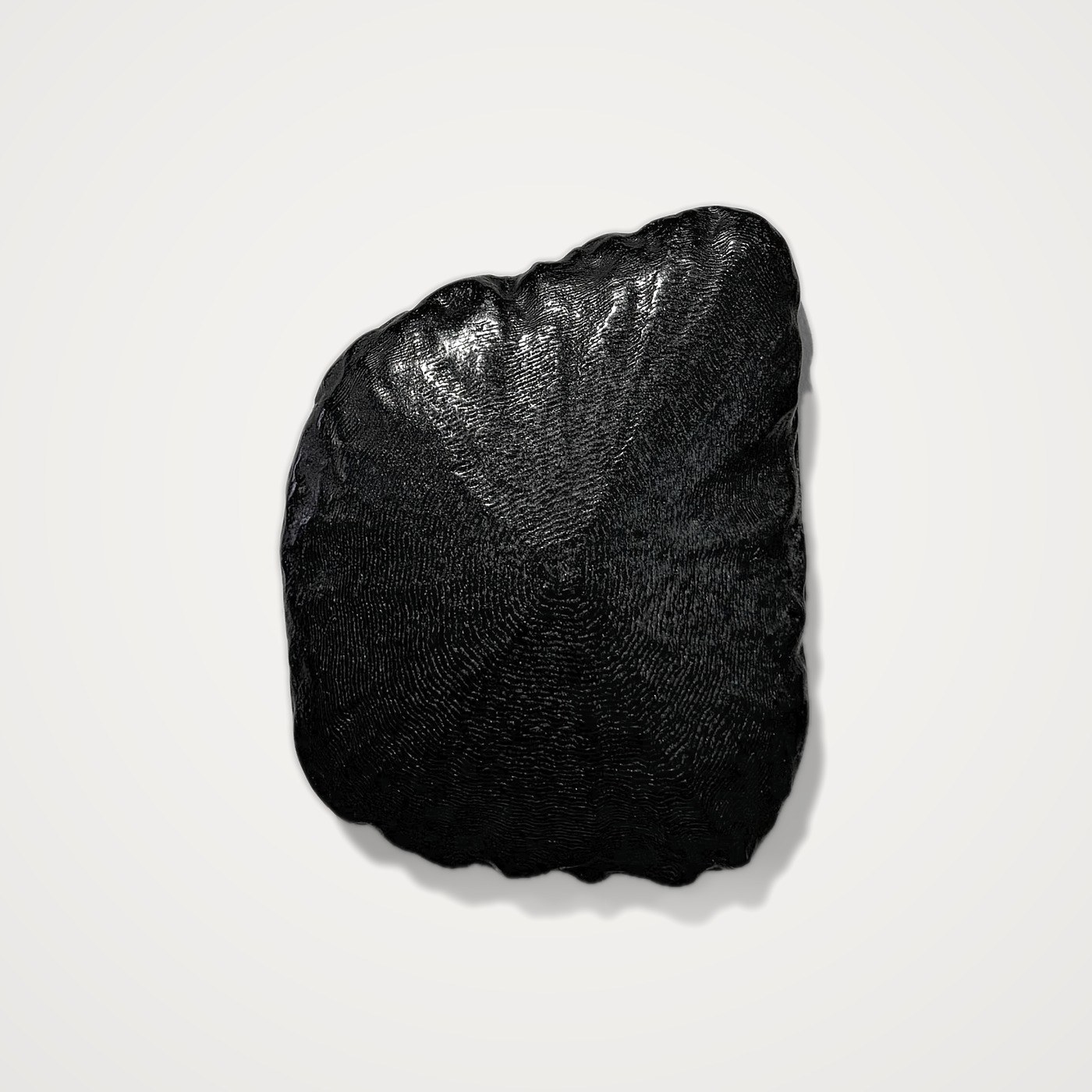
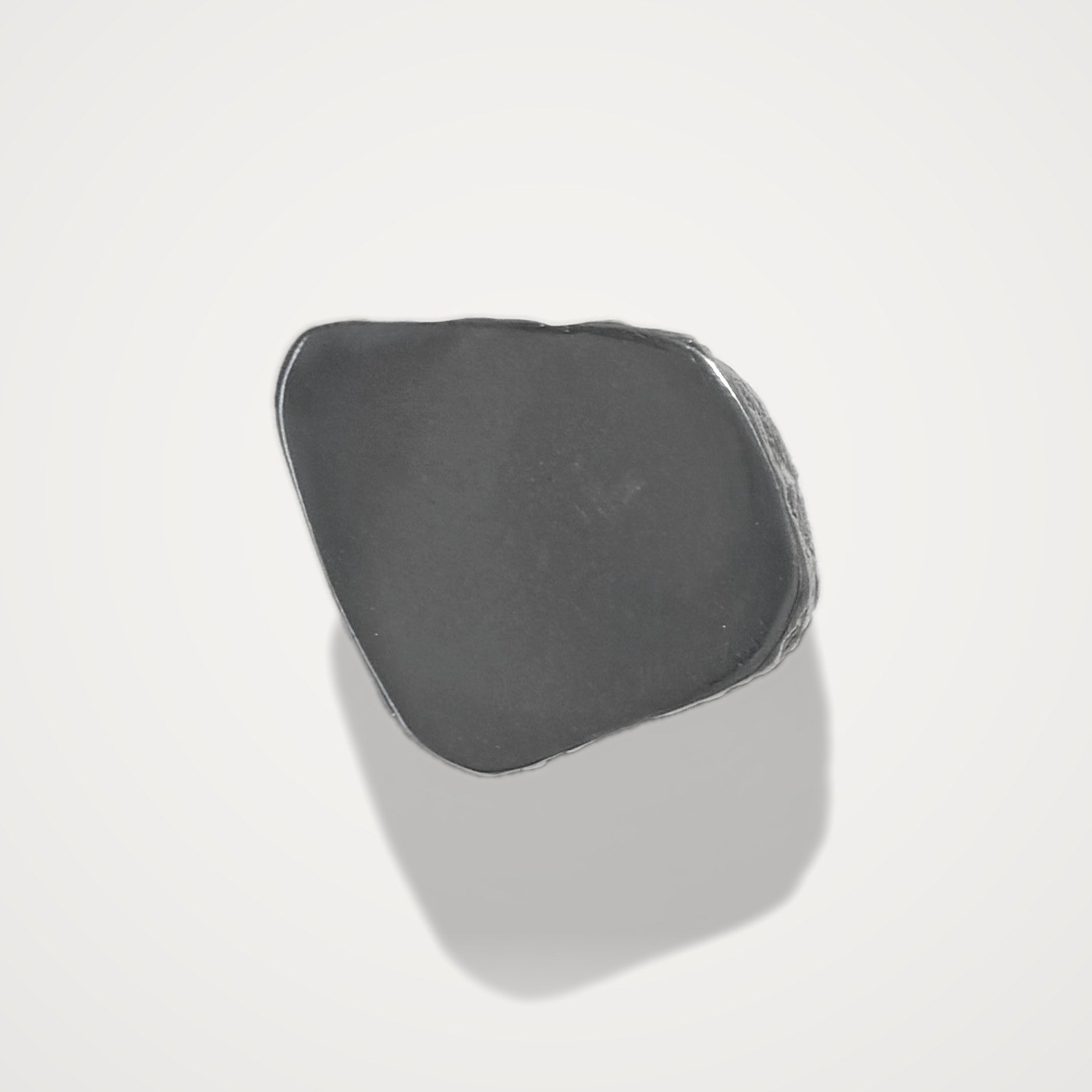
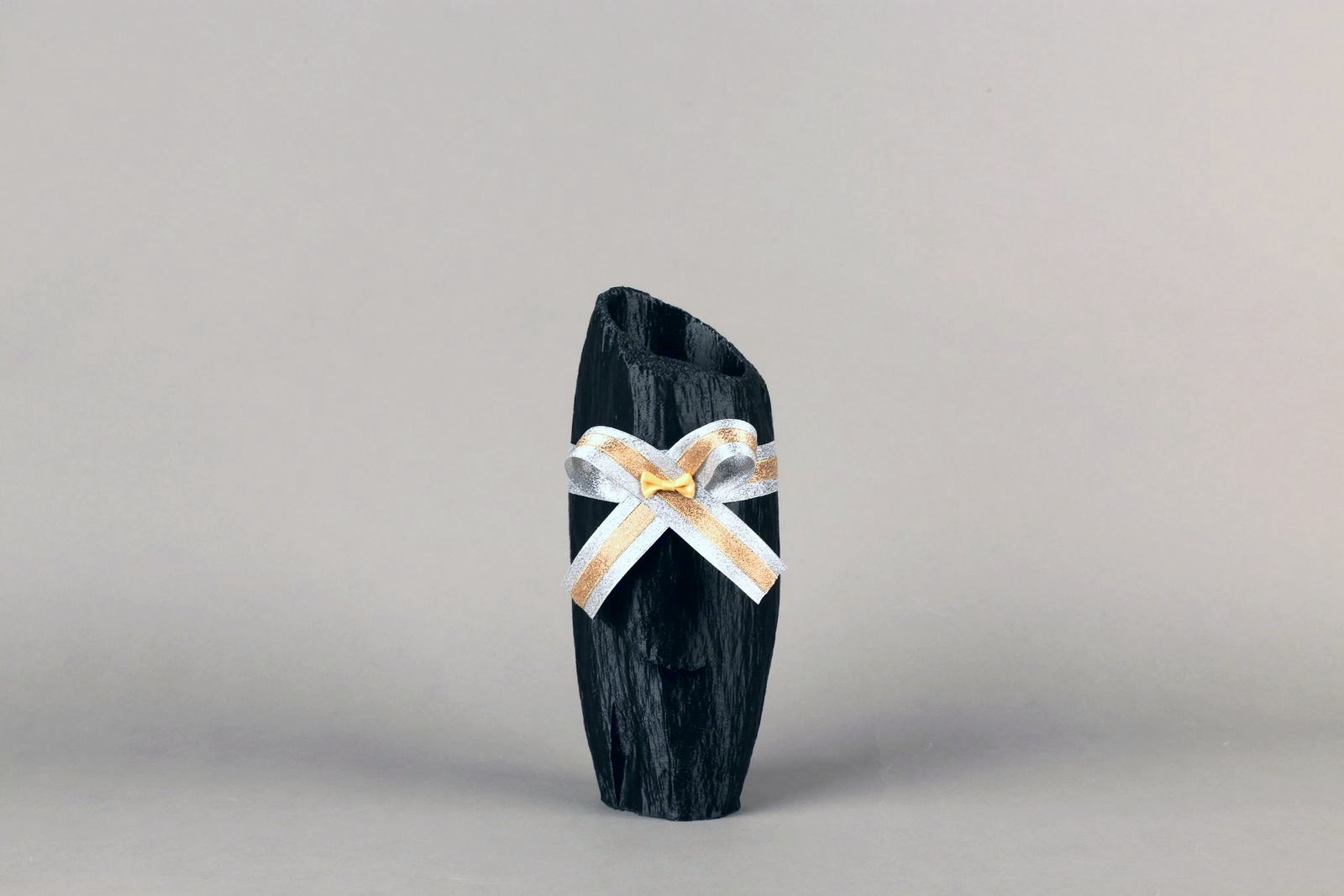
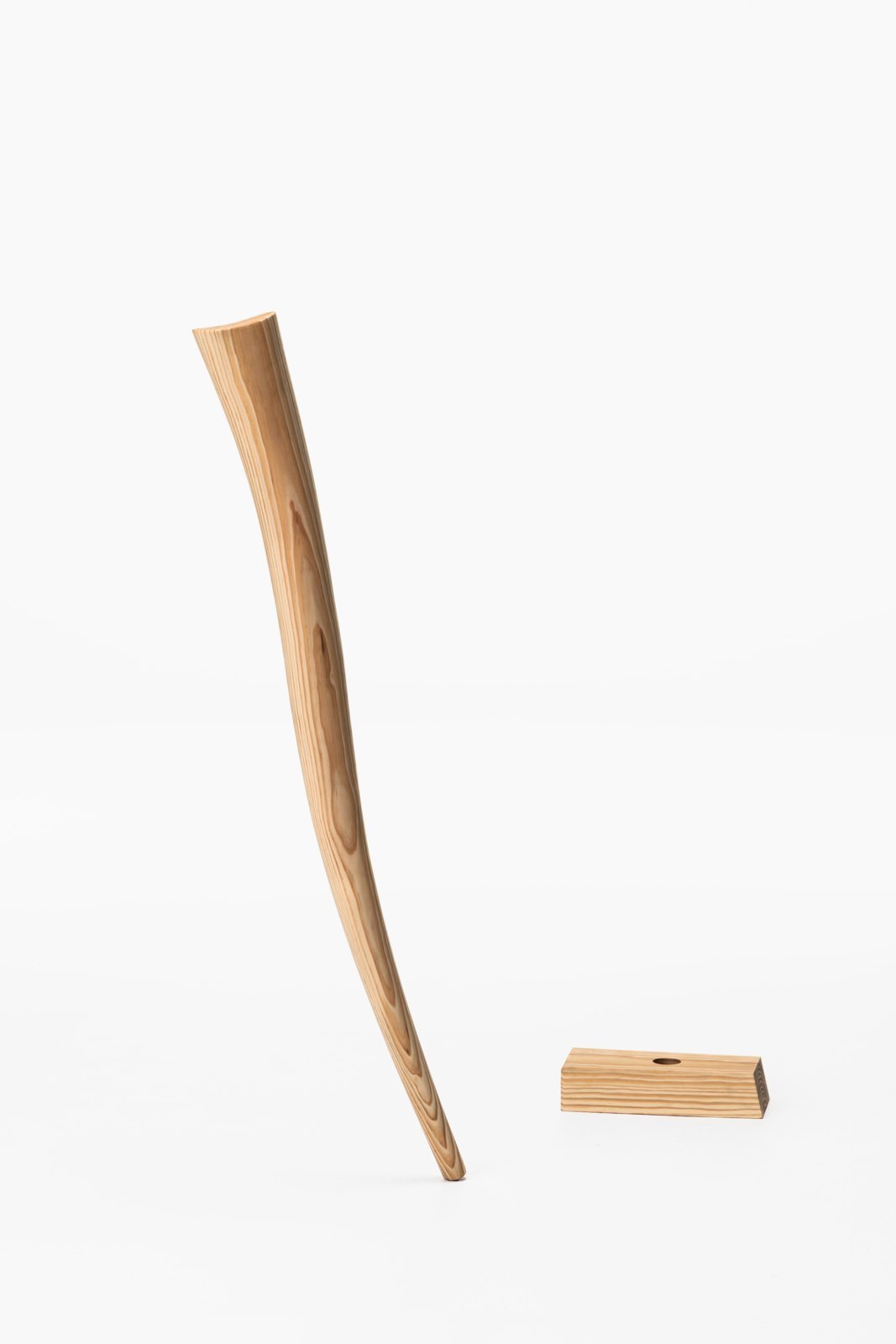
A series that raises wood left behind by wildfires into walking canes—shown in the Honglim Association and Peace Forest cane exhibitions “Black Land 75,010,925 Pyeong” (2023, Woong Gallery) and “80 Canes from the Ashes” (2024, Jebi Hanok), and continued at the 2025 Cheongju Craft Biennale in Honglim’s “Black Mountain.”


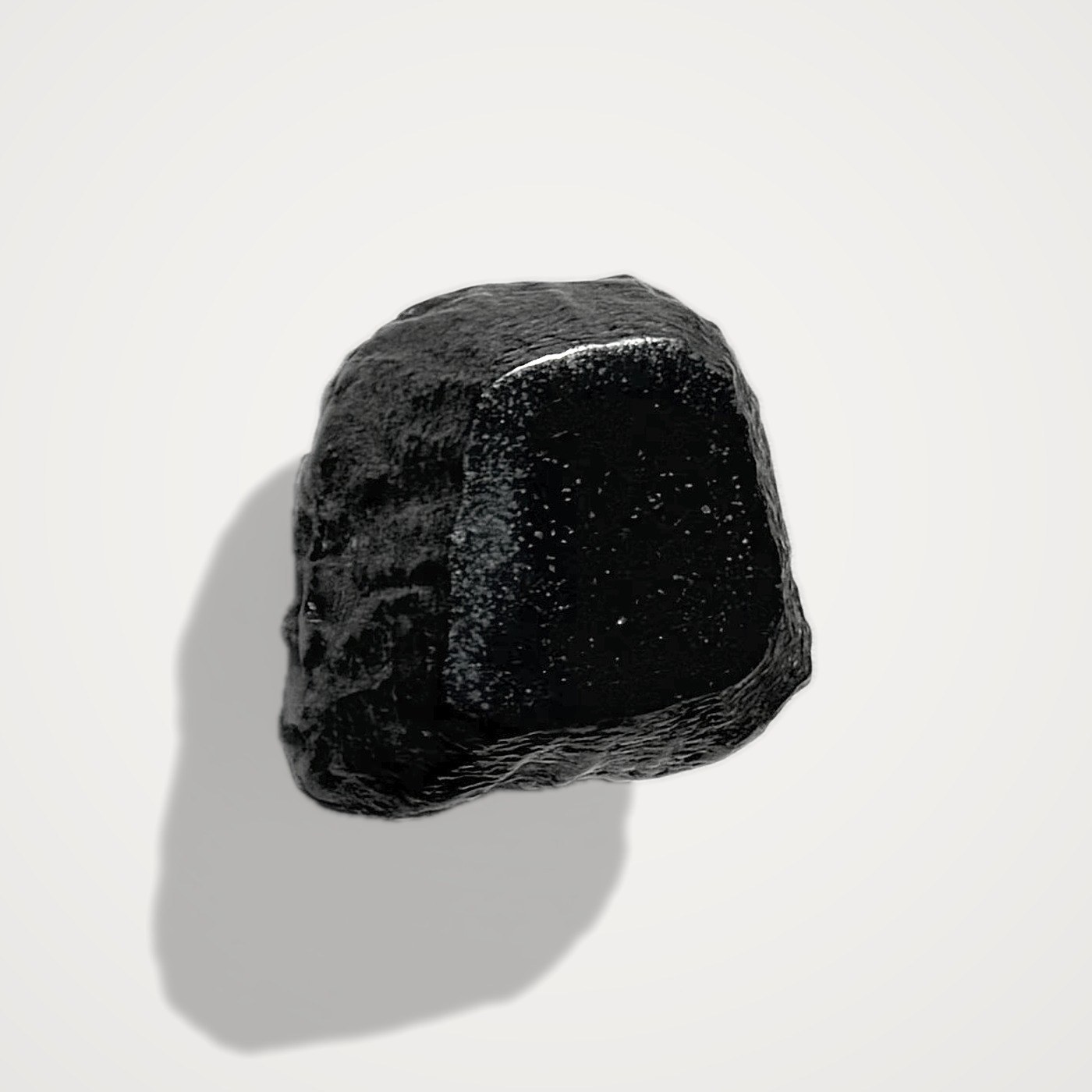
It looks like stone but is not. The first series of black and white desk objects printed from 3D-scanned stone, photographed around the 2015 solo exhibition “This Is Not A Stone” at Limlip Art Museum.

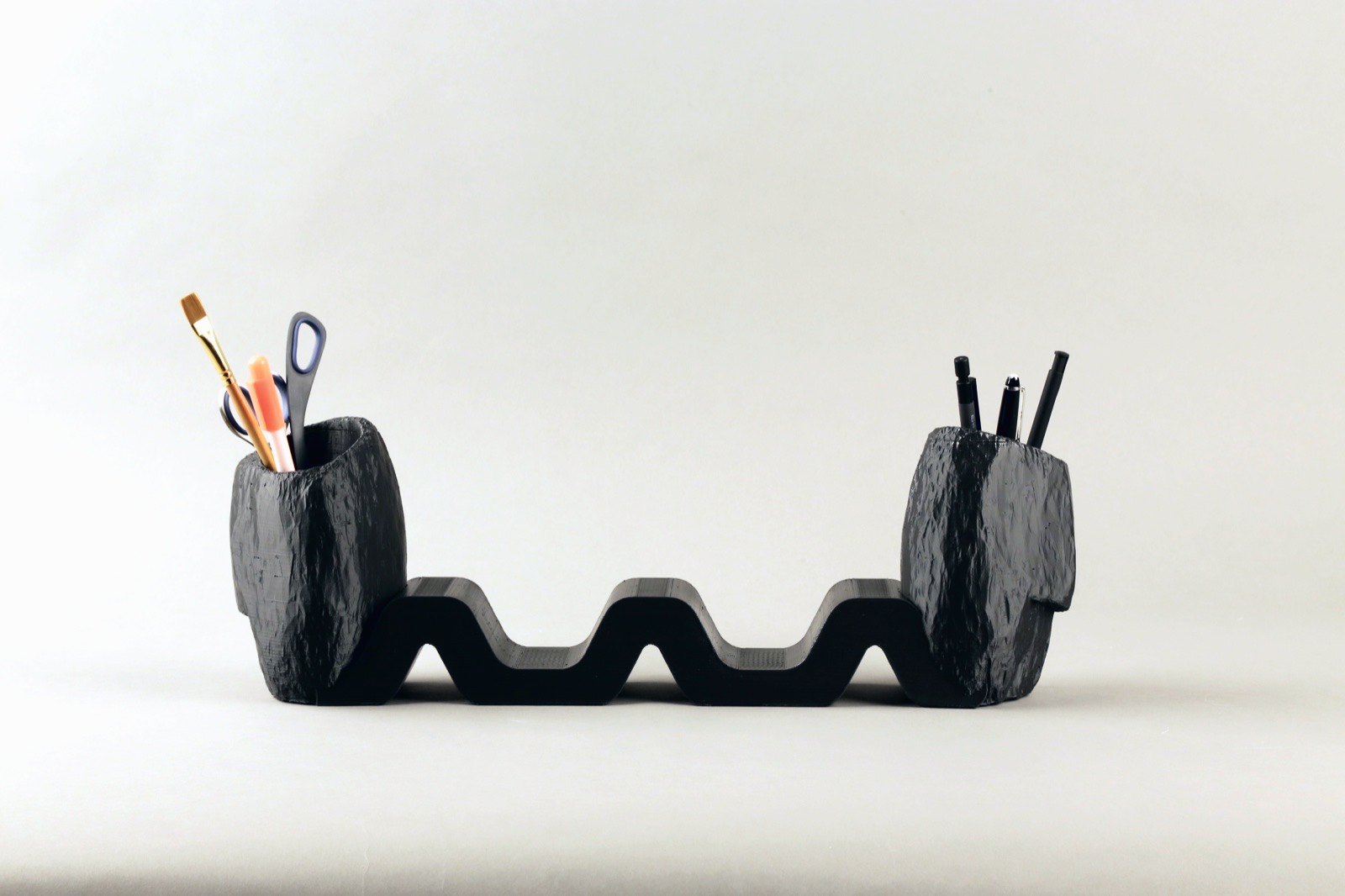


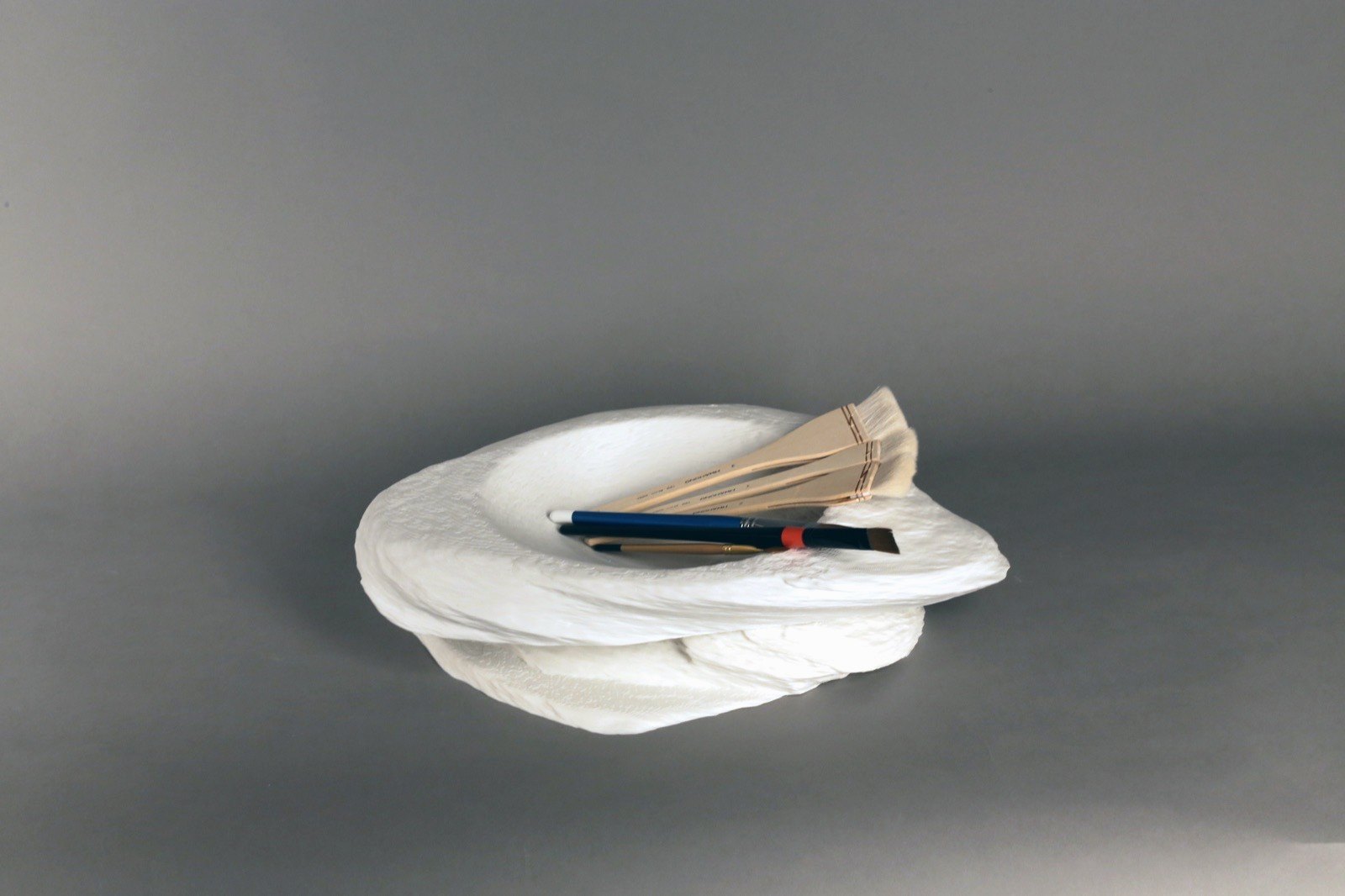

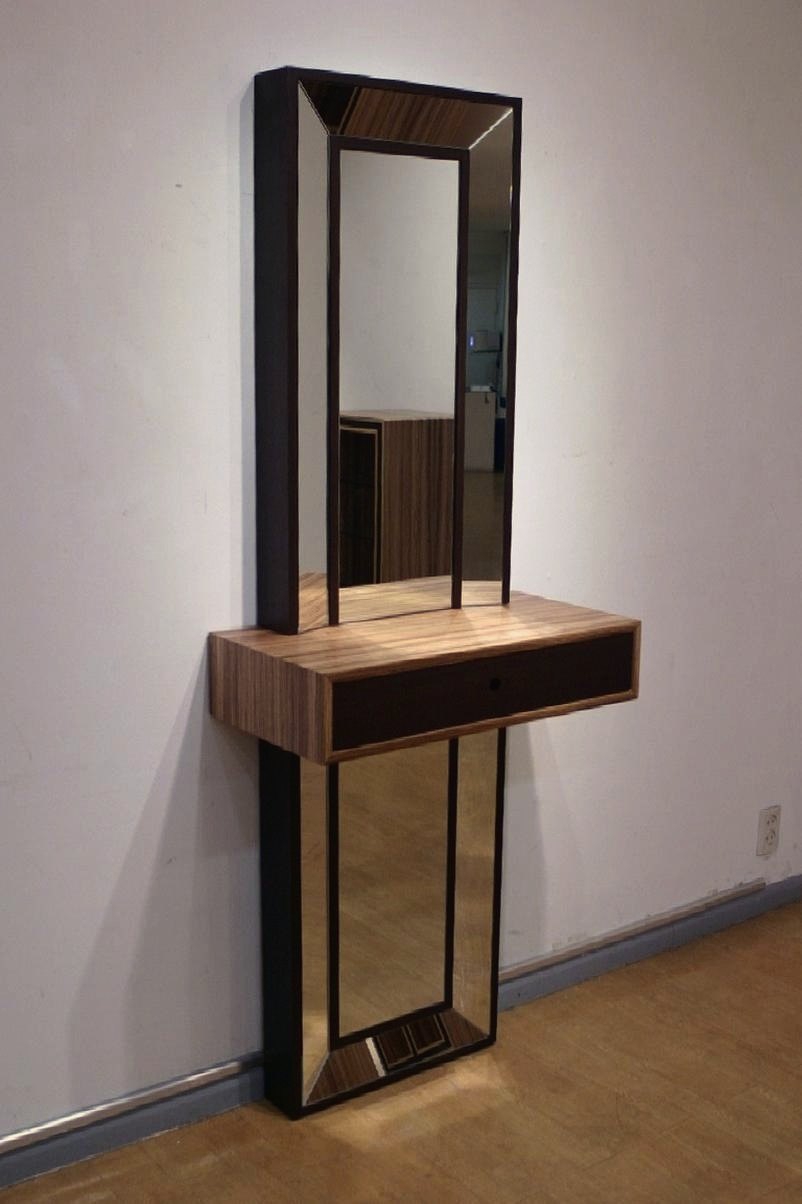
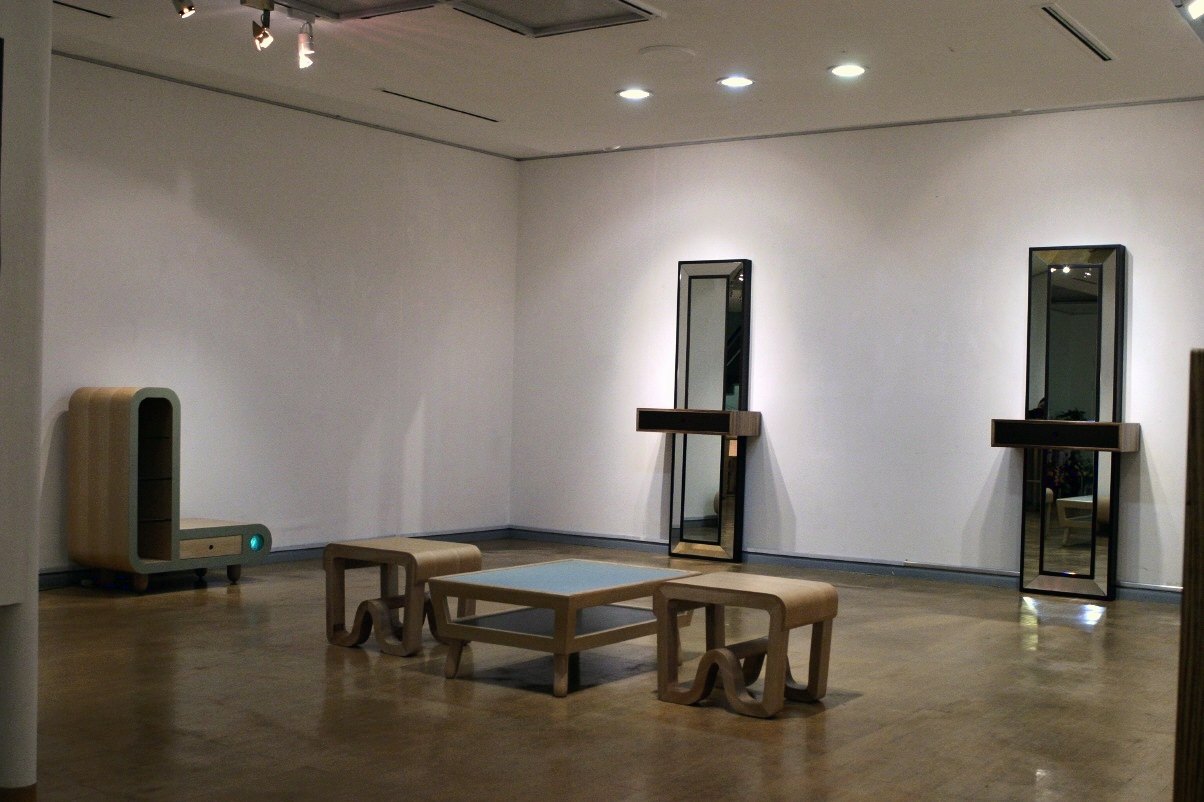
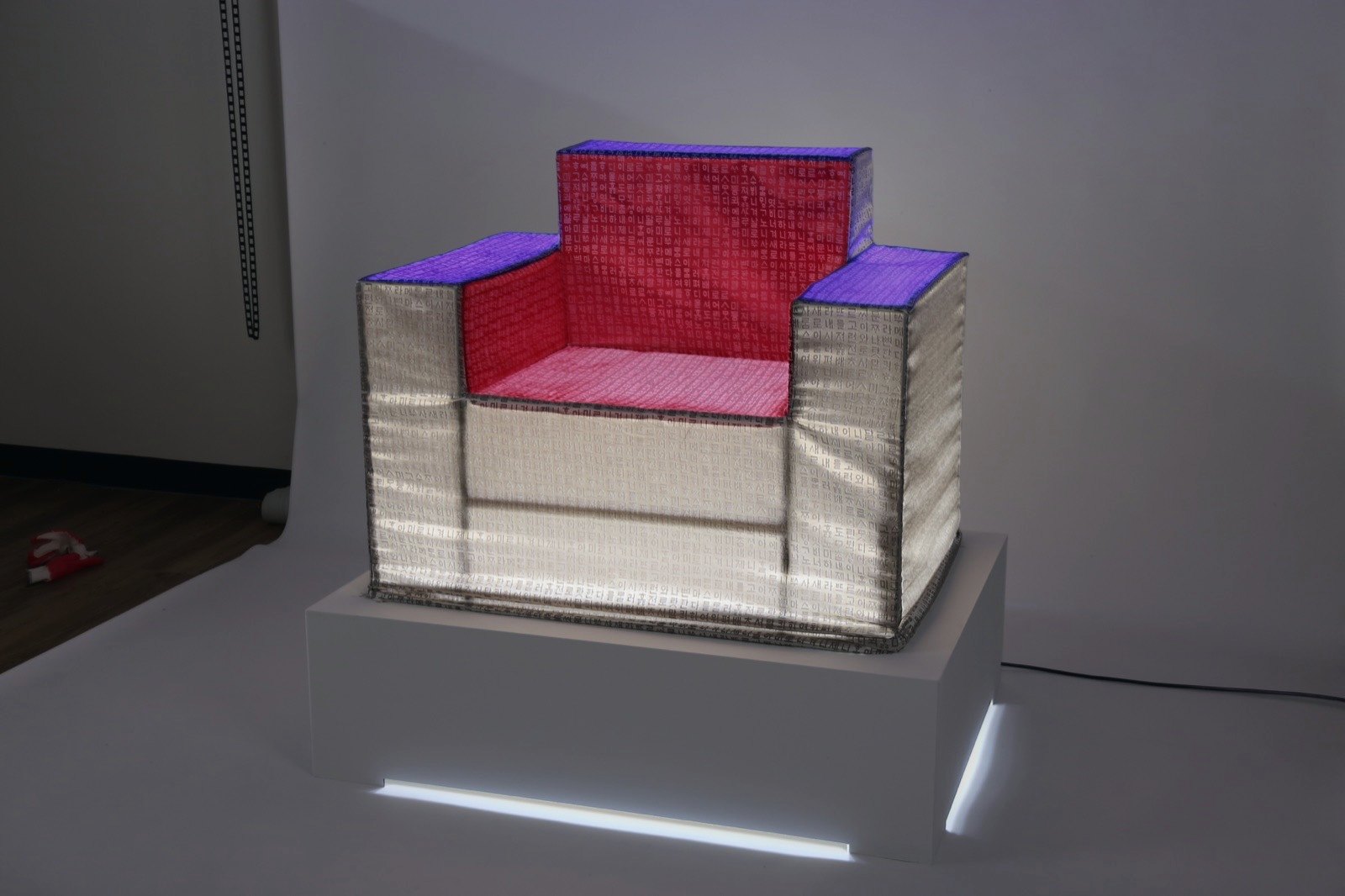
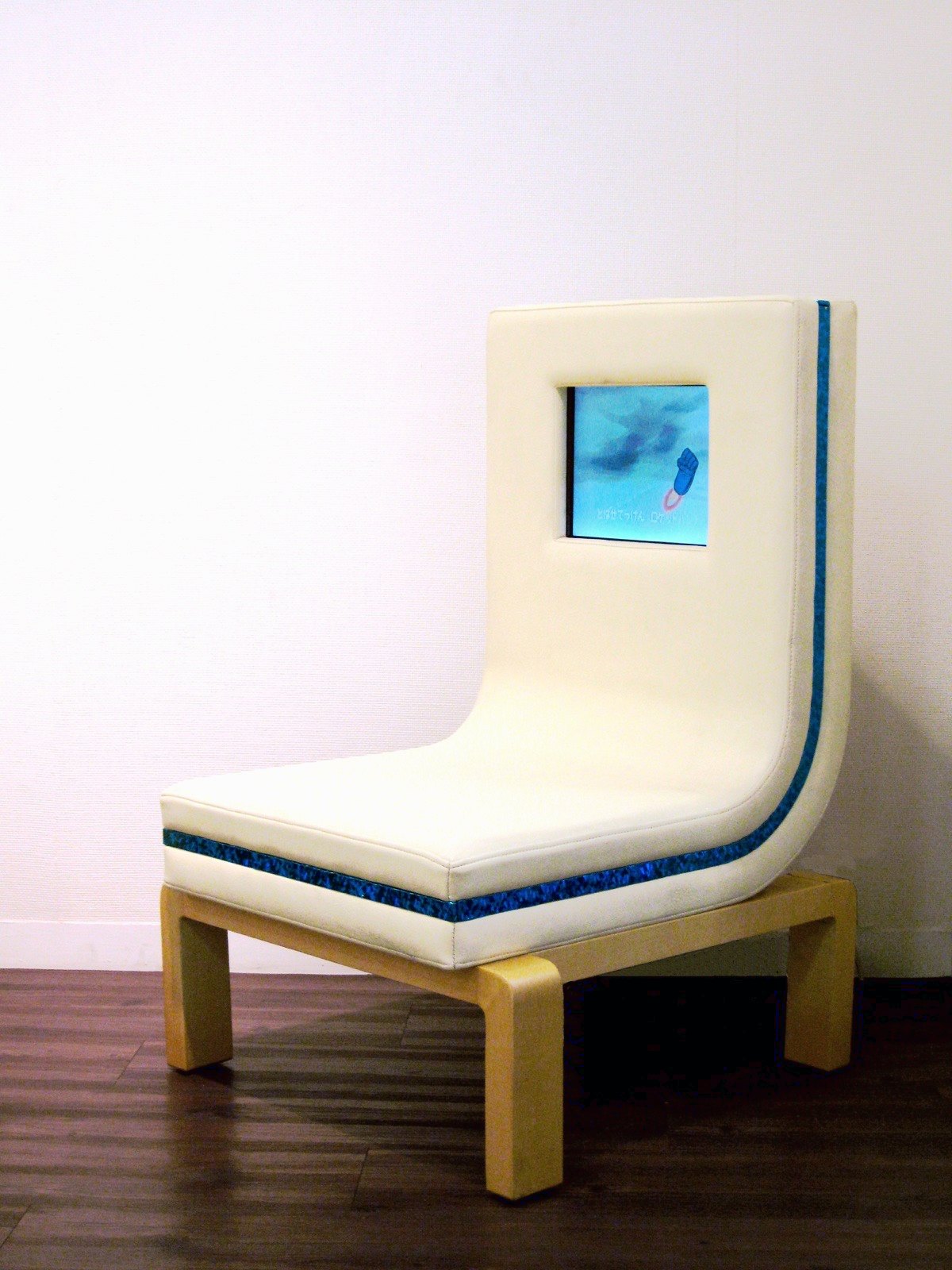
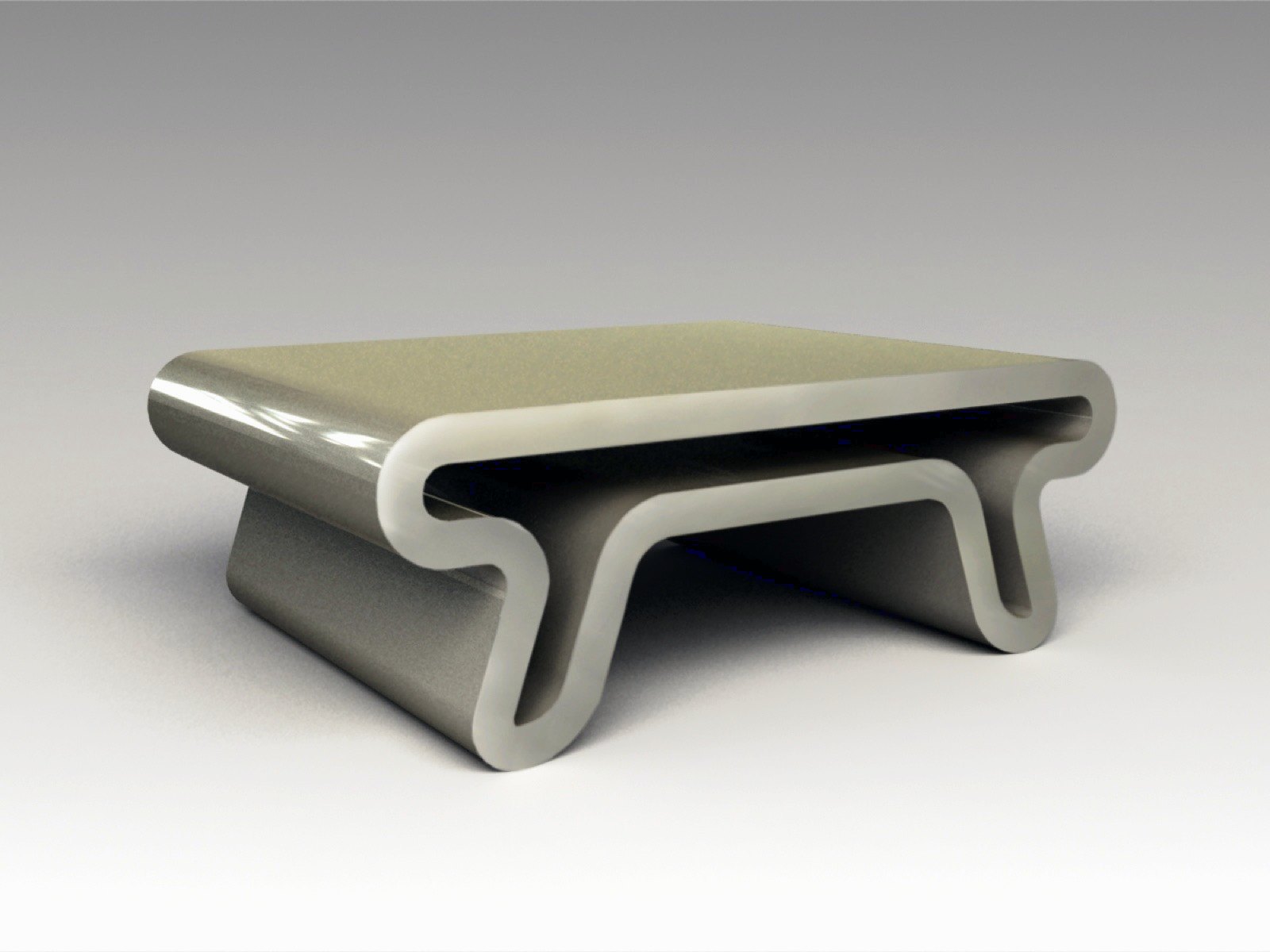
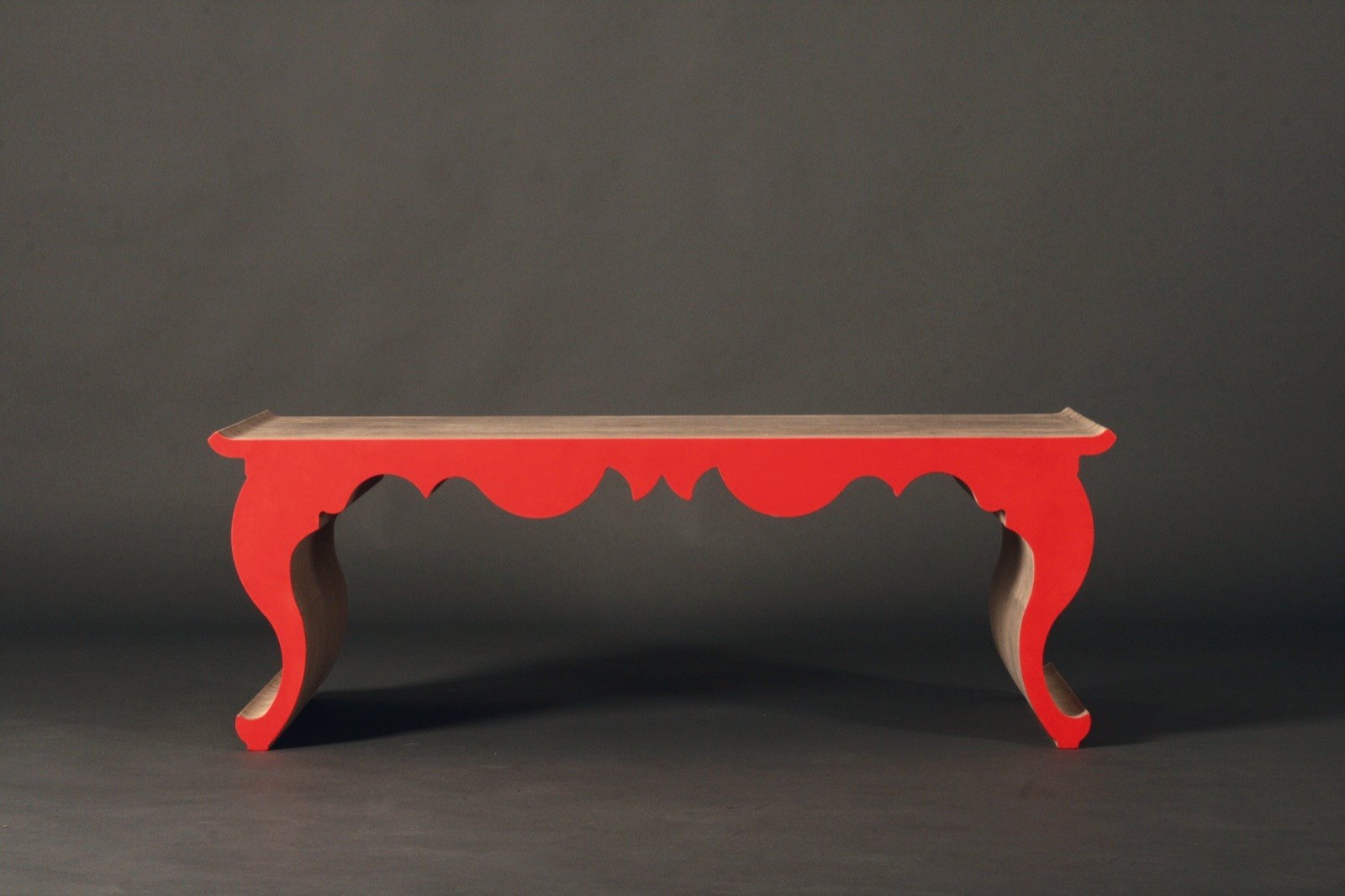
The meeting of digital and furniture began with “King’s Furniture” wrapped in cooking film (2004) and a chair with embedded LCD screens (2005), continuing through the CNC-layered Multi-Layer Furniture (2007) and the solo exhibition Mass Furniture (2012).


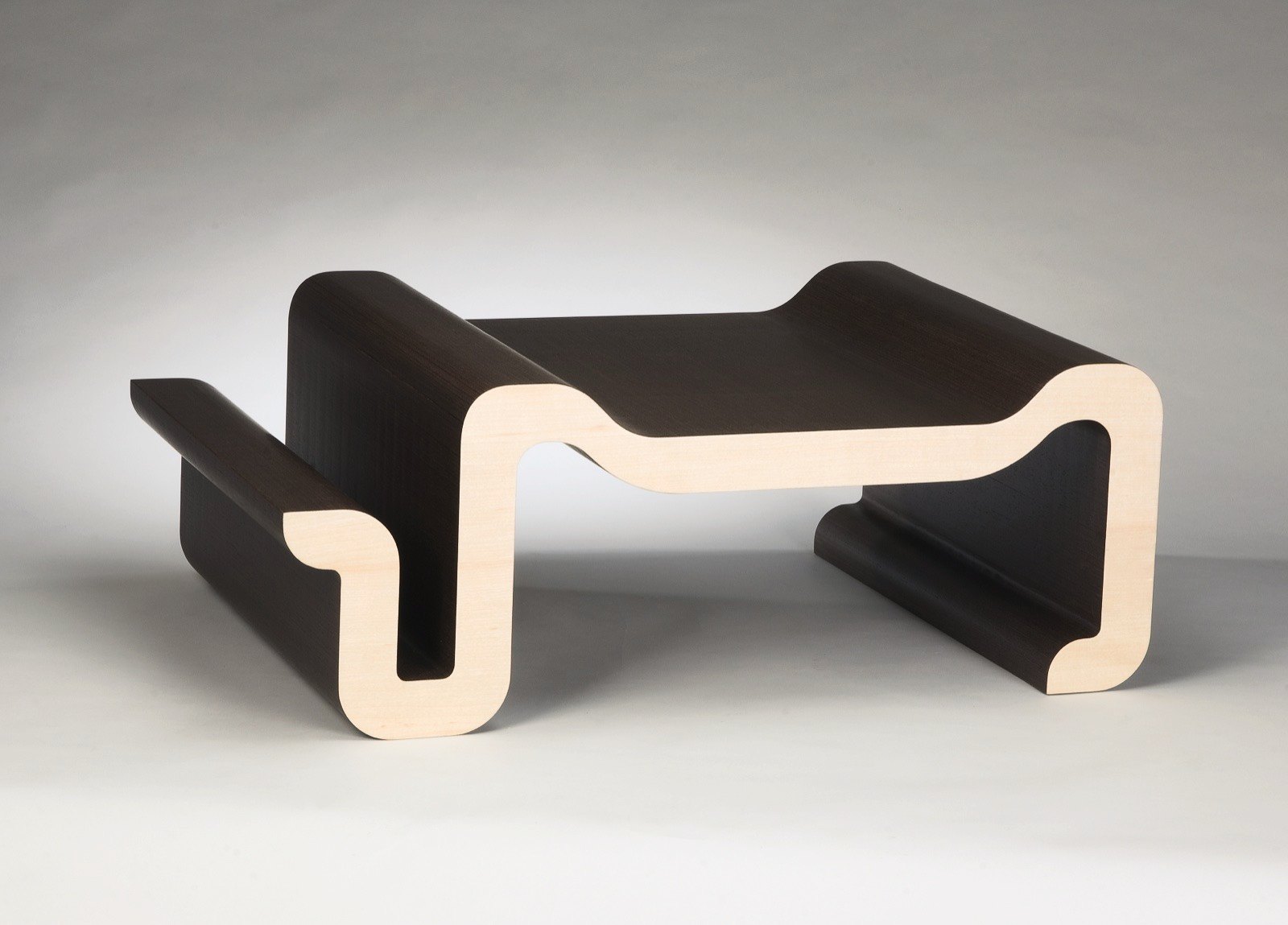

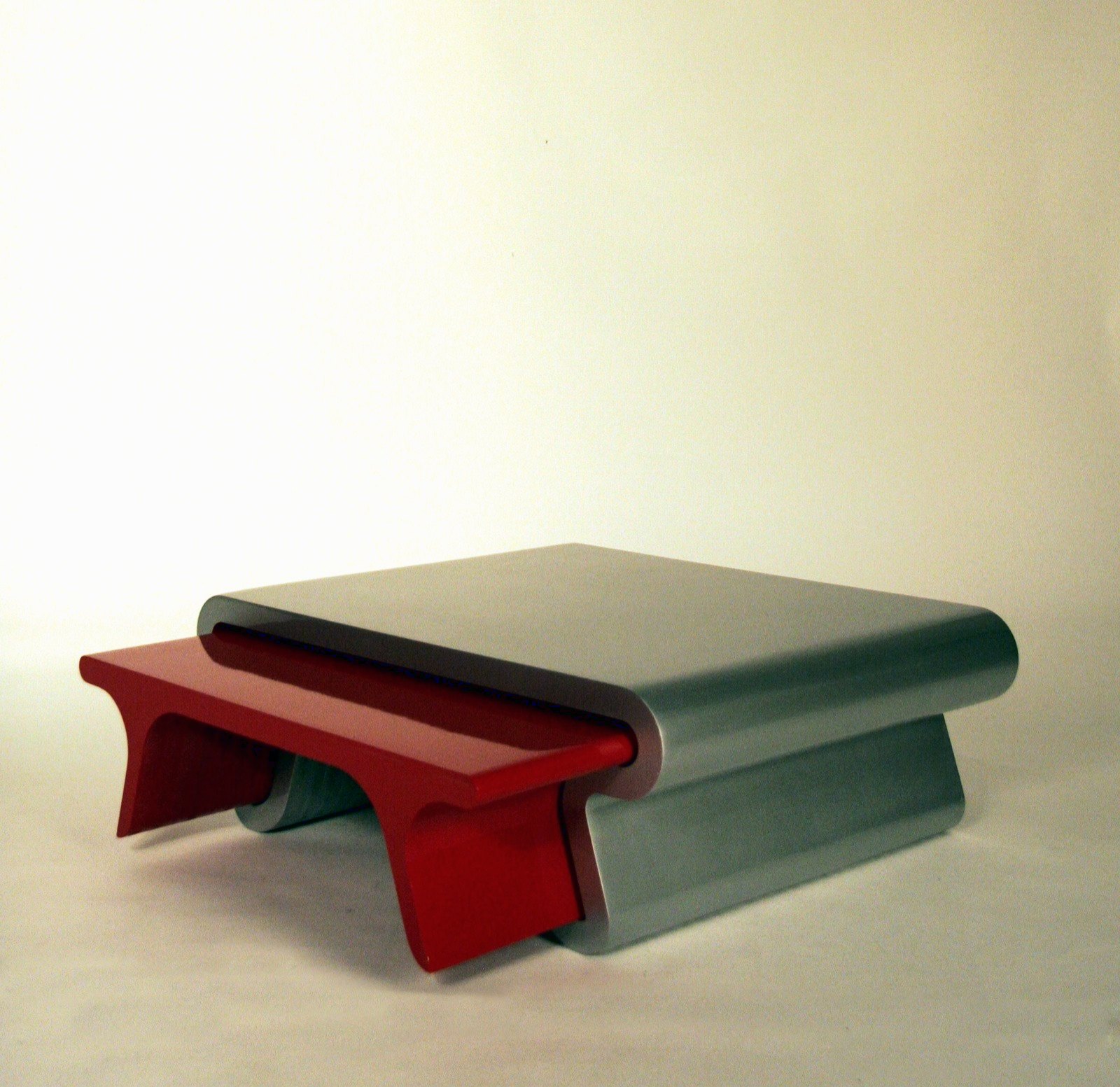
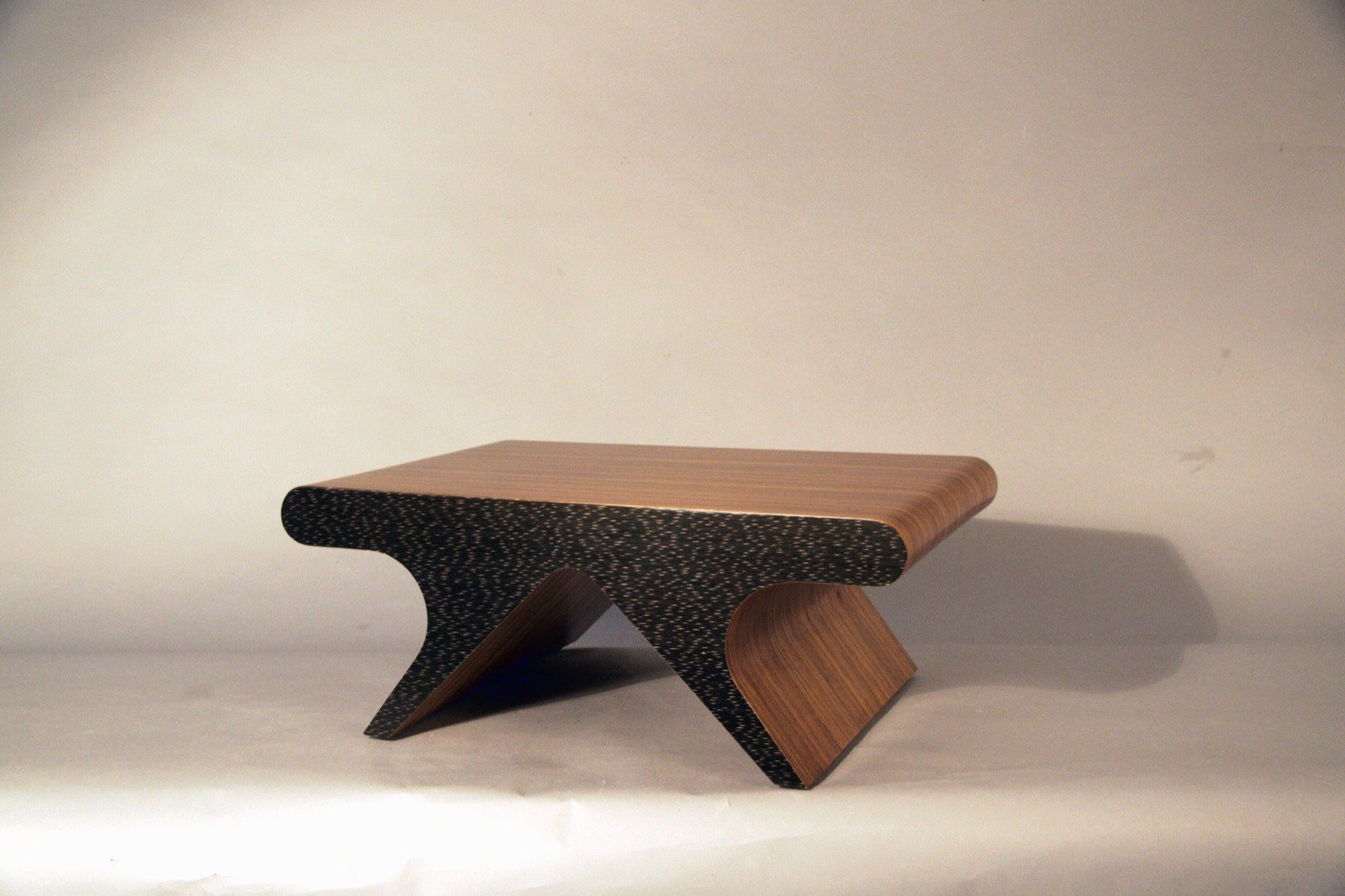
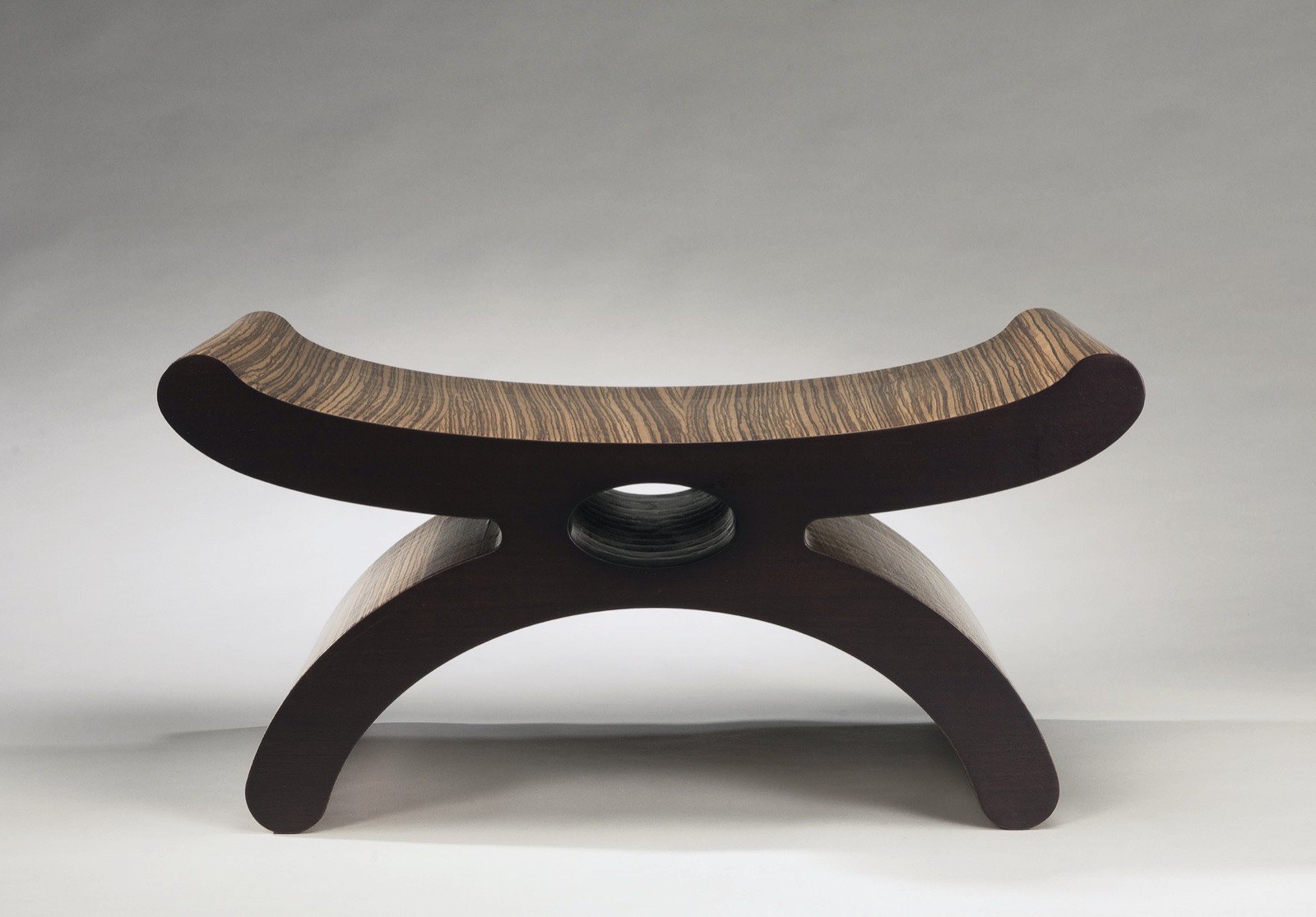




Gunsoo Kim was born in Seoul in 1967 and studied furniture at Hongik University. From his master’s thesis to his 2017 doctoral dissertation, A Study on Art Furniture Combining the Naturalistic Spirit of Korea and Digital Process, his work has pursued a single question: how can the Korean attitude toward nature and the technology of each era meet within one object?
Beginning with “Studio for Six” at the 1997 Seoul Living Design Fair, he moved through a chair with embedded LCD screens (2005), the CNC-layered Multi-Layer Furniture (2007) and the solo exhibition Mass Furniture (2012). Since 2015 his series This Is Not A Stone, another Stone and Stone and another Stone Tower—natural stones scanned, transformed, printed and joined with real stone—have opened a new chapter for art furniture in the digital age.
His work has been shown at the Seoul Museum of Craft Art, the Triennale Milano Design Museum, Gana Art Center, the Gwangju Design Biennale and the Cheongju International Craft Biennale. He has taught at Kongju National University since 2006 and has been President of the Korea Furniture Society since 2025.

Stone tower lights whose colors shift with the music—recorded on video in July 2016, first as a test in a university corridor the day before installation, then in the gallery of the Hongik Museum of Art.